LONDON: A US-based nonprofit group has issued a letter to American Airlines warning against doing business with Qatar — and will be sending tailored versions to other international corporations.
Qatar is allegedly harboring terrorists and funding extremist groups, according to the letter sent by the Counter Extremism Project (CEP).
In the CEP letter, seen by Politico, CEO Mark Wallace wrote, “Qatar has a long history of providing support for extremism and terrorism, including but not limited to vast financial and material support to internationally designated terrorist groups and willing accommodation of internationally designated or wanted terrorist leaders and financiers.”
The letter reportedly warns of a “risk to employees resident in Qatar” and accuses Qatar of offering financial support, either directly or indirectly, to Hamas, Al-Qaeda in the Arabian Peninsula and the Taliban.
A version of the letter was sent to American Airlines, and according to Politico tailored versions will soon be sent to 11 other companies around the world, including Siemens, Volkswagen, Credit Suisse, Barclays, Royal Dutch Shell and AccorHotels.
While portions of each letter are specific to the recipient company, the arguments laid out against the Qatari government reportedly remain the same in each version.
Wallace’s letter also states that companies doing business with Qatar may see the “diminution of corporate reputation and shareholder value,” as well possibly facing the “imposition of future sanctions on Qatar by other jurisdictions.”
The letter says that “serious legal, financial, commercial, and reputational risks associated with operating in and doing business with Qatar will continue for the foreseeable future — unless and until Qatar fundamentally changes its behavior and Qatar verifiably abandons its manifest support of terrorist and extremist groups and individuals … Consequently, prudent companies should conclude that business opportunities, partnerships, and ties in and with Qatar and its affiliated agencies are not worth the risk.”
The Counter Extremism Project, founded in 2014, features a long section on its website devoted to Qatar titled: “Qatar, Money and Terror: Doha’s Dangerous Policies” — in which the NGO writes that: “Qatar — a longtime US ally and member of the Global Coalition to Counter ISIS (Daesh) — has supported and harbored international terrorist organizations and individuals. The hydrocarbon-rich Gulf country sends direct financial and material support to internationally-designated terrorist groups such as Hamas and the Nusra Front, and knowingly permits internationally-designated or wanted terrorist leaders and financiers to operate within its borders.”
The letter writer at CEP, Mark Wallace, is one the group’s co-founders. The former diplomat was part of the US delegation to the UN under President George W. Bush. He was also an adviser to the 2008 presidential campaign of Sen. John McCain.


![]()
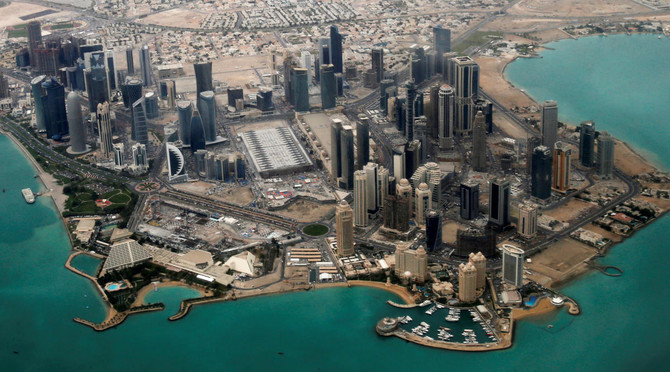
Counter-extremism nonprofit urges multinationals not to do business with Qatar
Counter-extremism nonprofit urges multinationals not to do business with Qatar
Latest updates




© 2026 SAUDI RESEARCH & PUBLISHING COMPANY, All Rights Reserved And subject to Terms of Use Agreement.