NGUENYYIEL REFUGEE CAMP, Ethiopia: Her feet bare and her hometown in flames, Nyadet walked east alone, eating food given to her by strangers and following trails left by others escaping war in South Sudan.
She is 12 years old.
Nine days after she fled bloodshed in the flashpoint town of Malakal last November, Nyadet reached the country’s border with Ethiopia, and crossed over to safety.
“Maybe they are safe,” is all she can say of her mother, father, sister and two brothers, whom she lost track of when the streets of her hometown transformed into a war zone.
South Sudan’s civil war has raged on for the past three years with such viciousness that parts of the country are bereft of food and a third of the population has fled their homes, but few refugees present as vexing a problem as children like Nyadet who escape the conflict alone.
“They are fleeing definitely life-threatening situations,” said Daniel Abate of aid group Save the Children, which helps reunite lost children with their families.
At the Nguenyyiel refugee camp near Ethiopia’s lush western frontier, boys and girls who crossed the border unaccompanied tell tales of murdered families and childhoods shattered by the unremitting violence in South Sudan.
“War happened,” is the description Nyakung, 11, gives for the atrocities she witnessed in the capital Juba, where her mother was left to die inside a blazing hut and three of her brothers were gunned down on a road while running for the safety of a UN base.
Aid agencies are trying to get children like Nyakung back with their families, but humanitarians admit that with the conflict still raging in South Sudan, the odds of these children seeing their loved ones again are slim.
South Sudan’s war, sparked when President Salva Kiir accused his former deputy Riek Machar of plotting a coup in 2013, has been marked by numerous atrocities against civilians despite the presence of thousands of UN peacekeeping troops.
Around 1.8 million South Sudanese have fled the country, making it the fastest growing refugee crisis in the world.
One million of those refugees are children, the UN says, and of that number about 75,000 were either separated from their parents or without any family at all.
Aid workers say they regularly see South Sudanese children straggling across the border, often with an adult stranger, but sometimes by themselves.
“You can tell they are very tired, their clothes (are) worn-out on them, they have not been showered for some time. So, you can see that they’re destitute,” Daniel said.
Nguenyyiel is home to nearly 2,900 children that arrived without any family, who pass their days attending school and playing in a tree-shaded jungle gym.
Chan, 13, escaped Malakal late last year when fighting erupted and the grass hut he lived in was torched.
He then walked for a month until he crossed into Ethiopia.
“I just go the direction where I see a safe place,” he said.
Some, like Nyadet, hope to one-day reunite with their families.
Others hold no such hope.
Chan says he does not know where his parents are but believes they must be dead.
With neither the government nor the rebels honoring a peace deal made two years ago, locating family members of lost children in the chaos of South Sudan is difficult, says Hiwotie Simachew, emergency response manager for aid group Plan International.
Some parents have also likely joined the exodus that has distributed hundreds of thousands of South Sudanese refugees to Uganda, Kenya, Sudan and beyond.
Parents, if they are still alive, could be in refugee camps in any of these countries, or in other settlements in Ethiopia, Hiwotie said.
Plan International and Save the Children have managed to reunite hundreds of youths with their families, but that is just a fraction of the around 31,500 children Ethiopia’s Administration for Refugee and Returnee Affairs says have arrived without their parents.
Even when family members are located, some do not want to take custody of the children.
In one case, aid workers found the uncle of three unaccompanied minors in Australia, but he declined to adopt them, Hiwotie said.
In other instances, it is the children themselves who resist reunion, because they believe that would mean a return to the violence from which they escaped.
“They are refusing to reunify with their family and thinking that, if they show their interest, they will return back to South Sudan,” Hiwotie said.


![]()
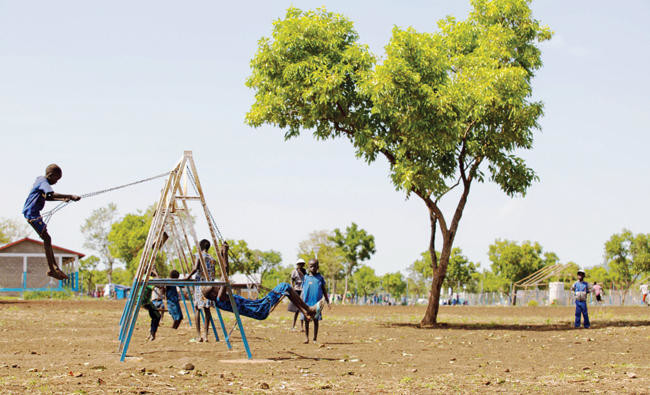
Barefoot and alone, children flee brutal S. Sudan war
Barefoot and alone, children flee brutal S. Sudan war
Latest updates


© 2026 SAUDI RESEARCH & PUBLISHING COMPANY, All Rights Reserved And subject to Terms of Use Agreement.