Flash floods kill 11 in Pakistan: officials

Flash floods kill 11 in Pakistan: officials
Updated 02 July 2017
Follow

Flash floods kill 11 in Pakistan: officials

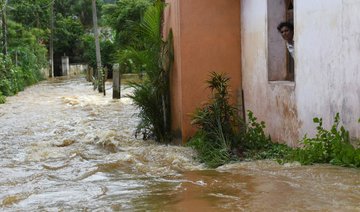
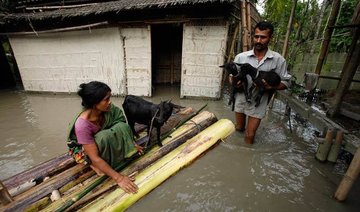
PAKISTAN: At least 11 people were killed and scores more people were injured in flash floods triggered by heavy rains in Pakistan’s southwestern province of Balochistan, officials said Sunday.
“Heavy rainfall on Friday triggered flash floods which swept away mud houses Lasbela district of Balochistan causing damage to life and property,” Hashim Ghilzai, a district administration official told AFP.
“The rain had swept away 14 people and we have recovered 11 dead bodies today while three people are still missing,” he said.
Provincial disaster management authorities said twenty house had been damaged by the flash floods.
Abuzar Ghaffari, chief of paramilitary troops in the area, said they were searching for dead bodies with the help of sniffer dogs.
Poorly built homes across Pakistan, particularly in rural areas, are susceptible to collapse during the annual spring and monsoon rains in July-August, which are often heavy.
Severe weather in recent years has killed hundreds and destroyed huge tracts of prime farmland.
The worst flooding in recent times occurred in 2010, when they covered almost a fifth of the country’s total landmass, killed nearly 2,000 people and displaced 20 million.


Judge bars federal prosecutors from seeking the death penalty against Luigi Mangione

Updated 3 sec ago
Follow

Judge bars federal prosecutors from seeking the death penalty against Luigi Mangione

  • Judge Margaret Garnett’s Friday ruling foiled the Trump administration’s bid to see Mangione executed
  • Garnett dismissed a federal murder charge against Mangione, finding it technically flawed. She left in place stalking charges that could carry a life sentence
NEW YORK: Federal prosecutors can’t seek the death penalty against Luigi Mangione in the killing of UnitedHealthcare CEO Brian Thompson, a federal judge ruled Friday, foiling the Trump administration’s bid to see him executed for what it called a “premeditated, cold-blooded assassination that shocked America.”
Judge Margaret Garnett dismissed a federal murder charge that had enabled prosecutors to seek capital punishment, finding it technically flawed. She wrote that she did so to “foreclose the death penalty as an available punishment to be considered by the jury” as it weighs whether to convict Mangione.
Garnett also dismissed a gun charge but left in place stalking charges that carry a maximum punishment of life in prison. To seek the death penalty, prosecutors needed to show that Mangione killed Thompson while committing another “crime of violence.” Stalking doesn’t fit that definition, Garnett wrote in her opinion, citing case law and legal precedents.
In a win for prosecutors, Garnett ruled they can use evidence collected from his backpack during his arrest, including a 9mm handgun and a notebook in which authorities say Mangione described his intent to “wack” an insurance executive. Mangione’s lawyers had sought to exclude those items, arguing the search was illegal because police hadn’t yet obtained a warrant.
During a hearing Friday, Garnett gave prosecutors 30 days to update her on whether they’ll appeal her death penalty decision. A spokesperson for the US attorney’s office in Manhattan, which is prosecuting the federal case, declined to comment.
Garnett acknowledged that the decision “may strike the average person — and indeed many lawyers and judges — as tortured and strange, and the result may seem contrary to our intuitions about the criminal law.” But, she said, it reflected her “committed effort to faithfully apply the dictates of the Supreme Court to the charges in this case. The law must be the Court’s only concern.”
Mangione, 27, appeared relaxed as he sat with his lawyers during the scheduled hearing, which took place about an hour after Garnett issued her written ruling. Prosecutors retained their right to appeal but said they were ready to proceed to trial.
Outside court afterward, Mangione attorney Karen Friedman Agnifilo said her client and his defense team were relieved by the “incredible decision.”
Jury selection in the federal case is set for Sept. 8, followed by opening statements and testimony on Oct. 13. The state trial’s date hasn’t been set. On Wednesday, the Manhattan district attorney’s office urged the judge in that case to schedule a July 1 trial date.
“That case is none of my concern,” Garnett said, adding that she would proceed as if the federal case is the only case unless she hears formally from parties involved in the state case. She also said the federal case will be paused if the government appeals her death penalty ruling.
Thompson, 50, was killed on Dec. 4, 2024, as he walked to a midtown Manhattan hotel for UnitedHealth Group’s annual investor conference. Surveillance video showed a masked gunman shooting him from behind. Police say “delay,” “deny” and “depose” were written on the ammunition, mimicking a phrase used by critics to describe how insurers avoid paying claims.
Mangione, an Ivy League graduate from a wealthy Maryland family, was arrested five days later at a McDonald’s in Altoona, Pennsylvania, about 230 miles (about 370 kilometers) west of Manhattan.
Following through on Trump’s campaign promise to vigorously pursue capital punishment, Attorney General Pam Bondi ordered Manhattan federal prosecutors last April to seek the death penalty against Mangione.
It was the first time the Justice Department sought the death penalty in President Donald Trump’s second term. He returned to office a year ago with a vow to resume federal executions after they were halted under his predecessor, President Joe Biden.
Garnett, a Biden appointee and former Manhattan federal prosecutor, ruled after hearing oral arguments earlier this month.
Besides seeking to have the death penalty rejected on the grounds Garnett cited, Mangione’s lawyers argued that Bondi’s announcement flouted long-established Justice Department protocols and was “based on politics, not merit.”
They said her remarks, followed by posts to her Instagram account and a TV appearance, “indelibly prejudiced” the grand jury process resulting in his indictment weeks later.
Prosecutors urged Garnett to keep the death penalty on the table, arguing that the charges were legally sound and Bondi’s remarks weren’t prejudicial, as “pretrial publicity, even when intense, is not itself a constitutional defect.”
Prosecutors argued that careful questioning of prospective jurors would alleviate the defense’s concerns about their knowledge of the case and ensure Mangione’s rights are respected at trial.
“What the defendant recasts as a constitutional crisis is merely a repackaging of arguments” rejected in previous cases, prosecutors said. “None warrants dismissal of the indictment or categorical preclusion of a congressionally authorized punishment.”