JEDDAH: The White House says it has found “potential” evidence that Syria is preparing for another chemical weapons attack.
Press Secretary Sean Spicer issued an ominous statement Monday evening that said the US “has identified potential preparations” for another chemical attack by the Assad government, that it said “would likely result in the mass murder of civilians, including innocent children.”
He said the activities were similar to those made before an April chemical attack. The Trump administration launched missile strikes in retaliation for that attack, which it blamed on Assad.
Spicer warned that “if Assad conducts another mass murder attack using chemical weapons, he and his military will pay a heavy price.”
The White House has provided no immediate evidence to back up its claims.
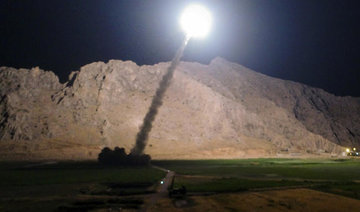
Washington launched a retaliatory cruise missile strike days later against a Syrian airbase from where it said the chemical weapons attack was launched.
That assault with 59 Tomahawk missiles marked the first direct US attack on the Syrian regime and Trump’s most dramatic military action since he took power in January.
It also led to a quick downward spiral in ties between Washington and Moscow, which accused the US of breaking international law.
Russia has supported the Syrian regime since 2015 with air strikes against what it says are Islamist extremists.
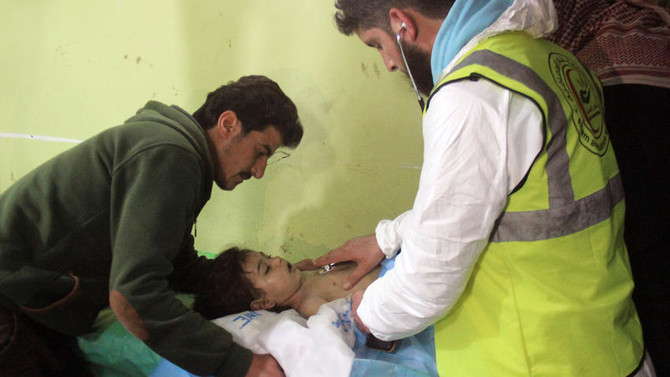
The suspected attack in April in the rebel held town of Khan Sheikhun killed at least 87 people, including many children, and images of the dead and of suffering victims provoked global outrage. The US State Department said it amounted to a war crime.
State Department officials who would normally be involved in a big announcement such as Monday’s warning to Syria said they were caught by surprise, the Los Angeles Times reported.
British Foreign Minister Michael Fallon told the BBC Tuesday morning he would support US military action in case of a Syria chemical attack.
“As always in war, the military action you use must be justified, it must be legal, it must proportionate, it must be necessary. In the last case it was,” Fallon said.
“If the Americans take similar action again, I want to be very clear — we will support it.”
In early reaction from Moscow, Franz Klintsevich, deputy chairman of the defense commission of the upper house of the Russian parliament, said the US warning heralded a new attack on Syrian forces under the pretext of the alleged preparations for a chemical attack.
“This is clear. A cynical and unprecedented provocation is under way,” he said in Moscow.
Assad, backed by Russia, has strongly denied the allegation that his forces used chemical weapons against the town in April, describing it as a “100 percent fabrication.”
He has said repeatedly that his forces turned over all chemical weapons stockpiles in 2013, under a deal brokered by Russia to avoid threatened US military action.
The agreement was later enshrined in a United Nations Security Council resolution.
But US Defense Secretary Jim Mattis previously warned that there was “no doubt” that Syria had in fact retained some chemical weapons. An Israeli military assessment also found that Assad’s regime was still in possession of “a few tons” of chemical weapons.
“As we have previously stated, the United States is in Syria to eliminate the Islamic State of Iraq and Syria,” Spicer added in his statement Monday, referring to Daesh using a different name.
Syria's war began in March 2011 with anti-government protests that spiraled into a complex and devastating conflict that has killed more than 320,000 people.
Russia is flying a bombing campaign in Syria in support of Assad, while the US is heading a coalition mainly targeting Daesh.
Neither Washington nor Moscow have managed to find a solution to the conflict.
Rebels are now on the back foot after regime advances with support from allies Russia and Iran.
The US-led coalition and allied fighters are battling to oust Daesh group from its Syrian bastion Raqa. The coalition is also backing a major assault on the last Daesh-held pockets of Mosul in neighboring Iraq.