SAN FRANCISCO: Facebook said it would not disclose information about political campaign advertising or related data such as how many users click on ads and if advertising messages are consistent across demographics, despite arguments from political scientists who want the data for research.
Details such as the frequency of ads, how much money was spent on them, where they were seen, what the messages were and how many people were reached would remain confidential under the company’s corporate policy, which is the same for political advertising as for commercial customers.
“Advertisers consider their ad creatives and their ad targeting strategy to be competitively sensitive and confidential,” Rob Sherman, Facebook’s deputy chief privacy officer, said in an interview on Wednesday, when asked about political ads.
“In many cases, they’ll ask us, as a condition of running ads on Facebook, not to disclose those details about how they’re running campaigns on our service,” he said. “From our perspective, it’s confidential information of these advertisers.”
Sherman said it would not make an exception for political advertising. “We try to have consistent policies across the board, so that we’re imposing similar requirements on everybody.”
Academics who study political campaigns worldwide said this kind of information fosters accountability by analyzing how candidates compete for votes and whether election systems live up to expectations of fairness. Transparency can also deter fraudulent ads, they said.
“We don’t have the capacity right now to track it, and nobody does, as far as we can tell,” said Bowdoin College Prof. Michael Franz, a co-director of the Wesleyan Media Project, which catalogs political ads on traditional television but has no means of doing so on Facebook.
Television has been the backbone of political advertising for decades, and local US broadcasters are required to disclose a wealth of details about the cost and schedules of ads. The ads can be seen by anyone with a television provided they are aired in their markets.
Online advertising, though, often targets narrow, more carefully constructed audiences, so for example an ad could be directed only to Democrats under 25 years of age.
Thousands of variations of online ads can be directed at select groups and the targeting can be extreme. Academics argue this is where the process can become very opaque.
“Candidates can speak out of both sides of their mouths,” said Daniel Kreiss, a communications professor at the University of North Carolina at Chapel Hill. “Having some kind of digital repository of ads that are purchased during a particular cycle and linked to a particular source is a good, democratic thing for the public.”
No such repository exists, and the quandary for researchers is expected to worsen as more politicians use digital advertising because of its relatively low cost and opportunities for target marketing.
According to US President Donald Trump’s campaign, $70 million was spent for its ads on Facebook, more than on any other digital platform including Google, and Trump has credited Facebook with helping him defeat Democrat Hillary Clinton last November.
Advertising on Facebook also figured prominently in recent elections in the Netherlands and the United Kingdom, researchers said.
Britain is investigating how candidates use data to target voters.
Facebook ads generally disappear with the scroll of a thumb on a smartphone, and they have no permanent links. Advocates for transparency call them “dark ads.” Facebook calls them “unpublished posts.”
Researchers said that disclosure reports from the US Federal Election Commission are unhelpful because they show what campaigns pay to intermediaries, not to Internet platforms.
The role of advertising online is as important to study as the effect of so-called “fake news,” which has received more attention than ads, scholars said.
“The holy grail, I think, of political analysis for the 2016 election is to figure out which communications from which entities had an effect on which jurisdictions in the United States,” said Nathan Persily, a Stanford University professor who writes about elections.
Facebook has such information and should make it available for study, Persily said.
Facebook’s Sherman said the company was open to hearing research proposals, but he doubted much could be achieved.
“Even if we were able to be more transparent in this area, it would only be a very small piece of an overall story,” he said.


![]()
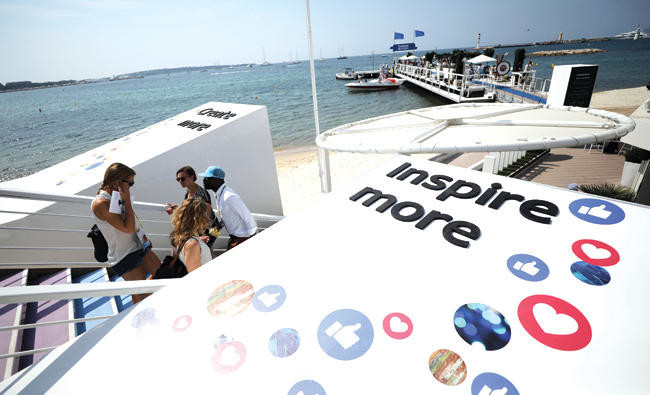
Facebook to keep wraps on political ads data despite researchers’ demands
Facebook to keep wraps on political ads data despite researchers’ demands
Latest updates


© 2026 SAUDI RESEARCH & PUBLISHING COMPANY, All Rights Reserved And subject to Terms of Use Agreement.