JAKARTA: Indonesian and Philippine authorities have arrested several people suspected of links to militants who overran a city in the southern Philippines and two others who allegedly helped inspire a double suicide bombing in Jakarta, officials said Thursday.
Indonesian national police spokesman Martinus Sitompul said a man arrested Tuesday in the city of Yogyakarta in Central Java is suspected of helping Indonesians travel to Mindanao, where they joined Daesh who still occupy parts of Marawi more than two weeks after their initial attack.
Police only gave the man’s initials and said four of those he helped are among seven Indonesians currently sought by Philippine authorities.
In the Philippines, officials said Cayamora Maute, the father of several of the militants behind the Marawi siege, was arrested Tuesday along with four other people at a checkpoint in southern Davao city. Maute was flown Thursday to a maximum-security detention center in metropolitan Manila, the military said.
Former Marawi Mayor Fajad Umpar Salic was also arrested in southern Misamis Oriental province late Wednesday. Maute and Salic denied any role in the Marawi siege, military officials said.
More than 200 people — mostly militants involved in the Marawi siege, along with politicians and civilians who back the gunmen — have been ordered arrested, Philippine military chief of staff Gen. Eduardo Ano said.
The audacious attack on Marawi, and the participation of foreign fighters, has been a wakeup call for Southeast Asian governments about the potential of the southern Philippine region to become a magnet for Deash sympathizers as it loses territory it controlled in Syria and Iraq.
The Philippine military says those killed since the fighting broke out on May 23 include 20 civilians, 138 militants and 39 government troops. More than 1,560 civilians have been rescued.
West Java police spokesman Yusri Yunus said two other men were captured Wednesday in the city of Bandung on suspicion of involvement in the May 24 suicide bombings that killed three policemen and the two suicide bombers.
Police said the men, Wachidun Triyono and Muslih Afifi, and another militant arrested earlier, Muhammad Iqbal, held a meeting with the two suicide bombers on May 19 in the West Java town of Cileunyi during which they steeled their resolve to carry out the bombings.
Police also say Iqbal, who was freed from prison in 2015 after serving a sentence for involvement in a bomb-making laboratory discovered in 2010, was the bomb maker.
All those connected to the suicide bombing were members of Jemaah Anshorut Daulah, a network of Indonesian extremist groups that pledges allegiance to Abu Bakr Al-Baghdadi, according to police.
In another development, local politician has been arrested and others are wanted for supporting the militants.
Authorities said on Thursday that they had been receiving support from local politicians and residents.
“It’s a combination of names of politicians, private citizens and members of Maute, the leaders,” Eduardo Ano said on ABS-CBN television as he discussed a list of about 200 people wanted for helping the gunmen.


Indonesia, Philippines make arrests linked to city siege

Indonesia, Philippines make arrests linked to city siege
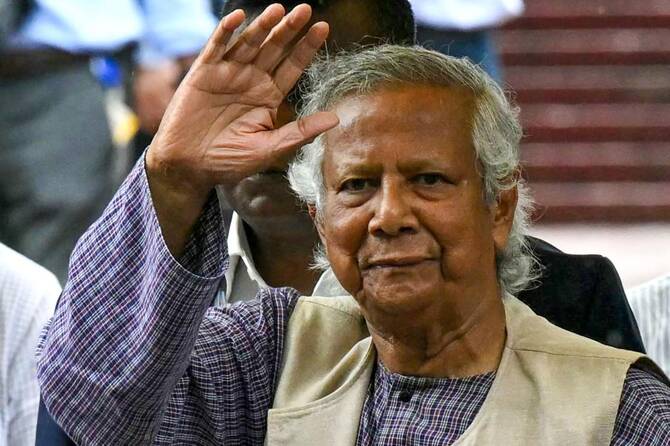
Bangladesh’s Yunus announces resignation, end of interim govt
- Yunus handed over power after congratulating the Bangladesh Nationalist Party and its leader Tarique Rahman
DHAKA: Bangladesh’s interim leader Muhammad Yunus stepped down on Monday in a farewell broadcast to the nation before handing over to an elected government.
“Today, the interim government is stepping down,” the 85-year-old Nobel Peace Prize winner said.
“But let the practice of democracy, freedom of speech, and fundamental rights that has begun not be halted.”
Yunus returned from self-imposed exile in August 2024, days after the iron-fisted government of Sheikh Hasina was overthrown by a student-led uprising and she fled by helicopter to India.
“That was the day of great liberation,” he said. “What a day of joy it was! Bangladeshis across the world shed tears of happiness. The youth of our country freed it from the grip of a demon.”
He has led Bangladesh as its “chief adviser” since, and now hands over power after congratulating the Bangladesh Nationalist Party (BNP) and its leader Tarique Rahman on a “landslide victory” in elections last week.
“The people, voters, political parties, and stakeholder institutions linked to the election have set a commendable example,” Yunus said.
“This election has set a benchmark for future elections.”
Rahman, 60, chief of the BNP and scion of one of the country’s most powerful political dynasties, will lead the South Asian nation of 170 million.
Rebuilt institutions’
Bangladeshi voters endorsed sweeping democratic reforms in a national referendum, a key pillar of Yunus’s post-uprising transition agenda, on the same day as the elections.
The lengthy document, known as the “July Charter” after the month when the uprising that toppled Hasina began, proposes term limits for prime ministers, the creation of an upper house of parliament, stronger presidential powers and greater judicial independence.
“We did not start from zero — we started from a deficit,” he said.
“Sweeping away the ruins, we rebuilt institutions and set the course for reforms.”
The referendum noted that approval would make the charter “binding on the parties that win” the election, obliging them to endorse it.
However, several parties raised questions before the vote, and the reforms will still require ratification by the new parliament.
The BNP alliance won 212 seats, compared with 77 for the Jamaat-e-Islami-led alliance, according to the Election Commission.
Jamaat chief Shafiqur Rahman conceded on Saturday, saying his Islamist party would “serve as a vigilant, principled, and peaceful opposition.”
Newly elected lawmakers are expected to be sworn in on Tuesday, after which Tarique Rahman is set to become Bangladesh’s next prime minister.
Police records show that political clashes during the campaign period killed five people and injured more than 600.
However, despite weeks of turbulence ahead of the polls, voting day passed without major unrest and the country has responded to the results with relative calm.