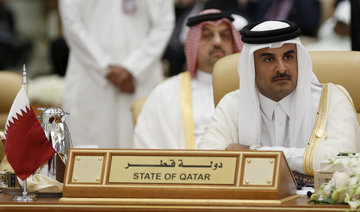
ABU DHABI: The United Arab Emirates said on Tuesday that Qatar would need to provide a “guaranteed roadmap” before it would consider mending ties.
Along with neighboring Saudi Arabia and its closest allies, the UAE severed relations with Qatar on Monday, suspending all flights and giving Qataris 14 days to leave in the biggest diplomatic crisis to hit the region in years.
“We need a guaranteed roadmap to rebuild confidence after our covenants were broken,” UAE state minister for foreign affairs Anwar Gargash said on Twitter.
Gargash accused Doha of turning to “money and media and partisanship and extremism” in a series of tweets early Tuesday.
Qatar has denied the allegations.
Bahrain, Egypt, Yemen and the Maldives were also among the governments that severed ties.
A longtime ally of the United States, Qatar has been viewed with lingering suspicion by Washington and its Gulf neighbors over its close relations with Palestinian Islamist group Hamas and the Muslim Brotherhood.
It hosts the largest US airbase in the region, which is crucial in the fight against Daesh group jihadists.
It is also set to host the 2022 football World Cup.
The rift among Washington’s Gulf allies comes less than a month after US President Donald Trump visited Saudi Arabia and called for a united Muslim front against extremism.
It follows weeks of rising tensions between Doha and its neighbors, including Qatari accusations of a concerted media campaign against the emirate and the alleged hacking of its official news agency.

UAE demands guarantees before mending Qatar ties
Israeli settlers burn tents, vehicles in West Bank village
- Videos show masked men rampaging into the Palestinian village of Susiya near Hebron and burning vehicles and property
- Similar attacks have become common as settlers seek to control large swathes of land in the West Bank
SUSIYA, West Bank: Israeli settlers set fire to vehicles and tents in the Palestinian village of Susiya on Tuesday night, residents said, in the latest incident of settler violence against Palestinians in the Israeli-occupied West Bank.
Videos verified by Reuters showed a masked group of men, who residents said were Israeli settlers, approaching the village near the city of Hebron, and later burning vehicles and Palestinian property.
“They attack us almost every day, repeatedly, because we live near the main road...Last night they burned everywhere,” Halima Abu Eid, a Susiya resident told Reuters on Wednesday.
The Israeli military said they had dispatched soldiers to deal with reports of “deliberate burnings of Palestinian property” and had opened an investigation into the incident.
Violence by Israeli settlers against Palestinians in the West Bank has increased sharply since the beginning of the war in Gaza in October 2023, with over 800 Palestinians displaced due to settler attacks in 2026 according to United Nations data.
Attacks where masked settlers arrive at night to destroy Palestinian property or attack residents have become common, as Israeli settlers seek to control large swathes of land in the West Bank.
An Israeli official previously blamed settler violence on a “fringe minority,” although Reuters reporting has shown well-organized plans to take Palestinian land in public settler social media channels.
The United Nations has documented at least 86 instances of settler violence from February 3 to 16, leading to the displacement of 146 Palestinians and the injury of 64.
Israeli indictments of settler violence are rare. At the end of 2025, Israeli monitoring group Yesh Din said of the hundreds of cases of settler violence it had documented since October 7, 2023, only 2 percent resulted in indictments. Israel’s far-right governing coalition has enabled the rapid spread of settlements, with some ministers openly stating they want to “bury” a Palestinian state.
Most world powers deem Israel’s settlements, on land it captured in a 1967 war, illegal, and numerous UN Security Council resolutions have called on Israel to halt all settlement activity.
Israel disputes the view that its settlements are unlawful and it cites biblical and historical ties to the land.


