Saudia Airlines suspends all Qatar-bound flights

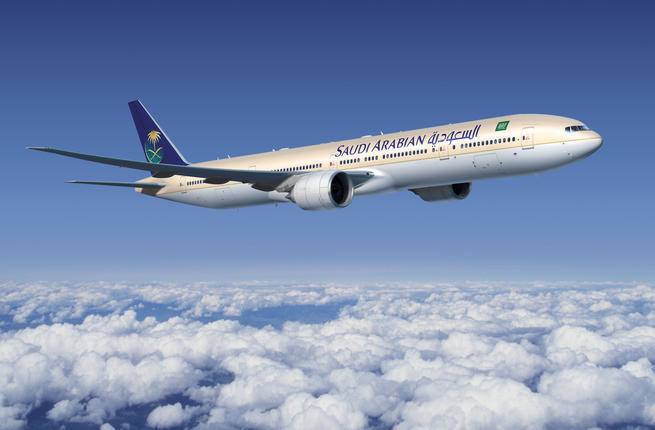
(Photo courtesy: Saudia Airlines)
Updated 05 June 2017
Follow

Saudia Airlines suspends all Qatar-bound flights

JEDDAH: Saudi Arabian Airlines, known locally as Saudia, has suspended all flights to Qatar, it said on its official Twitter account Monday.
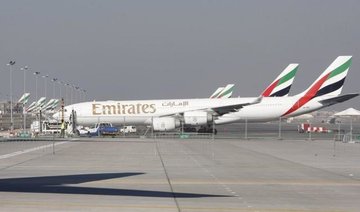
Other airlines, including Emirates, Etihad Airways and Air Arabia, have also announced similar moves, while Qatar Airways has suspended flights to Saudi Arabia.
Saudi Arabia, Egypt, the United Arab Emirates and Bahrain cut diplomatic ties with Qatar on Monday, accusing it of supporting terrorism and of being pro-Iran.
The General Authority of Civil Aviation (GACA) issued a decree prohibiting all Qatari airlines and Qatar Airways from landing at Saudi Arabian airports.
It is also preventing all private and commercial airlines registered in the Kingdom from operating in Qatar (on both direct and indirect flights).
GACA will also prevent all Qatari airlines and Qatar Airways from crossing the Kingdom of Saudi Arabia starting from June 6, 2017, at 00:01 UTC.
All airlines and non-registered aircraft in the Kingdom or Qatar wishing to cross the Kingdom from Qatar should communicate with the GACA within a week to determine the necessary procedures for continued operation in Saudi airspace.
Meanwhile, Qatar Airways said on its official website Monday that it had suspended all flights to Saudi Arabia.
“Qatar Airways has suspended all flights to the Kingdom of Saudi Arabia” until 1159 GMT the same day, a statement from the airline said.
A spokeswoman said it was unclear if the suspension would be extended.
Qatar Airways flies to nine cities in Saudi Arabia.
UAE carriers Emirates, Etihad, Fly Dubai and Air Arabia all announced earlier on Monday they would suspend flights to Doha starting from Tuesday morning.
It was not immediately clear if Qatar Airways would also suspend flights to other countries.

– With input from AFP and Reuters

Khartoum markets back to life but ‘nothing like before’

Updated 3 sec ago
Follow

Khartoum markets back to life but ‘nothing like before’

  • The hustle and bustle of buyers and sellers has returned to Khartoum’s central market, but “it’s nothing like before,” fruit vendor Hashim Mohamed told AFP, streets away from where war first broke out
KHARTOUM: The hustle and bustle of buyers and sellers has returned to Khartoum’s central market, but “it’s nothing like before,” fruit vendor Hashim Mohamed told AFP, streets away from where war first broke out nearly three years ago.
On April 15, 2023, central Khartoum awoke to battles between the Sudanese army and the paramilitary Rapid Support Forces (RSF), who had been allies since 2021, when they ousted civilians from a short-lived transitional government.
Their war has since killed tens of thousands and displaced millions.
In greater Khartoum alone, nearly four million people — around half the population — fled the city when the RSF took over.
Hashim Mohamed did not.
“I had to work discreetly, because there were regular attacks” on businesses, said the fruit seller, who has worked in the sprawling market for 50 years.
Like him, those who stayed in the city reported having lived in constant fear of assaults and robberies from militiamen roaming the streets.
Last March, army forces led an offensive through the capital, pushing paramilitary fighters out and revealing the vast looting and destruction left behind.
“The market’s not what it used to be, but it’s much better than when the RSF was here,” said market vendor Adam Haddad, resting in the shade of an awning.
In the market’s narrow, dusty alleyways, fruits and vegetables are piled high on makeshift stalls or tarps spread on the ground.
Two jobs to survive
Khartoum, where entire neighborhoods have been damaged by the fighting, is no longer threatened by the mass starvation that stalks battlefield cities and displacement camps elsewhere in Sudan.
But with the economy a shambles, a good living is still hard to provide.
“People complain about prices, they say it’s too expensive. You can find everything, but the costs keep going up: supplies, labor, transportation,” said Mohamed.
Sudan has known only triple-digit annual inflation for years. Figures for 2024 stood at 151 percent — down from a 2021 peak of 358 percent.
The currency has also collapsed, going from trading at 570 Sudanese pounds to the US dollar before the war to 3,500 in 2026, according to the black market rate.
One Sudanese teacher, who only a few years ago could provide comfortably for his two children, told AFP he could no longer pay his rent with a monthly salary of 250,000 Sudanese pounds ($71).
To feed his family, pay for school and cover health care, he “works in the market or anywhere” on his days off.
“You have to have another job to pay for the bare minimum of basic needs,” he said, asking for anonymity to protect his privacy and to avoid “problems with security services.”
Beyond Khartoum, the war still rages, with the RSF in control of much of western and southern Sudan and pushing into the central Kordofan region.
For Adam Haddad, the road to recovery will be a long one.
“We don’t have enough resources or workers or liquidity going through the market,” he said, adding that reliable electricity was still a problem.
“The government is striving to restore everything, and God willing, in the near future, the power will return and Khartoum will become what it once was.”