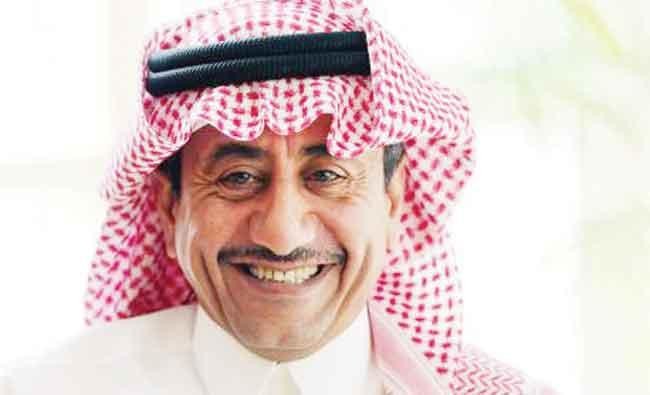
JEDDAH: Saudi cleric Saeed bin Farwah was convicted in a defamation case and sentenced to 45 days in prison for verbally assaulting a Saudi actor last Ramadan.
TV star Nasser Al-Qassabi, best known for his socially controversial TV series, sued Farwah who reportedly defamed him by accusing him of being an “infidel.”
The cleric called him “infidel” over an episode of his Ramadan series “Selfie” last year, which mocked religious men who break musical instruments.
The “Selfie” series addresses social issues in Saudi society and presents them in a comedic theme.
The case took a year in the legal system before the Court of Appeal in Assir finally endorsed the verdict issued by a court in Uhud Rufidah province.
Abdulrahman Al-Lahem, Al-Qassabi’s lawyer, said that only Al-Qassabi can pardon the defendant because the case does not involve a public right.
“The defendant has been sentenced in accordance with the Saudi law,” lawyer Majed Garoub told Arab News.
Garoub, an expert in fighting cybercrimes, said the ruling sends several messages to people. “First, it sends a message on how comprehensive the Saudi legal system is in all cases. Second, the legal system in Saudi Arabia preserves people’s rights and dignity from unlawful assault, either through words or opinions.”
He said the third message to be taken from the verdict is that everyone must know that there are clear limits between freedom of expression and verbal assault on either individuals or institutions.
“Freedom of expression is restricted by not prejudicing any party or entity,” he added.
Garoub said that the sentence confirmed many legal and religious lessons that would benefit society.
People should first have full confidence in the legal system, and, second, overcome the shame culture in litigation.
“It is very important to take legal action against all those who attack or insult individuals, society or institutions,” Garoub said.
Al-Qassabi tweeted Tuesday that there is “no immunity for anyone no matter how long their beards or short their thobe is (signs of religious men). People’s dignity is preserved by the law and nobody is usurping the role of the state.”
The Saudi actor added that today’s crisis is takfirism (intolerance for opposing thoughts) and “from now on, there won’t be defamation without punishment.”
Al-Qassabi received harsh criticism from conservatives this year as well, where he starred in an episode discussing thorny issues in Saudi society.

Prominent Saudi actor wins defamation case against cleric
Saudi Film Festival to return in April with focus on Korean cinema
- Ahmed Al-Mulla, founder and director of the Saudi Film Festival, said in a statement: “We’re excited to welcome filmmakers to our annual gathering. Our doors are open to all creators, and filmmakers remain at the heart of everything we do
DHAHRAN: The Saudi Film Festival, organized by the Cinema Association in partnership with the King Abdulaziz Center for World Culture and supported by the Saudi Film Commission, has announced that it will launch at Ithra in Dhahran between April 23-29.
This year’s festival explores the theme of “Cinema of the Journey,” presenting a selection of Arab and international films, both short and feature-length, that center on journeys and movement as essential storytelling elements.
The program includes road movies, travel narratives and films where physical or emotional journeys drive the narrative.
The theme encourages Saudi filmmakers to explore this subject through their own perspectives. It positions cinema itself as an act of continuous transition, where identity, place, and time converge to shape the human experience.
FASTFACTS
• This year’s Saudi Film Festival will explore the theme of ‘Cinema of the Journey,’ presenting a selection of Arab and international films that center on journeys and movement as essential storytelling elements.
• The program includes road movies, travel narratives and films where physical or emotional journeys drive the narrative.
Following last year’s focus on Japanese cinema, the festival will present a special “Spotlight on Korean Cinema” this year.
Ahmed Al-Mulla, founder and director of the Saudi Film Festival, said in a statement: “We’re excited to welcome filmmakers to our annual gathering. Our doors are open to all creators, and filmmakers remain at the heart of everything we do. This year’s festival creates an atmosphere filled with inspiration, idea exchange, and shared learning. It’s a celebration of cinematic creativity for everyone.”
Tariq Al-Khawaji, deputy director of the festival, added: “At Ithra, we’re proud of our longstanding partnership with the Cinema Association. It has enabled the festival’s growth and thematic diversity year after year, which we see clearly in how we empower filmmakers and create opportunities to engage with global cinema.
“The festival continues to grow across all areas, from preparations and participation to industry expectations locally and regionally. That makes attention to every detail essential.”
Since its launch in 2008, the Saudi Film Festival has played a central role in nurturing local and Gulf cinema. After intermittent early editions, it has now established itself as an annual platform for narrative and documentary competitions, industry programs and project markets.
By bringing together emerging and established filmmakers in Dhahran each year, the festival strengthens Saudi Arabia’s growing presence on the global film stage.