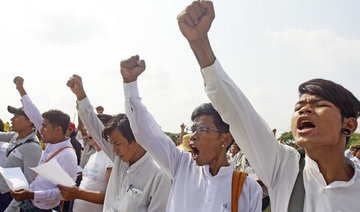
YANGON: Hundreds of monks and supporters of Myanmar’s ultra-nationalist Ma Ba Tha movement gathered in a Yangon monastery Saturday, in a defiant meeting days after Buddhist authorities banned their network, which has been accused of stoking Islamophobia.
The monk-led movement grew in strength under the country’s previous military-backed government, peddling a brand of Buddhist nationalism that aggravated religious unrest mainly targeted at minority Muslims.
But after months of distancing itself from the radical group, Myanmar’s top Buddhist clergy on Tuesday ordered the Ma Ba Tha to cease all activities by mid-July or face prosecution.
The threat did not deter hundreds of maroon-robed monks, nuns and followers from attending a weekend summit at a Yangon monastery decorated with Ma Ba Tha banners.
“Our journey is not at the end... We need to keep calm and think about how we can move forward,” leader Tilawka Biwuntha told a crowd that spilled outside of the vast temple hall.
“If you write Ma Ba Tha, you can erase the words. But no one can erase Ma Ba Tha from your heart,” the monk added, during the opening ceremony of the two-day gathering.
The shut-down order was the latest blow to a movement that flourished under the former quasi-civilian government but has faced mounting pressure ever since Aung Suu Kyi’s civilian administration took over in March 2016.
Earlier this year the ruling clergy, a body known as Sangha Maha Nayaka Committee, banned Ma Ba Tha’s most notorious monk Wirathu from preaching for a year.
The firebrand monk, who attended Saturday’s gathering, is known for scathing sermons and Facebook posts that helped foment the idea that Buddhism in Myanmar is threatened by Islam — despite Muslims making up only around 5 percent of the population.
In recent months Buddhist hard-liners have shut down religious events across the country and forced two Yangon schools accused of illegally doubling up as mosques to close their doors.
Police arrested several nationalists this month after a fight broke out in a Muslim neighborhood of Yangon when dozens of people raided a house believed to be hiding Rohingyas — a Muslim minority maligned by many Buddhists.


![]()

Myanmar’s hard-line monks gather despite ban
Myanmar’s hard-line monks gather despite ban


Latest updates


© 2026 SAUDI RESEARCH & PUBLISHING COMPANY, All Rights Reserved And subject to Terms of Use Agreement.