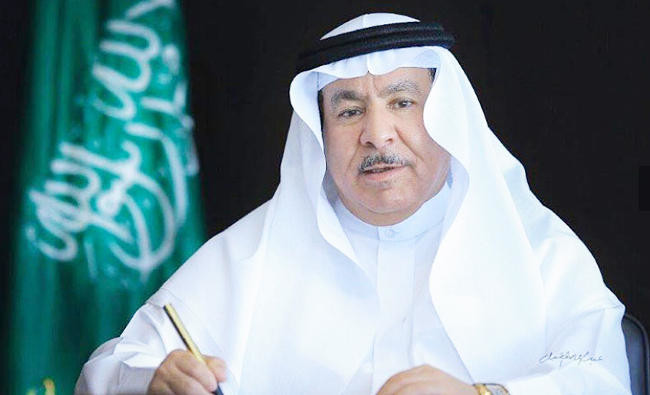
KAICIID stresses importance of religious institutions’ cooperation with political decision-makers for peace

KAICIID Secretary-General Faisal bin Muaammar
Updated 27 May 2017
Follow

KAICIID stresses importance of religious institutions’ cooperation with political decision-makers for peace

BERLIN: It is important to deepen cooperation among all groups of societies, religious organizations and political decision makers around the world in order to find sustainable solutions to violence, Faisal bin Muaammar, secretary-general of the King Abdullah bin Abdulaziz International Center for Interreligious and Interculture Dialouge (KAICIID), said at the Religious Responsibility for Peace conference held in Berlin on May 22 and 23.
“Comprehensive solutions are more likely to be sustainable when they take into account religious and moral values, traditions, ethics, customs and community traditions in all their forms,” he said.
“We can empower religious leaders to help decision makers combat extremism, religious violence and terrorism.”
The secretary-general said it became evident through dialogue, meetings and research studies that among the causes of extremism is the wide gap between individuals and religious institutions and political decision makers, resulting in ideological extremism in communities that separate religion and politics.
More than 100 institutions specializing in dialogue, religious figures and top officials from around the world representing 53 countries attended the conference.
Faisal bin Muaammar spoke about the organization’s work in the field of religious dialogue as well as its peace programs with religious leaders and political decision makers.
He said 80 percent of the world’s population has religious orientations, and thus focusing on shared visions, understanding and communication will have an impact on dialogue and interaction.
He invited religious leaders to instil a culture of dialogue and coexistence between followers of different religions and cultures so as to support international cohesion.
He said the organization is planning to hold a high-level conference early 2018 with the aim of launching the first network of religious followers and cultures in the Arab world and enhance human participation based on respect for diversity and cohesion.
He discussed religious responsibility in promoting peace around the world through religious institutions, and by working on combating extremism, violence, and abuse of religious teachings to promote sectarianism and violence.
The King Abdullah Center for National Dialogue between Followers of Religions and Culture is headquartered in Vienna, and works globally on building bridges of cooperation and understanding between religious institutions and individuals and political decision makers.
The center, through the founding countries and its board, has successfully launched programs aimed at promoting participations of religions and cultures in peace building.


Jeddah and Taif earn World Region of Gastronomy 2027 title

Updated 6 sec ago
Follow

Jeddah and Taif earn World Region of Gastronomy 2027 title

  • Recognition opens new avenues for international collaboration in food culture, research and tourism, says culinary commission CEO

RIYADH: Jeddah and Taif have been awarded the World Region of Gastronomy 2027 title according to the criteria set by the International Institute of Gastronomy, Culture, Arts and Tourism.

A recent report issued by the institute highlighted efforts to “preserve culinary heritage, support local biodiversity, empower youth and entrepreneurs in the food sector, and promote sustainable environmental practices.”

Mayada Badr, CEO of Culinary Arts Commission, said: “The award also reflects the ongoing legacy of excellence initiated by the Asir region, which held the same title in 2024.”

The two Saudi cities received the prestigious title following a comprehensive field visit by an international jury of IGCAT experts, who met key local stakeholders and assessed the region’s commitment to holistic sustainable development standards linking gastronomy, culture, responsible tourism, and economic and social development.

The commission led a broad national coalition to achieve the milestone, with participation from strategic partners including King Abdulaziz University, Dar Al-Hekma University, Jeddah Development Authority, Al-Balad Development Co., Azka Foods, Queen Taste, Aysh Academy, the Tour Guides Cooperative and the Abdullah Al-Thagafi Cultural Center.

“These efforts converged to support education, innovation and skills development, strengthen cultural identity and link gastronomy with responsible tourism,” she said.

By receiving the title, Jeddah and Taif join an exclusive global network of leading World Regions of Gastronomy, opening new opportunities for international collaboration in food research and development, cultural exchange and attracting responsible tourism that values authentic heritage.

The recognition will also serve as a catalyst for developing long-term plans that place culinary arts at the heart of the creative economy, contribute to income diversification and promote intercultural dialogue.

Badr told Arab News that the designation represents a high-level international acknowledgment of the richness of Saudi Arabia’s culinary heritage and its commitment to holistic sustainable development across economic, social, cultural and environmental sectors.

The achievement is part of a continuous journey building on the success of the Asir region in 2024, reflecting a national strategic vision to strengthen Saudi Arabia’s presence on the global gastronomy map and highlighting the role of cuisine as a bridge for preserving identity and empowering communities, Badr said.

She also highlighted that the international jury observed firsthand the efforts to support food and biodiversity, protect heritage, and empower youth to contribute to innovations advancing the creative economy and sustainable tourism development.

“Through this inclusion in the global platform, Jeddah and Taif will collaborate with their counterparts worldwide to promote sustainable food practices, support local food systems, advance food research and education, and establish gastronomy as an effective means of cultural exchange,” she added.

The title will act as a strong catalyst for developing long-term plans that position culinary arts as a core pillar for preserving intangible cultural heritage, diversifying economic sources, and promoting dialogue and understanding among cultures and peoples, Badr said.