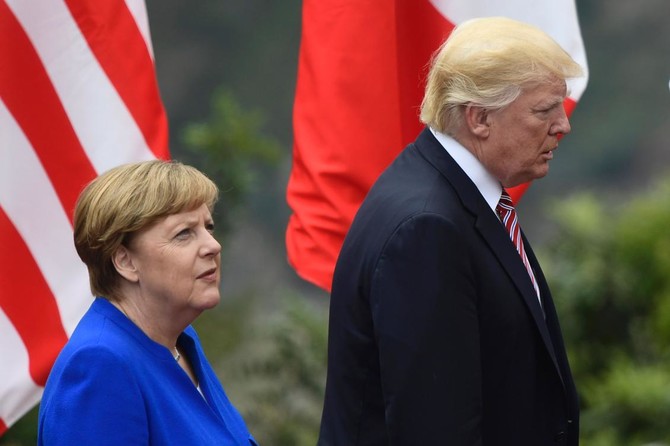
TAORMINA, Italy: US President Donald Trump has launched a salvo against German car exports to the US, officials confirmed Friday, in the latest sign of simmering transatlantic trade tensions.
Speaking after German media reported the US president as having described the Germans as “bad, very bad,” European Commission President Jean-Claude Juncker tried to play down the latest spat to erupt since Trump came to power pursuing a protectionist agenda.
Suggesting the comment attributed to Trump had been mistranslated, Juncker confirmed that Trump had raised Germany’s large trade surplus with the US in the automobile sector during trade talks in Brussels on Thursday.
“I don’t want to comment but I have to,” said the head of the EU executive, who is in overall charge of the giant economic bloc’s trading relationship with the rest of the world.
“It is not true the president was aggressive in his approach. This a translation problem,” he said in Italy at a G-7 summit attended by Trump, German Chancellor Angela Merkel and other leaders.
“He did not say the Germans were behaving bad. He said we have a problem. It was not aggressive.”
Gary Cohn, Trump’s economic adviser, also insisted the exchanges had been amicable but that an important issue for the new administration had been put on the table.
“He said they are very bad on trade but he does not have a problem with Germany,” Cohn told reporters, saying Trump had highlighted his father’s German heritage.
“He (Trump) said: ‘I do not have a problem with Germany, I have a problem with German trade,’” Cohn insisted.
According to the German media reports Trump had complained bitterly about the likes of Volkswagen, BMW and Mercedes selling millions of vehicles to the US and vowed to stop it.
Whatever the exact truth, the issue did not prevent Trump and Merkel enjoying a light-hearted moment together at the start of the G-7 summit, when they were seen laughing in the company of Britain’s Theresa May and EU President Donald Tusk.
Juncker aides were accused last month of feeding details of a dinner meeting he had with May about Britain leaving the EU. That leak also went to German media and prompted Tusk to warn a lack of privacy would make the Brexit talks impossible. He issued a similar warning on Friday.
“I do not want to be part of this new political culture of permanent leaks,” Tusk said.
“Today’s diplomacy needs professional plumbers rather than indiscreet diplomats.”
The issue of German cars blew up against a backdrop of concern among US partners in the G-7 club that Trump’s ‘America First’ agenda could lead to protectionist measures which could roll back decades of trade liberalization between the world’s most advanced economies.
During his election campaign, Trump accused China, Germany and other countries running trade surpluses with the US of destroying the jobs and prosperity of ordinary Americans with the help of manipulated currencies.
Since his election, he has yet to implement any significant protectionist measures and the EU has interpreted a liberalizing deal struck between Washington and China as a sign that flexibility and pragmatism are more likely to guide US trade policy.


![]()
Car wars: Trump-Germany salvo raises EU-US trade fears
Car wars: Trump-Germany salvo raises EU-US trade fears
Latest updates


© 2026 SAUDI RESEARCH & PUBLISHING COMPANY, All Rights Reserved And subject to Terms of Use Agreement.