BERLIN : Iran must stop supporting armed groups in Syria and Iraq that contribute to the destabilization of the Middle East if it wants good relations with the West, German Foreign Minister Sigmar Gabriel said on Monday.
“In many conflicts in the region Iran plays a difficult role, especially in Iraq and Syria,” Gabriel told a news conference with French Foreign Minister Jean-Yves Le Drian.
“The message must be that we are ready to work with the new government but we expect Iran to behave responsibly in the region, to support not terror but the politics of peace,” Gabriel said, referring to the re-election of reformist President Hassan Rouhani.
“When that happens then confidence in the place as an investment location will return.”
Le Drian urged Iran to vigorously implement a 2015 nuclear agreement with six powers that resulted in a lifting of most sanctions in return for curbs on Tehran’s nuclear program.


Germany urges Iran to stop supporting militants in Syria and Iraq
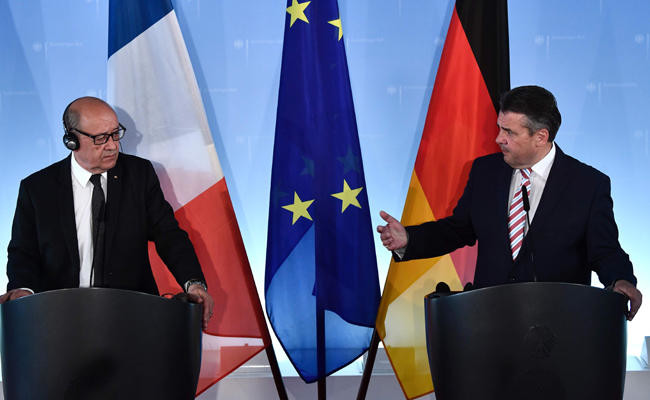
Germany urges Iran to stop supporting militants in Syria and Iraq


Iran’s foreign ministry: ‘Time has come to defend the homeland’ after US-Israeli strikes
DUBAI: Iran’s Foreign Ministry responded to a joint US-Israel attack on Saturday by saying that the country “will not hesitate” in its response to the strikes.
In a statement posted on X, the ministry said: “The time has come to defend the homeland and confront the enemy’s military assault.”
Iran said it will “respond decisively” after Israel and the United States launched strikes on the country despite talks underway on Tehran’s nuclear program.
“The Armed Forces of the Islamic Republic of Iran will respond decisively to the aggressors,” a foreign ministry said in a statement, insisting Iran had done “everything necessary to prevent war.”
“Just as we were ready for negotiations, we are now more prepared than ever to defend the Iranian nation,” it said.
The US and Israel launched a major attack on targets across Iran on Saturday, and US President Donald Trump called on the Iranian people to “take over your government” — an extraordinary appeal that suggested the allies could be seeking to end of the country’s theocracy after decades of tensions.
The first strikes of the attack appeared to target the compound home to Iran’s 86-year-old Supreme Leader Ayatollah Ali Khamenei in downtown Tehran. It wasn’t immediately clear if he was there at the time. Smoke could be seen rising from the Iranian capital.
“For 47 years, the Iranian regime has chanted Death to America and waged an unending campaign of bloodshed and mass murder, targeting the United States, our troops and the innocent people in many, many countries,” Trump said in a video posted on social media that sought to justify the attacks.
He urged Iranians to take cover during the strikes, but then: “When we are finished, take over your government. It will be yours to take.”


