LEAVENWORTH, Kansas: Chelsea Manning walked out of a US military prison on Wednesday, seven years after being arrested for passing secrets to WikiLeaks in the largest breach of classified information in US history.
Manning, 29, was released from the US Disciplinary Barracks at Fort Leavenworth, Kansas, at about 2 a.m., according to a brief statement released by the US Army.
The former military intelligence analyst, once known as Private First Class Bradley Manning, is likely to become a transgender advocate following her release, said Chase Strangio, an American Civil Liberties Union lawyer who has represented her.
Manning was convicted of providing more than 700,000 documents, videos, diplomatic cables and battlefield accounts to WikiLeaks, an international organization that publishes such information from anonymous sources.
WikiLeaks founder Julian Assange, a target of criminal investigations in Sweden and the US, has promised to accept extradition if Manning was freed. US Attorney General Jeff Sessions has said Assange’s arrest was a priority.
Manning said in 2014 that she chose to disclose the classified information to expose truths about the civil war in Iraq “out of a love for my country.”
Before he left office, president Barack Obama commuted the final 28 years of Manning’s 35-year sentence. The decision angered national security experts who say Manning put US lives at risk, but it won praise from transgender advocates who have embraced her transition to a female gender identity.
Manning announced her gender transition while the US Army kept her in the men’s prison. Her lawyer said she twice tried to commit suicide and faced long stretches of solitary confinement as well as denial of health care.
Intelligence analyst
Last year, the US Defense Department lifted a long-standing ban against transgender men and women serving openly in the military.
Although transgender people still complain of widespread discrimination in education, employment and medical care, awareness of the issue has exploded since Manning went to jail. Transgender celebrities such as Caitlyn Jenner and Laverne Cox have become part of the mainstream.
In a statement to ABC News, Manning said she appreciated the support she had received from people all over the world.
“As I rebuild my life, I remind myself not to relive the past,” the statement said. “The past will always affect me, and I will keep that in mind while remembering that how it played out is only my starting point — not my final destination.”
WikiLeaks began revealing secrets in 2007 and then burst onto the wider public consciousness three years later with a series of releases, including material gathered by Manning during her stint as an intelligence analyst in Baghdad.
Among the material from her was a 2007 gunsight video of a US Apache helicopter firing at suspected insurgents in Iraq, killing a dozen people, including two Reuters news staffers.
More recently, WikiLeaks published Democratic National Committee e-mails in the weeks leading up to the Nov. 8 US presidential election. US intelligence agencies have concluded the e-mail accounts were hacked by Russian intelligence as part of a campaign by Moscow to influence the election.
On April 13, Central Intelligence Agency Director Mike Pompeo called WikiLeaks a “hostile intelligence service.”
Assange has been Ecuador’s London embassy since 2012 to avoid extradition to Sweden for the investigation of allegations, which he denies, that he committed rape there in 2010. He has said he fears Sweden would extradite him to the US, where there is an open criminal investigation into the activities of WikiLeaks.


Manning leaves US prison 7 years after giving secrets to WikiLeaks
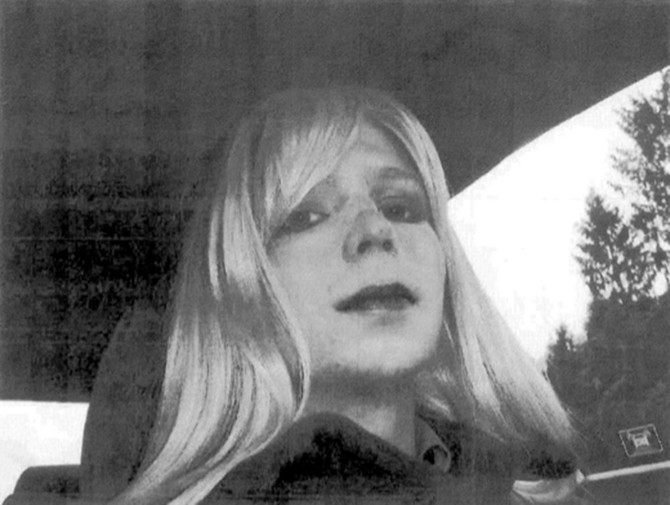
Manning leaves US prison 7 years after giving secrets to WikiLeaks

Top Australian writers’ festival canceled after Palestinian author barred
- 180 authors boycotted the event and its director resigned after a Palestinian author was disinvited
SYDNEY: One of Australia’s top writers’ festivals was canceled on Tuesday, after 180 authors boycotted the event and its director resigned saying she could not be party to silencing a Palestinian author and warned moves to ban protests and slogans after the Bondi Beach mass shooting threatened free speech.
Louise Adler, the Jewish daughter of Holocaust survivors, said on Tuesday she was quitting her role at the Adelaide Writers’ Week in February, following a decision by the festival’s board to disinvite a Palestinian-Australian author.
The novelist and academic Randa Abdel-Fattah said the move to bar her was “a blatant and shameless act of anti-Palestinian racism and censorship.”
Prime Minister Anthony Albanese on Tuesday announced a national day of mourning would be held on January 22 to remember the 15 people killed in last month’s shooting at a Jewish Hanukkah celebration on Bondi Beach.
Police say the alleged gunmen were inspired by the Islamic State militant group, and the incident sparked nationwide calls to tackle antisemitism, and prompted state and federal government moves to tighten hate speech laws.
The Adelaide Festival board said on Tuesday its decision last week to disinvite Abdel-Fattah, on the grounds it would not be culturally sensitive for her to appear at the literary event “so soon after Bondi,” was made “out of respect for a community experiencing the pain from a devastating event.”
“Instead, this decision has created more division and for that we express our sincere apologies,” the board said in a statement.
The event would not go ahead and remaining board members will step down, it added.
Former New Zealand Prime Minister Jacinda Ardern, British author Zadie Smith, Australian author Kathy Lette, Pulitzer Prize-winning American Percival Everett and former Greek finance minister Yanis Varoufakis are among the authors who said they would no longer appear at the festival in South Australia state, Australian media reported.
The festival board on Tuesday apologized to Abdel-Fattah for “how the decision was represented.”
“This is not about identity or dissent but rather a continuing rapid shift in the national discourse around the breadth of freedom of expression in our nation following Australia’s worst terror attack in history,” it added.
Abdel-Fattah wrote on social media that she did not accept the apology, saying she had nothing to do with the Bondi attack, “nor did any Palestinian.”
Adler earlier wrote in The Guardian that the board’s decision to disinvite Abdel-Fattah “weakens freedom of speech and is the harbinger of a less free nation, where lobbying and political pressure determine who gets to speak and who doesn’t.”
The South Australian state government has appointed a new festival board.


