DOHA: Millions of refugees have fled their countries and homes to escape oppression, persecution and natural disasters in search of a better life, Qatari Emir Sheikh Tamim bin Hamad Al-Thani said at the opening of the 17th Doha Forum.
Attendants of the forum, under the theme “Development, Stability and Refugee Crisis,” included Sudanese President Omar Al-Bashir, Mali President Ibrahim Boubacar Keita, Lebanese Prime Minister Saad Al-Hariri and Somali Prime Minister Hassan Ali Khayre.
An increase in conflicts has led to the displacement of millions worldwide, which means millions of stories of suffering that cannot be measured quantitatively, said the emir.
This increases the international community’s responsibility to find just, sustainable solutions to these conflicts, he added.
“I note here with great regret the displacement of Iraqi Christians, not only because of the suffering and tragedies that followed the displacement… but also because it altered the pluralistic nature of the ancient Arab societies and their cultural richness,” he said.
He also cited the displacement of the Palestinian people in 1948, and that of about half the Syrian population within and beyond Syria’s borders.
“People have resorted to other regions or countries to protect their children from indiscriminate bombing, collective punishment, the brutality of forces and allied militias, and the repressive behavior of extremist movements that have imposed themselves on the just Syrian people’s revolution,” Al-Thani said.
He called for “a political solution that achieves justice for the Syrian people, who have experienced the worst because they dared to aspire to freedom and justice… The Syrian regime has displaced its people and changed its demographic structure instead of changing itself.”
Continued on Page 2
Qatar continues to maximize its efforts to provide all forms of support to refugees, said the emir.
“Development and stability are interdependent and intertwined; there is no development without stability, and no stability without development,” he added.
He called for greater international cooperation to resolve the flow of refugees across borders, in way that focuses on humanity rather than national identity.
He said terrorism and extremism are a global phenomenon that is not associated with a specific society, people or religion.
“The eradication of this abhorrent phenomenon requires international cooperation and a strategy… to address the circumstances and causes of terrorism,” he said.
Al-Bashir said the large number of refugees worldwide, totaling about 250 million, clearly impacts the stability and development of societies, and is one of the most important issues globally.
Sudan’s hosting of large numbers of refugees stems from his belief in the teachings of Islam and the traditions of his family, Al-Bashir said, adding that he is committed to international laws and agreements on refugees.
The nearly 2 million refugees and asylum-seekers in Sudan enjoy full rights equal to Sudanese citizens, he said.
Sudan was the first country to enact a law to regulate asylum in 1974, followed by similar laws in 2014 and 2015 to combat human trafficking, he added.
Al-Bashir called on the international community to play its humanitarian role in providing assistance to vulnerable groups and addressing the root causes of crises politically, economically and socially, saying Sudan will cooperate with all humanitarian efforts.
Keita said the international community should help refugees in host countries, while focusing on finding means to return them safely to their home countries.
“We should not remain idle,” he said. “All assistance must be provided to… refugees to protect them and ensure their security.”
He praised the commitment of countries such as Qatar and Algeria to support Mali and its efforts to promote peace.
Al-Hariri said: “The most important thing the Arab region needs today is stability, security and development.”
He stressed the need for cooperation against extremism and terrorism, saying they “have become globalized.” Arab states face both common and country-specific challenges, he added.
Al-Hariri highlighted the importance of creating employment opportunities for youths by stimulating economic growth in full partnership between the public and private sectors.
“The Lebanese government is prioritizing the implementation of” such a partnership, he said. “We have launched a series of reforms to promote the economy across all sectors.”
But he noted the difficulties in spurring economic growth given the presence of 1.5 million Syrian and half a million Palestinian refugees, equal to almost half the number of Lebanese citizens in the country.
Lebanon is carrying out its duties and commitments to the Syrian humanitarian crisis, but cannot continue to shoulder the burden alone, he said.
This burden has increased poverty and unemployment, and has “burdened public services and infrastructure, and increased the deficit of public finances at a time of economic decline,” he said.
“Our Arab brothers, who have always been on the side of Lebanon in good times and bad, will be at the forefront of supporters among the international community to contribute to ensuring the stability of our country and its ability to withstand the hurricanes that plague the region,” said Al-Hariri.


Qatar emir urges political solution to refugee problem
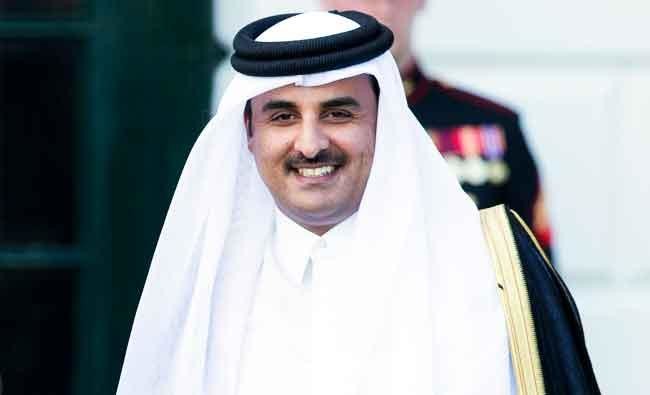
Qatar emir urges political solution to refugee problem


Battered by Gaza war, Israel’s tech sector in recovery mode
- “High-tech companies had to overcome massive staffing cuts, because 15 to 20 percent of employees, and sometimes more, were called up” to the front as reservists, IIA director Dror Bin told
JERUSALEM: Israel’s vital tech sector, dragged down by the war in Gaza, is showing early signs of recovery, buoyed by a surge in defense innovation and fresh investment momentum.
Cutting-edge technologies represent 17 percent of the country’s GDP, 11.5 percent of jobs and 57 percent of exports, according to the latest available data from the Israel Innovation Authority (IIA), published in September 2025.
But like the rest of the economy, the sector was not spared the knock-on effects of the war, which began in October 2023 and led to staffing shortages and skittishness from would-be backers.
Now, with a ceasefire largely holding in Gaza since October, Israel’s appeal is gradually returning, as illustrated in mid-December, when US chip giant Nvidia announced it would create a massive research and development center in the north that could host up to 10,000 employees.
“Investors are coming to Israel nonstop,” Prime Minister Benjamin Netanyahu said at the time.
After the war, the recovery can’t come soon enough.
“High-tech companies had to overcome massive staffing cuts, because 15 to 20 percent of employees, and sometimes more, were called up” to the front as reservists, IIA director Dror Bin told AFP.
To make matters worse, in late 2023 and 2024, “air traffic, a crucial element of this globalized sector, was suspended, and foreign investors froze everything while waiting to see what would happen,” he added.
The war also sparked a brain drain in Israel.
Between October 2023 and July 2024, about 8,300 employees in advanced technologies left the country for a year or more, according to an IIA report published in April 2025.
The figure represents around 2.1 percent of the sector’s workforce.
The report did not specify how many employees left Israel to work for foreign companies versus Israeli firms based abroad, or how many have since returned to Israel.
- Rise in defense startups -
In 2023, the tech sector far outpaced GDP growth, increasing by 13.7 percent compared to 1.8 percent for GDP.
But the sector’s output stagnated in 2024 and 2025, according to IIA figures.
Industry professionals now believe the industry is turning a corner.
Israeli high-tech companies raised $15.6 billion in private funding in 2025, up from $12.2 billion in 2024, according to preliminary figures published in December by Startup Nation Central (SNC), a non-profit organization that promotes Israeli innovation.
Deep tech — innovation based on major scientific or engineering advances such as artificial intelligence, biotech and quantum computing — returned in 2025 to its pre-2021 levels, according to the IIA.
The year 2021 is considered a historic peak for Israeli tech.
The past two years have also seen a surge in Israeli defense technologies, with the military engaged on several fronts from Lebanon and Syria to Iran, Yemen, Gaza and the occupied West Bank.
Between July 2024 and April 2025, the number of startups in the defense sector nearly doubled, from 160 to 312, according to SNC.
Of the more than 300 emerging companies collaborating with the research and development department of Israel’s defense ministry, “over 130 joined our operations during the war,” Director General Amir Baram said in December.
Until then, the ministry had primarily sourced from Israel’s large defense firms, said Menahem Landau, head of Caveret Ventures, a defense tech investment company.
But he said the war pushed the ministry “to accept products that were not necessarily fully finished and tested, coming from startups.”
“Defense-related technologies have replaced cybersecurity as the most in-demand high-tech sector,” the reserve lieutenant colonel explained.
“Not only in Israel but worldwide, due to the war between Russia and Ukraine and tensions with China.”


