Trump visit will reaffirm strong US-Saudi ties: US homeland security chief

1 / 7
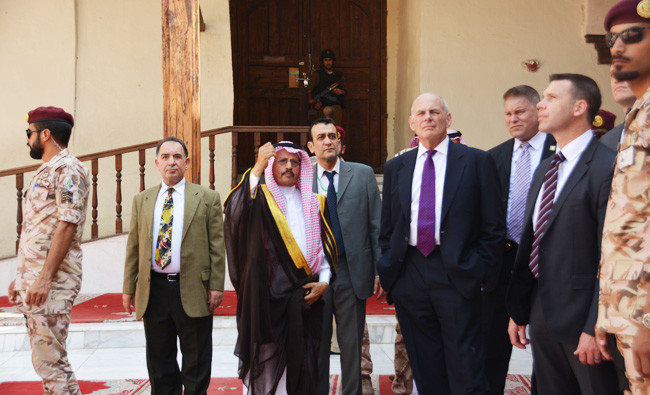
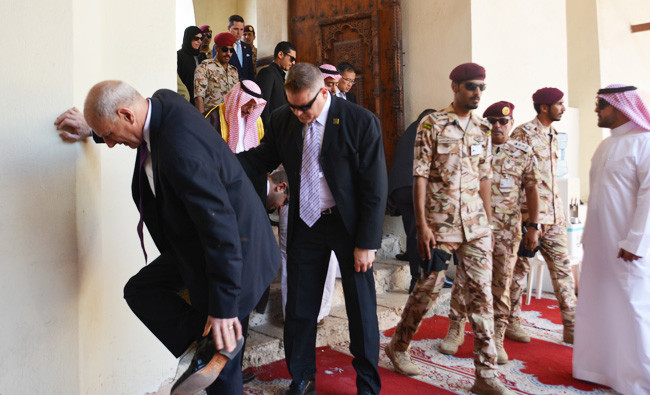
US Homeland Security Secretary John Kelly and his delegation visit Al-Shafei Mosque, Jeddah’s oldest mosque, during a tour of Jeddah’s historic Al-Balad district on May 8, 2016. (AN photo)
2 / 7
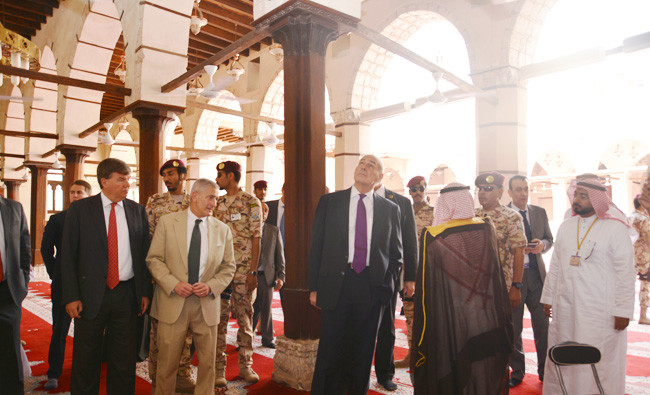
US Homeland Security Secretary John Kelly and his delegation visit Al-Shafei Mosque, Jeddah’s oldest mosque, during a tour of Jeddah’s historic Al-Balad district on May 8, 2016. (AN photo)
3 / 7
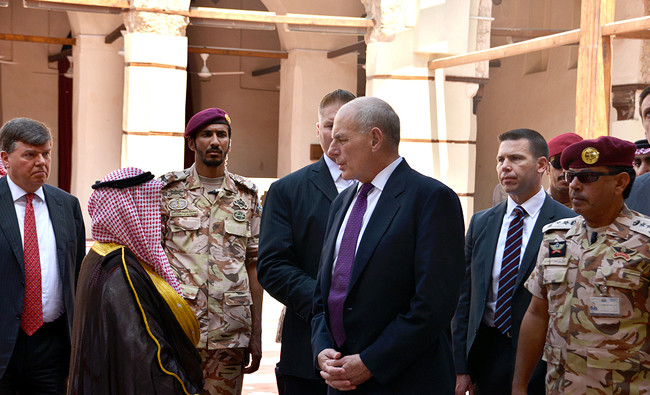
US Homeland Security Secretary John Kelly and his delegation visit Al-Shafei Mosque, Jeddah’s oldest mosque, during a tour of Jeddah’s historic Al-Balad district on May 8, 2016. (AN photo)
4 / 7
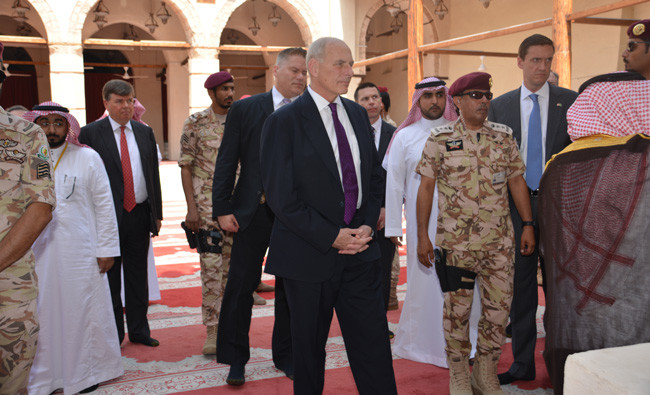
US Homeland Security Secretary John Kelly and his delegation visit Al-Shafei Mosque, Jeddah’s oldest mosque, during a tour of Jeddah’s historic Al-Balad district on May 8, 2016. (AN photo)
5 / 7
US Homeland Security Secretary John Kelly and his delegation visit Al-Shafei Mosque, Jeddah’s oldest mosque, during a tour of Jeddah’s historic Al-Balad district on May 8, 2016. (AN photo)
6 / 7
US Homeland Security Secretary John Kelly and his delegation visit Al-Shafei Mosque, Jeddah’s oldest mosque, during a tour of Jeddah’s historic Al-Balad district on May 8, 2016. (AN photo)
7 / 7
US Homeland Security Secretary John Kelly and his delegation visit Al-Shafei Mosque, Jeddah’s oldest mosque, during a tour of Jeddah’s historic Al-Balad district on May 8, 2016. (AN photo)
Updated 18 May 2017
Follow

Trump visit will reaffirm strong US-Saudi ties: US homeland security chief

JEDDAH: US Homeland Security Secretary John Kelly has described Saudi Arabia as a “critical ally in the region.”
In an exclusive statement to Arab News at the end of his visit to Jeddah on Monday, he said: “President (Donald) Trump has accepted the invitation of King Salman to visit Saudi Arabia later this month. The visit will reaffirm the strong partnership between the United States and Saudi Arabia and allow the leaders to discuss issues of strategic concern, including efforts to defeat terrorist groups and discredit radical ideologies.”
Kelly said the bilateral relationship is a key and longstanding one. “President Trump sees Saudi Arabia as a critical ally in the region, and he is coming to Saudi Arabia for his first official visit to emphasize the importance of the new administration’s goals to partner with the Kingdom in the areas of regional security and stability, counterterrorism, and other areas of common interest.”
Quoting Trump, Kelly said: “Saudi Arabia is the custodian of the two holiest sites in Islam, and it is there that we will begin to construct a new foundation of cooperation and support with our Muslim allies to combat extremism, terrorism and violence, and to embrace a more just and hopeful future for young Muslims in their countries.”
During his visit, Kelly met with Crown Prince Mohammed bin Naif and discussed bilateral relations and cooperation to confront emerging and persistent security threats.
The visit and discussions highlighted the strong ties between the US and Saudi Arabia, particularly in counterterrorism, information sharing and cybersecurity, as well as ongoing efforts to share best practices in maritime, aviation and border security.
Kelly was joined by Trump’s Homeland Security Adviser Thomas Bossert, Chargé d’Affaires Christopher Henzel and Consul General Matthias Mitman.
The delegation was taken on a tour of Jeddah’s historic Al-Balad district, and visited Al-Shafei Mosque, the city’s oldest mosque, dating back to the time of Caliph Omar 1,400 years ago.
The US officials also visited Bayt Nasseef Heritage House in Jeddah’s historic district. Sami Nawwar, chairman of the Historic Jeddah Municipality, explained the significance of the mosque and other heritage sites to the delegation.
Kelly appreciated the opportunity to see the historical significance of Jeddah as the gateway of religious pilgrims to Makkah and Madinah.


Saudi Arabia launches initiative to reroute Gulf cargo to Red Sea ports

Updated 7 sec ago
Follow

Saudi Arabia launches initiative to reroute Gulf cargo to Red Sea ports

  • The initiative comes as shipping through the Strait of Hormuz has been severely disrupted by the widening conflict in the region
  • Since the US and Israel struck Iran last month, Tehran has moved to restrict passage through the waterway


RIYADH: Saudi Arabia has launched an initiative to redirect shipping from ports in the Arabian Gulf to its Red Sea ports amid the ongoing US-Israel-Iran war.

Transport Minister Saleh Al-Jasser, who also chairs the Saudi Ports Authority (Mawani), launched the Logistics Corridors Initiative alongside Zakat, Tax and Customs Authority Governor Suhail Abanmi, Mawani President Suliman Al-Mazroua, and other officials, the Saudi Press Agency reported.

The initiative will establish dedicated operational corridors to receive containers and cargo redirected from ports in the Kingdom's Eastern Region and other Gulf Cooperation Council states to Jeddah Islamic Port and other Red Sea coast ports.

Al-Jasser said the Kingdom was committed to ensuring supply-chain stability and the smooth flow of goods through global trade routes. Jeddah Islamic Port and other west coast ports, he added, were already playing a key role in accommodating shipments redirected from the east, while also linking Gulf cargo to regional and international markets.

The initiative comes as shipping through the Strait of Hormuz has been severely disrupted by the widening conflict in the region. Iran has long threatened to close the strait — the world's most critical oil and gas chokepoint, through which roughly a fifth of global oil supplies pass — in the event of a war.

Since the US and Israel struck Iran last month, Tehran has moved to restrict passage through the waterway, sending freight rates soaring and forcing shipping companies to seek alternative routes.

Saudi Arabia's Red Sea ports offer a viable bypass, connecting Gulf cargo to global markets without passing through the strait.