BEIJING: Up to 5,000 ethnic Uighurs from China’s violence-prone far western region of Xinjiang are fighting in various militant groups in Syria, the Syrian ambassador to China said on Monday, adding that Beijing should be extremely concerned about it.
China is worried that Uighurs, a mostly Muslim people who speak a Turkic language, have gone to Syria and Iraq to fight for militants there, having traveled illegally via Southeast Asia and Turkey.
Daesh claimed responsibility for the killing of a Chinese hostage in 2015, highlighting China’s concern about Uighurs it says are fighting in the Middle East.
Hundreds of people have been killed in Xinjiang in the past few years, most in unrest between Uighurs and ethnic majority Han Chinese. The government blames the unrest on Islamist militants who want a separate state called East Turkestan.
Syria’s ambassador in Beijing, Imad Moustapha, told Reuters on the sidelines of a business forum that while some of the Uighurs were fighting with Daesh, most were fighting “under their own banner” to promote their separatist cause.
“Our estimated numbers, because of the numbers we fight against, we kill, we capture, we wound, would be around 4-5,000 Xinjiang jihadists,” he said. “China as well as every other country should be extremely concerned.”
Beijing has never given a number for how many Uighurs it believes are fighting in the Middle East, but has repeatedly warned they pose a serious threat to China. It is not possible to independently verify the number of Uighurs in Syria.
Rights groups and Uighur exiles say many Uighurs have fled to Turkey simply to escape Chinese repression at home, accusations Beijing denies.
Moustapha said China did not pick favorites with rebel groups, like Western countries, and China and Syria were cooperating to fight the threat.
“They don’t have a mixed message,” he said, referring to China.
“They understand the true nature of the ultra-Islamic jihadi doctrine of these groups. Yes, we do exchange information and a little bit more than information regarding these terrorist groups,” he said, without elaborating.
’RIGHT TIME’
Syrian President Bashar Assad, in an interview with the Hong Kong-based Phoenix Television in March, praised “crucial cooperation” between Syria and Chinese intelligence against Uighur militants. He said ties with China were “on the rise.”
Syria is trying to woo back Chinese investment, with a group of about 30 Syrian businessman meeting about 100 Chinese representatives over two days in Beijing.
Moustapha said he would be attending next week’s summit on China’s new Silk Road plan, which aims to expand links between Asia, Africa and Europe underpinned by billions of dollars in infrastructure investment.
Aboud Sarrouf, chairman of the Sarrouf Group and member of the Syria-China Business Council, said they were hoping to get Chinese investment to help repair war-damaged infrastructure.
“They are preparing and waiting for the right time. They are a little bit reluctant and hesitating,” he told Reuters, referring to Chinese companies.
“But we’re coming here to start preparing the foundation.”
Syria may have difficulty encouraging back Chinese companies.
Paul Liu, chief executive of Chinese steel products firm Sino Sources, said he wanted to hear about opportunities in Syria but was concerned about security.
“If the government thinks things are not dependable, then we’ll first plan and then execute later,” Liu said.


![]()
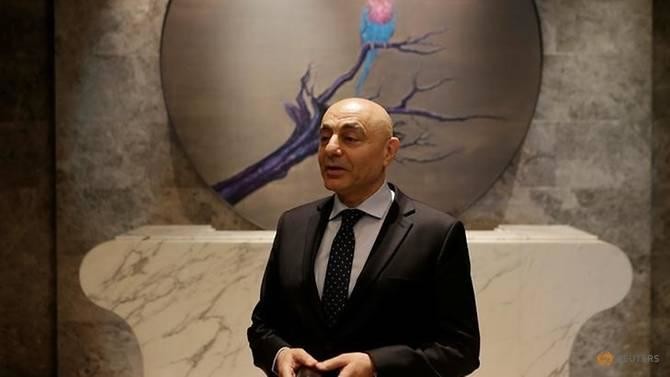
Syria says up to 5,000 Chinese Uighurs fighting in militant groups
Syria says up to 5,000 Chinese Uighurs fighting in militant groups
Latest updates


© 2026 SAUDI RESEARCH & PUBLISHING COMPANY, All Rights Reserved And subject to Terms of Use Agreement.