BAGHDAD: US combat troops will not stay on in Iraq after the fight against Daesh is over, Iraq’s prime minister said Friday — a statement that followed an Associated Press report on talks between Iraq and the US on maintaining American forces in the country.
A US official and an official from the Iraqi government told the AP this week that talks about keeping US troops in Iraq were ongoing.
In his statement, Haider Al-Abadi emphasized that there are no foreign combat troops on Iraqi soil and that any American troops who stay on once Daesh militants are defeated will be advisers working to train Iraq’s security forces to maintain “full readiness” for any “future security challenges.”
While some US forces are carrying out combat operations with Iraqi forces on and beyond front lines in the fight against Daesh, Al-Abadi has maintained that the forces are acting only as advisers, apparently to get around a required parliamentary approval for their presence.
Any forces who remained would continue to be designated as advisers for the same reason, the Iraqi government official had told the AP.
Currently, the Pentagon has close to 7,000 US troops in Iraq, many not publicly acknowledged because they are on temporary duty or under specific personnel rules. At the height of the surge of US forces in 2007, there were about 170,000 American troops in the country. The numbers were wound down eventually to 40,000, before the complete withdrawal in 2011.
Meanwhile, Iraqi forces pushed further into Mosul from the north on the second day of a new push to speed up the nearly seven-month attempt to dislodge Daesh, commanders said Friday.
Daesh tried to block the troops’ northerly advance into their de facto Iraqi capital with suicide car bombs and sniper fire, Brig. Gen. Walid Khalifa, deputy commander of the 9th brigade, told Reuters in Hulayla, west of Musherfa.
His troops had killed about 30 militants and destroyed five car bombs before they could be used against them, he said.
Brig. Gen. Yahya Rasool, a spokesman for the joint operations command, told Reuters the militants “didn’t have time to make barriers, the advance since yesterday has been good.”
An army statement said the Second Musherfa district as well as the Church and Mikhail’s Monastery area had been retaken.
The US-backed Iraqi forces’ new foothold aims to open escape routes for the hundreds of thousands of civilians trapped behind Daesh lines and, in turn, help troops’ progress.
Rasool said Iraqi forces rescued 1,000 families on Thursday.
Footage taken by a drone operated by the Iraqi 9th Armored Division over the northwestern suburb of Musherfa and seen by Reuters, showed the militants had scant defenses there, unlike in other parts of Mosul where streets are blocked by anti-tank barriers and vehicles.


![]()
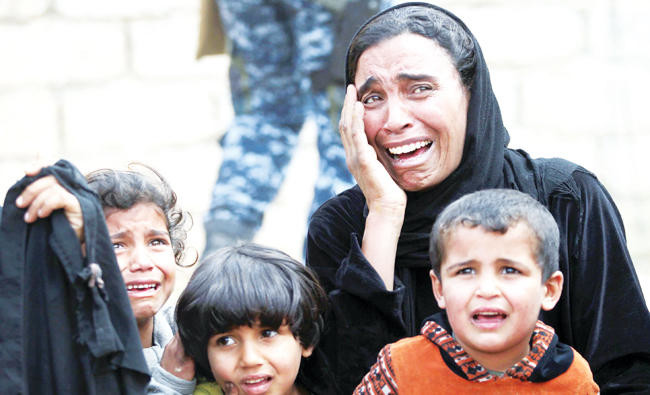
No US combat troops to stay in Iraq after anti-Daesh fight: PM
No US combat troops to stay in Iraq after anti-Daesh fight: PM

Latest updates


© 2026 SAUDI RESEARCH & PUBLISHING COMPANY, All Rights Reserved And subject to Terms of Use Agreement.