AFGHANISTAN: Daesh killed a senior Afghan Taliban official in the northwestern Pakistani city of Peshawar, the Afghan militants said on Saturday, in a rare clash between the rival Islamist groups inside Pakistan.
Afghan Taliban sources told Reuters Maulvi Daud was killed on the outskirts of Peshawar with two other men on Thursday. Taliban spokesman Zabihullah Mujahid confirmed Daud’s death.
The Daesh on Friday claimed responsibility for “assassination of a Taliban leader” a day earlier, without naming him, through the group’s affiliated news agency AMAQ.
Daesh, which at one point controlled huge chunks of territory across Syria and Iraq, has made some inroads into Afghanistan but the group has met tough resistance from the Taliban as well as US and Afghan special forces.
Afghan Taliban sources said Daud was based in Afghanistan’s Logar province but would frequently visit Pakistan.
Daesh does not control any territory inside Pakistan but the group has claimed responsibility for several large-scale bomb attacks.
Pakistani officials say Daes does not have a presence inside the country.


![]()
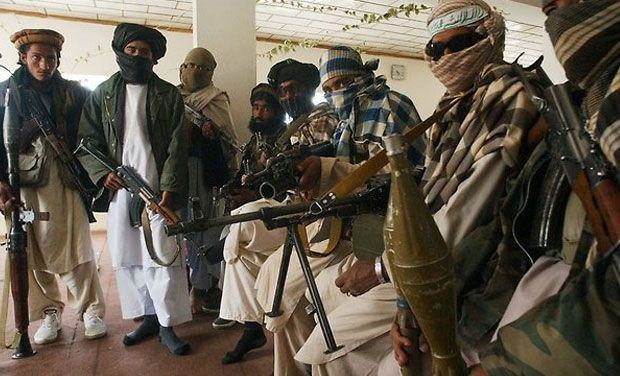

Daesh kills senior Afghan Taliban official in Pakistan — militants
Daesh kills senior Afghan Taliban official in Pakistan — militants

US NATO envoy says allies must ‘pull weight’ after Czech defense cut
PRAGUE, March 12 : The United States’ ambassador to NATO said on Thursday that all allies must “pull their weight,” after Czech lawmakers approved a 2026 budget that cuts defense outlays.
Czech Prime Minister Andrej Babis’ government, in power since December, pushed a revamped budget through the lower house on Wednesday evening which cut the defense ministry’s allocation versus a previous proposal to 154.8 billion crowns ($7.31 billion), or 1.73 percent of gross domestic product.
That is below a NATO target of 2 percent of GDP already expected before alliance members pledged last year in the Hague to raise defense spending to 3.5 percent of GDP plus 1.5 percent on other defense-relevant investments over the next decade.
The Czech Finance Ministry says total defense spending in the budget will reach 2.07 percent of GDP, but the country’s budget watchdog has warned that includes money earmarked elsewhere, like for the transport ministry for road projects, that may not be recognized by NATO.
“All Allies must pull their weight and honor The Hague Defense Commitment,” US Ambassador to NATO Matthew Whitaker said on X on Thursday with a picture of a news headline on the Czech budget approval.
“These numbers are not arbitrary. They are about meeting the moment — and the moment requires 5 percent as the standard. No excuses, no opt-outs.”
European NATO countries are under pressure to raise defense spending amid the Ukraine-Russia war and at US President Donald Trump’s urging.
Babis, whose populist ANO party won elections last year, said in February the country was “certainly not” on the path to raising core defense spending to the 3.5 percent target, saying there was a different focus, like on health care.
The budget watchdog on Thursday reiterated “strong doubts” that some spending deemed defense in this year’s budget would meet NATO’s definition.
President Petr Pavel, a former NATO official, has also said defense cuts risked a loss of trust from allies — but has signalled he would not veto the budget.
US Ambassador to Prague Nicholas Merrick said last week the Czech Republic may slip to the bottom of NATO’s defense-spending ranks.
Czech Prime Minister Andrej Babis’ government, in power since December, pushed a revamped budget through the lower house on Wednesday evening which cut the defense ministry’s allocation versus a previous proposal to 154.8 billion crowns ($7.31 billion), or 1.73 percent of gross domestic product.
That is below a NATO target of 2 percent of GDP already expected before alliance members pledged last year in the Hague to raise defense spending to 3.5 percent of GDP plus 1.5 percent on other defense-relevant investments over the next decade.
The Czech Finance Ministry says total defense spending in the budget will reach 2.07 percent of GDP, but the country’s budget watchdog has warned that includes money earmarked elsewhere, like for the transport ministry for road projects, that may not be recognized by NATO.
“All Allies must pull their weight and honor The Hague Defense Commitment,” US Ambassador to NATO Matthew Whitaker said on X on Thursday with a picture of a news headline on the Czech budget approval.
“These numbers are not arbitrary. They are about meeting the moment — and the moment requires 5 percent as the standard. No excuses, no opt-outs.”
European NATO countries are under pressure to raise defense spending amid the Ukraine-Russia war and at US President Donald Trump’s urging.
Babis, whose populist ANO party won elections last year, said in February the country was “certainly not” on the path to raising core defense spending to the 3.5 percent target, saying there was a different focus, like on health care.
The budget watchdog on Thursday reiterated “strong doubts” that some spending deemed defense in this year’s budget would meet NATO’s definition.
President Petr Pavel, a former NATO official, has also said defense cuts risked a loss of trust from allies — but has signalled he would not veto the budget.
US Ambassador to Prague Nicholas Merrick said last week the Czech Republic may slip to the bottom of NATO’s defense-spending ranks.
Latest updates


© 2026 SAUDI RESEARCH & PUBLISHING COMPANY, All Rights Reserved And subject to Terms of Use Agreement.