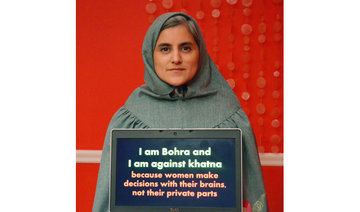
LONDON: London's mayor, Sadiq Khan, should lead a high profile campaign to end "the hidden crime" of female genital mutilation (FGM) in the capital, the city's assembly said on Tuesday.
An estimated 170,000 women and girls in Britain have undergone FGM and 65,000 pre-teen girls are thought to be at risk, the London Assembly said in a report.
Half of FGM cases recorded in the country are in London, where affected communities include Somalis, Sierra Leoneans, Eritreans and Sudanese.
The ritual, done for cultural, traditional or religious reasons, involves the partial or total removal of the external genitalia. In some cases the vaginal opening is also sewn up.
"FGM remains a hidden crime - still taking place behind closed doors, with many girls still at risk," Jennette Arnold, deputy chairwoman of the elected assembly, said in a statement.
The report said many professionals, such as police, teachers health and social workers, were not confident about how to respond to cases of FGM, which can cause serious physical and emotional problems.
It called for the mayor to help improve coordination between frontline services and highlighted the need for better training.
"We need to be bold, strong and ambitious," Arnold said. "I am more determined than ever that London becomes a 'zero cutting city'."
National efforts to eradicate FGM have gained momentum in recent years with the once taboo subject making the headlines.
Health workers and teachers are now required to report cases of FGM in under 18s.
Britain has also strengthened the law on FGM which was outlawed in 1985, although there has never been a successful prosecution.
But the London Assembly report said many believed the emphasis should be on preventing FGM and supporting those at risk rather than pursuing prosecutions.
It also called for increased efforts to engage boys and men in combating the ancient ritual which some families believe prevents promiscuity.
FGM activist Hibo Wardere said having Khan spearhead a London-wide campaign would make "a massive difference".
"Everybody should make it their business to end FGM - it doesn't matter what community you're from," added Wardere who wrote about undergoing FGM as a child in Somalia in her recently published memoir "Cut"..
The mayor did not comment on whether he would lead a campaign, but his deputy mayor for policing, Sophie Linden, said he was committed to tackling the "appalling practice".
"We need to ... ensure that people who carry out such barbaric practices are brought to justice," she said.

London mayor Khan urged to lead campaign on female genital mutilation
Nigerian villagers are rattled by US airstrikes that made their homes shake and the sky glow red
JABO: Sanusi Madabo, a 40-year-old farmer in the Nigerian village of Jabo, was preparing for bed on Thursday night when he heard a loud noise that sounded like a plane crashing. He rushed outside his mud house with his wife to see the sky glowing a bright red.
The light burned bright for hours, Madabo said: “It was almost like daytime.”
He did not learn until later that he had witnessed a USattack on an alleged camp of the militant Daesh group.
US President Donald Trump announced late Thursday that the United States had launched a “powerful and deadly strike” against Daesh militants in Nigeria. The Nigerian government has since confirmed that it cooperated with the US government in its strike.
A panicked village
Nigerian government spokesperson Mohammed Idris said Friday that the strikes were launched from the Gulf of Guinea in the Atlantic Ocean shortly after midnight and involved “16 GPS-guided precision” missiles and also MQ-9 Reaper drones.
Idris said the strikes targeted areas used as “staging grounds by foreign” Daesh fighters who had sneaked into Nigeria from the Sahel, the southern fringe of Africa’s vast Sahara Desert. The government did not release any casualty figures among the militants.
Residents of Jabo, a village in the northwestern Nigerian state of Sokoto, spoke to The Associated Press on Friday about panic and confusion among the villagers following the strikes, which they said hit not far from Jabo’s outskirts. There were no casualties among the villagers.
They said that Jabo has never been attacked as part of the violence the US says is widespread — though such attacks regularly occur in neighboring villages.
Abubakar Sani, who lives on the edge of the village, recalled the “intense heat” as the strikes hit.
“Our rooms began to shake, and then fire broke out,” he told the AP.
“The Nigerian government should take appropriate measures to protect us as citizens,” he added. “We have never experienced anything like this before.”
It’s a ‘new phase of an old conflict’
The strikes are the outcome of a months long tense diplomatic clash between the West African nation and the US
The Trump administration has said Nigeria is experiencing a genocide of Christians, a claim the Nigerian government has rejected.
However, Nigeria’s Ministry of Foreign Affairs now said the strikes resulted from intelligence sharing and strategic coordination between the two governments.
Yusuf Tuggar, Nigeria’s foreign minister, called the airstrikes a “new phase of an old conflict” and said he expected more strikes to follow.
“For us, it is something that has been ongoing,” Tuggar added, referring to attacks that have targeted Christians and Muslims in Nigeria for years.
Bulama Bukarti, a security analyst on sub-Saharan Africa, said the residents’ fear is compounded by a lack of information.
Nigerian security forces have since cordoned off the area of the strikes and access was not allowed.
Bukarti said transparency would go a long way to calm the local residents. “The more opaque the governments are, the more panic there will be on the ground, and that is what will escalate tensions.”
Foreign fighters operate in Nigeria
Analysts say the strikes might have been intended for the Lakurawa group, a relatively new entrant to Nigeria’s complex security crisis.
The group’s first attack was recorded around 2018 in the northwestern region before the Nigerian government officially announced its presence last year. The composition of the group has been documented by security researchers as primarily consisting of foreigners from the Sahel.
However, experts say ties between the Lakurawa group and Daesh are unproven. The Islamic State West African Province — a Daesh affiliate in Nigeria — has its strongholds in the northeastern part of the country, where it is currently involved in a power struggle with its parent organization, Boko Haram.
“What might have happened is that, working with the American government, Nigeria identified Lakurawa as a threat and identified camps that belong to the group,” Bukarti said.
Still, some local people feel vulnerable.
Aliyu Garba, a Jabo village leader, told the AP that debris left after the strikes was scattered, and that residents had rushed to the scene. Some picked up pieces of the debris, hoping for valuable metal to trade, and Garba said he fears they could get hurt.
The strikes rattled 17-year-old Balira Sa’idu, who has been preparing for her upcoming marriage.
“I am supposed to be thinking about my wedding, but right now I am panicking,” she said. “The strike has changed everything. My family is afraid, and I don’t even know if it is safe to continue with the wedding plan in Jabo.”
The light burned bright for hours, Madabo said: “It was almost like daytime.”
He did not learn until later that he had witnessed a USattack on an alleged camp of the militant Daesh group.
US President Donald Trump announced late Thursday that the United States had launched a “powerful and deadly strike” against Daesh militants in Nigeria. The Nigerian government has since confirmed that it cooperated with the US government in its strike.
A panicked village
Nigerian government spokesperson Mohammed Idris said Friday that the strikes were launched from the Gulf of Guinea in the Atlantic Ocean shortly after midnight and involved “16 GPS-guided precision” missiles and also MQ-9 Reaper drones.
Idris said the strikes targeted areas used as “staging grounds by foreign” Daesh fighters who had sneaked into Nigeria from the Sahel, the southern fringe of Africa’s vast Sahara Desert. The government did not release any casualty figures among the militants.
Residents of Jabo, a village in the northwestern Nigerian state of Sokoto, spoke to The Associated Press on Friday about panic and confusion among the villagers following the strikes, which they said hit not far from Jabo’s outskirts. There were no casualties among the villagers.
They said that Jabo has never been attacked as part of the violence the US says is widespread — though such attacks regularly occur in neighboring villages.
Abubakar Sani, who lives on the edge of the village, recalled the “intense heat” as the strikes hit.
“Our rooms began to shake, and then fire broke out,” he told the AP.
“The Nigerian government should take appropriate measures to protect us as citizens,” he added. “We have never experienced anything like this before.”
It’s a ‘new phase of an old conflict’
The strikes are the outcome of a months long tense diplomatic clash between the West African nation and the US
The Trump administration has said Nigeria is experiencing a genocide of Christians, a claim the Nigerian government has rejected.
However, Nigeria’s Ministry of Foreign Affairs now said the strikes resulted from intelligence sharing and strategic coordination between the two governments.
Yusuf Tuggar, Nigeria’s foreign minister, called the airstrikes a “new phase of an old conflict” and said he expected more strikes to follow.
“For us, it is something that has been ongoing,” Tuggar added, referring to attacks that have targeted Christians and Muslims in Nigeria for years.
Bulama Bukarti, a security analyst on sub-Saharan Africa, said the residents’ fear is compounded by a lack of information.
Nigerian security forces have since cordoned off the area of the strikes and access was not allowed.
Bukarti said transparency would go a long way to calm the local residents. “The more opaque the governments are, the more panic there will be on the ground, and that is what will escalate tensions.”
Foreign fighters operate in Nigeria
Analysts say the strikes might have been intended for the Lakurawa group, a relatively new entrant to Nigeria’s complex security crisis.
The group’s first attack was recorded around 2018 in the northwestern region before the Nigerian government officially announced its presence last year. The composition of the group has been documented by security researchers as primarily consisting of foreigners from the Sahel.
However, experts say ties between the Lakurawa group and Daesh are unproven. The Islamic State West African Province — a Daesh affiliate in Nigeria — has its strongholds in the northeastern part of the country, where it is currently involved in a power struggle with its parent organization, Boko Haram.
“What might have happened is that, working with the American government, Nigeria identified Lakurawa as a threat and identified camps that belong to the group,” Bukarti said.
Still, some local people feel vulnerable.
Aliyu Garba, a Jabo village leader, told the AP that debris left after the strikes was scattered, and that residents had rushed to the scene. Some picked up pieces of the debris, hoping for valuable metal to trade, and Garba said he fears they could get hurt.
The strikes rattled 17-year-old Balira Sa’idu, who has been preparing for her upcoming marriage.
“I am supposed to be thinking about my wedding, but right now I am panicking,” she said. “The strike has changed everything. My family is afraid, and I don’t even know if it is safe to continue with the wedding plan in Jabo.”
© 2025 SAUDI RESEARCH & PUBLISHING COMPANY, All Rights Reserved And subject to Terms of Use Agreement.