BERLIN: German business morale brightened more than expected in April, hitting its highest in nearly six years, a survey showed on Monday, suggesting Europe’s largest economy is set to carry its robust upswing into the second quarter of this year.
The Munich-based Ifo Institute for Economic Research said its business climate index, based on a monthly survey of some 7,000 firms, rose to 112.9 from an upwardly revised 112.4 in March.
The reading, the highest since July 2011, came in stronger than a Reuters consensus forecast for a value of 112.5.
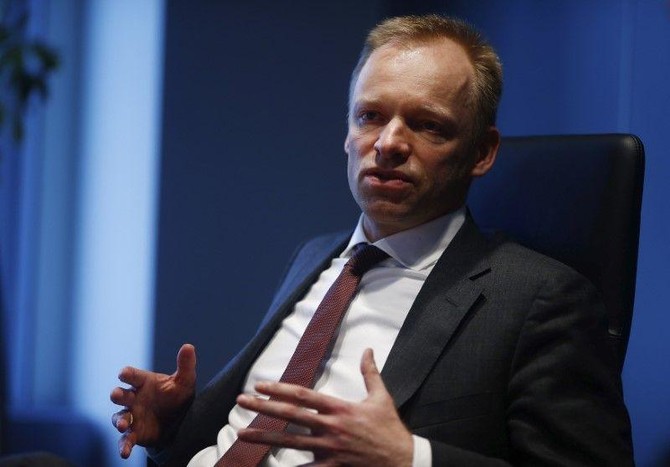
“The German economy is growing strongly,” Ifo chief Clemens Fuest said in a statement.
Ifo economist Klaus Wohlrabe told Reuters that the German economy was not being influenced by political uncertainties such as the threat of rising protectionism, major elections in Europe and the course of Brexit negotiations.
The survey was conducted in the first half of April, meaning it did not include any reaction to the first round of the French presidential election on Sunday in which centrist Emmanuel Macron came in first, qualifying for a May 7 runoff alongside far-right leader Marine Le Pen.
Managers’ assessments of the current business situation improved significantly while their outlook for the coming six months was a bit less optimistic, it showed.
Morale improved in construction, retailing and wholesaling whereas managers in manufacturing were somewhat less upbeat.
In construction, assessments of the current business situation rose to a new record high while expectations remained broadly positive and the order level was excellent, Ifo said.
“The Ifo index continued its recent surge in April, increasing for the third consecutive month, suggesting that Germany’s golden cycle has entered yet another round,” ING economist Carsten Brzeski said.
“The only weak spot of the German economy remains a rather sluggish investment,” he noted, adding the government should focus on the import side of the trade surplus and further support domestic demand, preferably in the form of stimulating higher private and further increasing public investments.
Germany’s gross domestic product (GDP) grew by 1.9 percent last year, the strongest rate in five years, helped by a vibrant domestic economy, which more than offset a drag from net trade.
Strong industrial output and export figures for January and February have suggested that the economy shifted into an even higher gear in the first quarter of 2017, helped by rising global demand for cars and machines.
Economists expect Germany’s quarterly growth rate to clearly pick up in the January-March period after 0.4 percent in the final three months of 2016.
Germany’s VDMA engineering association said earlier on Monday it could lift its growth forecast for this year if early signals of positive business sentiment persist and prove justified.
VDMA head Carl-Martin Welcker said higher demand from emerging markets such as Russia and India could lift German engineering production this year after a year of stagnation while China, the US and Britain were sources of uncertainty.


German business morale brightens in April
German business morale brightens in April
The Family Office to host global investment summit in Saudi Arabia
RIYADH: The Family Office, one of the Gulf’s leading wealth management firms, will host its exclusive investment summit, “Investing Is a Sea,” from Jan. 29 to 31 on Shura Island along Saudi Arabia’s Red Sea coast.
The event comes as part of the Kingdom’s broader Vision 2030 initiative, reflecting efforts to position Saudi Arabia as a global hub for investment dialogue and strategic economic development.
The summit is designed to offer participants an immersive environment for exploring global investment trends and assessing emerging opportunities and challenges in a rapidly changing financial landscape.
Discussions will cover key themes including shifts in the global economy, the role of private markets in portfolio management, long-term investment strategies, and the transformative impact of artificial intelligence and advanced technologies on investment decision-making and risk management, according to a press release issued on Sunday.
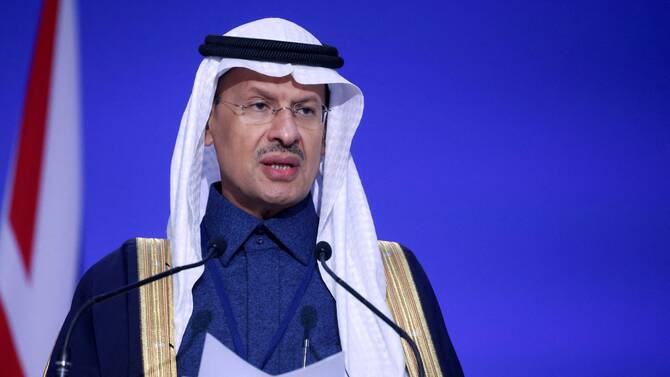
Abdulmohsin Al-Omran, founder and CEO of The Family Office, will deliver the opening remarks, with keynote addresses from Saudi Energy Minister Prince Abdulaziz bin Salman and Prince Turki Al-Faisal, chairman of the King Faisal Center for Research and Islamic Studies.
The press release said the event reflects the firm’s commitment to institutional discipline, selective investment strategies, and long-term planning that anticipates economic cycles.
The summit will bring together prominent international and regional figures, including former UK Treasury Commercial Secretary Lord Jim O’Neill, Mohamed El-Erian, chairman of Gramercy Fund Management, Abdulrahman Al-Rashed, chairman of the editorial board at Al Arabiya, Lebanese Minister of Economy and Trade Dr. Amer Bisat, economist Nouriel Roubini of NYU Stern School of Business, Naim Yazbeck, president of Microsoft Middle East and Africa, John Pagano, CEO of Red Sea Global, Dr. Anne-Marie Imafidon, MBE, co-founder of Stemettes, SRMG CEO Jomana R. Alrashed and other leaders in finance, technology, and investment.
With offices in Bahrain, Dubai, Riyadh, and Kuwait, and through its Zurich-based sister company Petiole Asset Management AG with a presence in New York and Hong Kong, The Family Office has established a reputation for combining institutional rigor with innovative, long-term investment strategies.
The “Investing Is a Sea” summit underscores Saudi Arabia’s growing role as a global center for financial dialogue and strategic investment, reinforcing the Kingdom’s Vision 2030 objective of fostering economic diversification and sustainable development.


