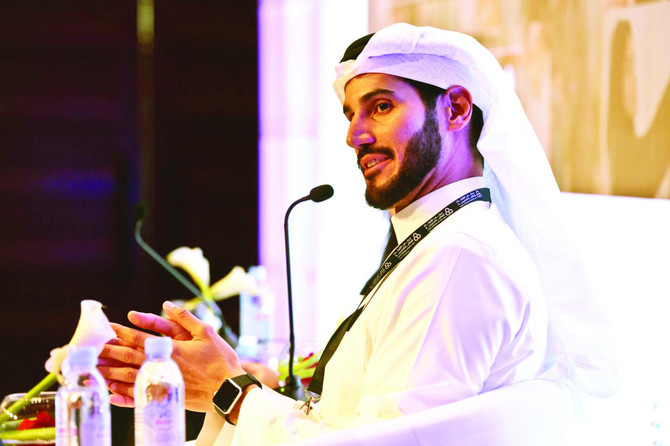
Family Business Council — Gulf (FBCG), the regional association of Family Business Network International (FBNi), recently concluded its Annual Summit 2017 under the theme “Secrets to Family Business Continuity: Committed to Evolve Over Generations” held in Dubai.
The fourth edition of the summit brought together leading GCC family businesses experts and academicians to share experiences and effective approaches to address family business challenges.
Abdulaziz Al-Ghurair, chairman of FBCG, said: “We believe that each family business has its own secrets to success, but we also believe that families can inspire each another on ways to regenerate their own formula to success.”
He added: “By tailoring the summit agenda around real-world case studies and success stories, we aimed to provide families with practical insights that they can learn from and incorporate in order to better address the challenges of growth, business model evolution and generational transition.”
Prominent regional and international speakers took the stage at the summit presenting case studies and taking part in panel discussions. Two GCC family groups, Al-Mulla Group from Kuwait and SEDCO Holding Group from Saudi Arabia, shared their learnings and discussed how to professionalize and introduce corporate discipline in the family business. They focused on how to build effective boards to fit long-term generational time horizons.
The summit also witnessed the launch of a GCC case study on family business social impact. Community Jameel shared their approach in developing community projects tied to their business and centered on job creation. Hassan Jameel, deputy president and vice chairman of Abdul Latif Jameel, took part in a relevant panel session along sustainability experts to discuss effective ways of giving in the context of the family business.
International family speakers also took part in the summit. These include Hans-Jacob Bonnier of Bonnier Group, a sixth-generation family firm which is ranked among Scandinavia’s leading media conglomerates; and Meral Zaim Inci, from the leading Turkish Inci conglomerate. Both families belong to FBN exclusive community; and took part in the GCC summit to present their family governance development journey.
Every year, the FBCG summit attracts leading GCC family businesses in a private closed-door gathering. FBCG’s events are exclusive to family-business members and the format of the sessions is designed to encourage open and effective discussions among the participating members.

GCC family businesses discuss long-term continuity and growth at FBCG Annual Summit
Schneider Electric launches academy in Saudi Arabia to build future-ready talent
Schneider Electric has announced the launch of the Energy Tech Academy Middle East and Africa in Saudi Arabia, a regional capability platform dedicated to skilling, upskilling, and knowledge sharing.
The launch comes at a critical moment as the Kingdom accelerates energy transition, industrial localization, and human capability development under Vision 2030. The academy reinforces the Kingdom’s leadership role in building future-ready talent while supporting industrial and energy transformation across the wider Middle East and Africa region.
The Energy Tech Academy Middle East and Africa is not a traditional training center; it is a regional platform translating Schneider Electric’s global energy technology expertise into applied capability for Saudi Arabia and the broader region. Anchored in Riyadh, the academy is designed to serve as a benchmark for skills development and enablement across the MEA.
The launch reflects Schneider Electric’s long-term commitment to investing in people and capabilities, and to supporting national priorities across energy, industry, and digital infrastructure.
Mohamed Shaheen, cluster president of Schneider Electric Saudi Arabia and Yemen, said: “This launch reflects our long-term commitment to Saudi Arabia and to building capability that lasts. After more than 40 years in the Kingdom, we continue to invest where impact matters most: in people. Launching the Energy Tech Academy Middle East and Africa from Riyadh underscores our belief that sustainable transformation is built on local capability and trusted partnerships.”
The academy directly supports Saudi Arabia’s focus on human capability development, localization, and Saudi-made outcomes by enabling the skills behind advanced energy systems, industrial automation, and digital infrastructure. Capabilities developed through the academy will support Saudi manufacturing, national projects, and resilient supply chains, while also strengthening regional industrial ecosystems.
“The Energy Tech Academy Middle East and Africa is designed to enable real outcomes,” said Walid Sheta, zone president for the MEA at Schneider Electric. “By equipping talent with future-ready skills across electrification, automation, and digital intelligence, we are strengthening Saudi and regional capability to design, operate, and lead the energy and industrial systems of the future.”
The launch event in Riyadh brought together senior government representatives, industry partners, customers, and Schneider Electric’s leadership, highlighting the importance of cross-sector collaboration in aligning education, skills development, and labor market needs.
Designed as a long-term platform, the Energy Tech Academy Middle East and Africa will continue to evolve through partnerships, programs, and continuous capability development, reinforcing Saudi Arabia’s role as a regional hub for skills, knowledge, and industrial enablement.