JEDDAH: The King Salman Center for Relief and Humanitarian Aid (KSRelief) has provided health and medical services to Yemeni civilians in the crisis-hit country.
The KSRelief carried out health and medical projects in Yemen and in Saudi Arabia in cooperation with the Ministry of Health, and in Jordan at the Jordanian Red Crescent Hospital in Amman. It also provided services in Sudan in cooperation with the Sudanese Red Crescent Society.
Center officials say they are committed to treat Yemeni patients and to provide care for their relatives until their return to their country. They are establishing medical clinics in Abkh province in the Republic of Djibouti and running it to provide medical care for Yemeni refugees in the camp that cares for more than 2,550 refugees.
The center also implemented health projects to treat injured civilians in Yemen.
The KSRelief has secured medical supplies in the governorates of Aden, Hadramout, Marib, Saada and Taiz where the number of treated patients reached 22,500.
The KSRelief deployed Sudanese medical staff to provide medical services in Yemen. They provided emergency medical services to Yemen’s women and children in order to reduce morbidity and mortality rates. The project benefited 7.5 million people.
It also provided preventive interventions for saving the lives of girls and boys under 5 years old in addition to pregnant and lactating women. The project benefited 2.7 million people.
The KSRelief supported water and environmental sanitation services, and provided drinking water and sewage in the governorates of Aden, Taiz, Sanaa, Lahj and Ibb. The number of beneficiaries of the project reached 13.3 million people.
The KSRelief established and operated Al-Salam Hospital in Saada governorate where the number of beneficiaries of the project reached 356,322 individuals.
The KSRelief worked to establish and operate the Saudi Hospital in Hajah governorate by providing medical equipment and care. The project benefited 270,000 people.
The center provided the arterial blood gas (ABG) device to the military hospital in Sanaa for patients with heart disease. The project benefited 15,300 individuals.
The KSRelief also set up and operated the Marib General Hospital, providing medical equipment, and comprehensive care and testing for patients in Marib governorate to benefit 74,480 people.
The center, in cooperation with the Saudi National Campaign for the Relief of the Somali People, dug two wells along with a water desalination plant in Yemen refugee camp in Abkh province in the Republic of Djibouti to provide drinking water for Yemeni refugees. The number of beneficiaries reached 3,902 individuals.


KSRelief provides health services to Yemeni people
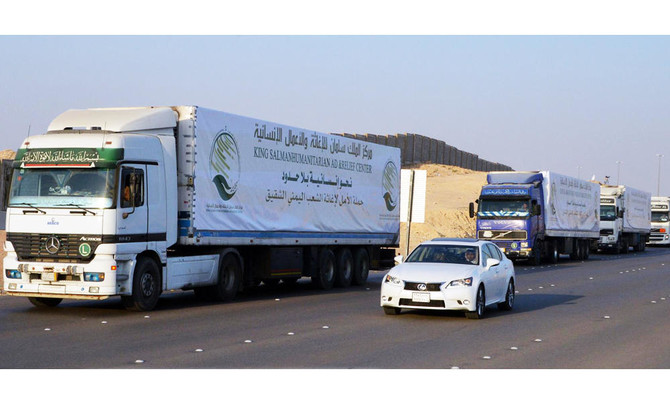
KSRelief provides health services to Yemeni people

Saudi Cabinet condemns ‘blatant’ Iranian aggression; affirms Kingdom’s right to respond to threats
RIYADH: Saudi Arabia has warned it reserves the “full right” to respond to Iranian aggression following a series of “blatant and cowardly” strikes targeting the capital and the Eastern Province.
The warning came during a late-night Cabinet session on Tuesday, chaired by Crown Prince and Prime Minister Mohammed bin Salman via videoconference, according to the Saudi Press Agency (SPA).
During the session, the Cabinet “reaffirmed Saudi Arabia’s full solidarity with the brotherly countries whose territories were subjected to blatant Iranian aggression”, signaling a united front against regional threats.
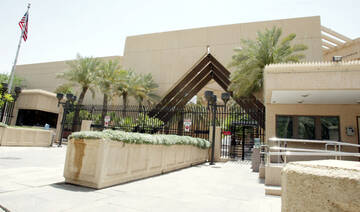
The session followed a dramatic escalation of hostilities, including a direct drone attack on the US Embassy in Riyadh.
Major General Turki al-Malki, spokesperson for the Ministry of Defense, confirmed that while air defenses intercepted multiple threats, the embassy compound sustained a “limited fire and minor material damage.”
General Al-Malki further announced that Saudi forces successfully intercepted and destroyed eight additional drones targeting the cities of Riyadh and Al-Kharj early Tuesday morning.
In a sharp rebuke of the embassy strike, the Saudi Ministry of Foreign Affairs (MOFA) cited a flagrant violation of the 1949 Geneva Convention and the 1961 Vienna Convention on Diplomatic Relations.
“The repetition of this flagrant Iranian behavior... will push the region toward further escalation,” the Ministry stated, underscoring that these provocations occurred despite Riyadh’s explicit policy of not allowing its airspace or territory to be used as a launchpad for strikes against Iran.
Global condemnation and solidarity
The Cabinet expressed deep appreciation for the wave of international support as world leaders condemned Tehran’s “indiscriminate” behavior.
In a joint show of force, the US and GCC member states (Bahrain, Kuwait, Qatar, Saudi Arabia and the UAE) along with Jordan stood united, labeling the strikes a “dangerous escalation” and reaffirming a collective right to self-defense.
Leaders from the United Kingdom, France, and India. — including Prime Minister Narendra Modi — voiced strong solidarity with the Kingdom. The UK government confirmed its forces are engaged in “defensive actions” to maintain regional stability.
Amid the heightened military tension, the Cabinet reviewed the Kingdom’s hospitality efforts for GCC citizens currently stranded at Saudi airports due to regional airspace closures. The crown prince reaffirmed that the state would mobilize all capabilities to support brotherly nations in any measures they take to restore regional peace and stability.