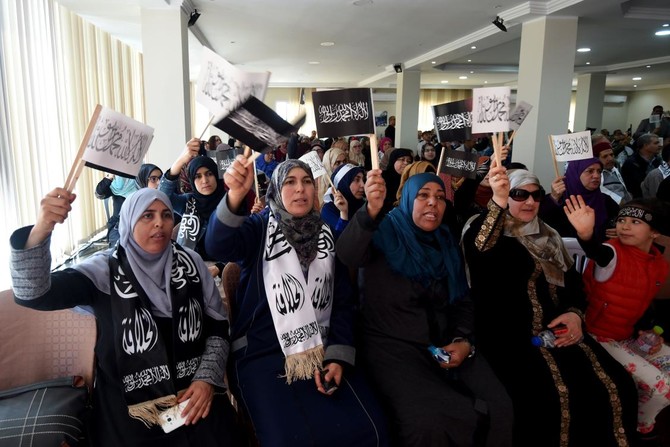
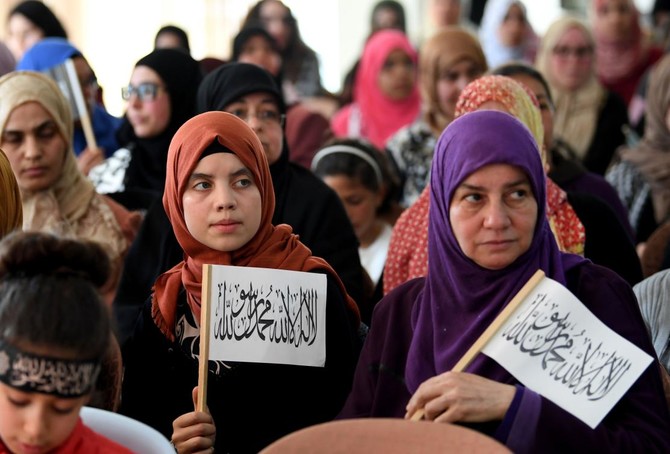
TUNIS: The Tunisian branch of the radical Islamist Hizb ut-Tahrir movement, which calls for Islamic law and wants to unify Muslims into a caliphate, said Saturday it was time to “bury” democracy.
“Democracy no longer attracts anyone,” the movement’s politburo chief Abderraouf Amri told its annual conference.
“It is time to announce its death and work to bury it.”
Hizb ut-Tahrir is banned in several countries and Tunisian authorities regularly accuse it of “disturbing public order.”
Hundreds of party members took part in the congress near Tunis, praising “the caliphate, savior of humanity” and denouncing “persecution” by the democratic system.
It said it was the victim of “attempts to prohibit and hinder” its activities.
Mehdi Ben Gharbia, a minister overseeing relations with civil society, said he had filed a request earlier this month for a one-month suspension of the group’s activities over its “attacks against Tunisia’s republican system.”
Tunisia’s government in September asked a military court to outlaw the movement, created in the 1980s but only legalized in 2012 following the overthrow the previous year of longtime strongman Zine El Abidine Ben Ali.
Interior Minister Hedi Majdoub has called the group “a party that does not recognize the civilian character of the state.”
Hizb ut-Tahrir’s 2016 Tunisian conference was banned for “security reasons.”
Tunisia has been in a state of emergency since a deadly 2015 jihadist attack against presidential guards.


![]()
![]()
![]()
Tunisian Islamist party says time to ‘bury’ democracy

Tunisian Islamist party says time to ‘bury’ democracy


Latest updates


© 2026 SAUDI RESEARCH & PUBLISHING COMPANY, All Rights Reserved And subject to Terms of Use Agreement.