MOGADISHU: A Lebanese registered ship hijacked off the coast of Somalia has been freed, said a shipping expert.
The pirates who boarded the ship on Saturday abandoned it on Sunday before naval forces rescued the ship, said Mohamed Abdirahman, former director of Puntland’s marine forces.
The pirates were unable to take the crew hostage because they locked themselves in a safe room said Abdirahman. No pirates were arrested and international naval forces are now escorting the ship, he said.
The ship hijacked off the coast of war-torn Yemen is a cargo vessel owned by a Lebanon-registered company, a UN agency confirmed on Sunday. The hijacking was the latest in a resurgence of piracy in the waters off Somalia and Yemen, one of the world’s crucial sea trade routes.
The OS 35, which can carry non-liquid cargoes like grain or iron ore, is registered by Oldstone Cargo Ltd, which lists its business address in Tripoli, Lebanon, said the International Maritime Organization. The OS 35 is Oldstone’s only ship registered with the UN. Oldstone could not be immediately reached for comment.
The pirates managed to board the ship on Saturday evening near Yemen’s Socotra Island despite resistance from the crew, said Somali pirate, Bile Hussein.
Somali pirates in recent weeks have hijacked at least two vessels with foreign crews in the waters off Somalia and Yemen, marking a return of the threat after five years.
In March, Somali pirates hijacked a Comoros-flagged oil tanker, marking the first such seizure of a large commercial vessel since 2012. They later released the vessel and its Sri Lankan crew without conditions.
Pirates later seized a fishing trawler, which Somali authorities warned could be used for further piracy.
Earlier this month, Somali pirates seized a small boat and its 11 Indian crew members as the vessel passed through the narrow channel between Socotra Island and Somalia’s coast.
Piracy off Somalia’s coast was once a serious threat to the global shipping industry. It has lessened in recent years after an international effort to patrol near the country, whose weak central government has been trying to assert itself after a quarter-century of conflict.
In December, NATO ended its anti-piracy mission off Somalia’s waters.
But frustrations have been rising among Somali fishermen, including former pirates, at what they say are foreign fishermen illegally fishing in local waters.


![]()
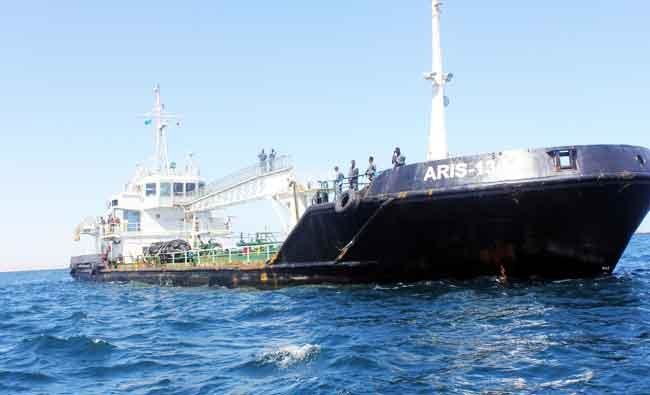
Ship hijacked off Yemen coast is freed
Ship hijacked off Yemen coast is freed
Latest updates


Recommended


© 2026 SAUDI RESEARCH & PUBLISHING COMPANY, All Rights Reserved And subject to Terms of Use Agreement.