OSLO: Norway’s sovereign wealth fund, the world’s largest, on Friday called for a cap on executive pay and fiscal transparency at the companies in which it invests, further buffing its reputation as an ethical investor.
In every company, “the board should... disclose a ceiling for total remuneration for the coming year” for the chief executive, Norway’s central bank, which manages the fund built on the country’s oil revenues, said in a new policy document.
In an era of fat-cat salaries that have drawn widespread criticism, the stance is all the more significant given that the fund holds stakes in about 9,000 companies worldwide, representing 1.3 percent of the global market capitalization.
With its weight, and its often-praised management requirements on ethics and transparency, the Scandinavian fund often sets the bar for investment funds worldwide.
The shift comes as challenging a company’s remuneration policies has proven increasingly succesful.
Last year, BP chief executive Bob Dudley saw his overall pay cut by 40 percent after a rebellion by shareholders.
Volkswagen decided last month to cap salaries for members of its board of directors, a hot topic in Germany.
And on Sunday, under pressure from politicians and unions, six top executives at the Canadian engineering group Bombardier agreed to have their promised pay increase reduced by half.
For many years, the Norwegian wealth fund had little to say about executive pay, but recently it has begun to play a more active role.
Last year, it voted against the executive pay policies at companies including Alphabet (the parent of Google), Goldman Sachs, JP Morgan and Sanofi, according to The Financial Times.
“We are not in a position any longer as investors to say that this is an issue we are not going to have a view on,” the fund’s director, Yngve Slyngstad, told the newspaper, noting that the principle of “say on pay” was now spreading in a number of countries.
The fund’s policy document said that in order to align a CEO’s interests with those of shareholders, “a substantial proportion of total annual remuneration should be provided as shares that are locked in for at least five and preferably 10 years, regardless of resignation or retirement,” and without any conditions based on a company’s performance.
In another document published Friday, Norway’s central bank also called on companies to implement fiscal transparency.
“Taxes should be paid where economic value is generated,” it said, expressing clear opposition to so-called fiscal optimization, where companies declare their profits in countries with lower taxes.
In Europe, giants like Apple, Starbucks and Fiat have in recent years been at odds with the European Commission over their fiscal opportunism, which is technically legal.
The Norwegian fund, worth around 7.87 trillion kroner (859 billion euros, $912 billion) at the end of March, grew by 298 billion kroner in the first quarter, its third-best quarterly performance in its 20-year history.
The fund invests in stocks, bonds and real estate.
The policies announced Friday are a signal it wants to set the bar for investor responsibility even higher.
Ethical rules already prohibit the fund from investing in companies accused of serious violations of human rights, the use of child labor or serious environmental damage, as well as in tobacco companies and manufacturers of “particularly inhumane” weapons.
And in line with a 2015 vote in Norway’s parliament, the fund cannot invest in mining or energy companies where coal represents more than 30 percent of their business — a somewhat paradoxical stance for a fund bankrolled by Norway’s oil revenues.


![]()
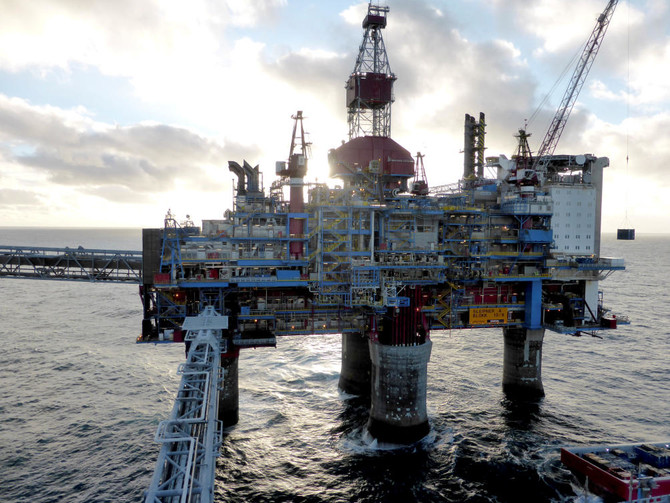
Norway’s wealth fund calls for cap on executive pay
Norway’s wealth fund calls for cap on executive pay
Latest updates


© 2026 SAUDI RESEARCH & PUBLISHING COMPANY, All Rights Reserved And subject to Terms of Use Agreement.