HRW requests Jordan to arrest Sudan's Bashir ahead of Arab League visit

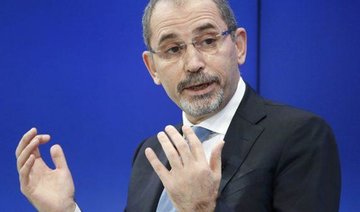
Jordan’s Minister Of State For Media Affairs Mohammed Momani. (AFP)
Updated 27 March 2017
Follow

HRW requests Jordan to arrest Sudan's Bashir ahead of Arab League visit

The Dead Sea: Jordan said Monday that it welcomes the participation of all Arab countries in the 28th Arab Summit, including Sudan.
“According to the Arab League charter, all member states have access to all Arab League activities at all levels,” Jordan’s Minister Of State For Media Affairs Mohammed Momani told Arab News on Monday.
“Sudan is an Arab state and an active member of the Arab League and thus Jordan welcomes the participation of the Arab Republic of Sudan, regardless of the representation,” he added.
Momani’s statement came in the aftermath of Human Rights Watch’s call on Jordan to deny entry to Sudanese President Omar Al Bashir or arrest him if he enters the country.
Al Bashir has been invited to visit Jordan on March 29 to attend the 28th summit of the Arab League taking place at the King Hussein Convention Center.
“Jordan would be defying its international obligations as an ICC member if it allows Al Bashir to visit without arresting him,” said Elize Keppler, associate international justice director at Human Rights Watch.
“Welcoming an ICC fugitive would undermine the Jordanian government’s recent efforts to strengthen the country’s rule of law,” Keppler added.
Meanwhile, the Sudanese Minister of Foreign Affairs Ibrahim Ghandour confirmed that President Bashir will lead the Sudanese delegation to the summit, which he said comes at a critical time in the life of the country.
He said the summit is set to discuss development and rehabilitation efforts in Sudan as well as the question of Arab food security.
The minister criticized HRW which he said continues to fabricate reports about Sudan, including allegations of the use of chemical weapons in the Jabal Mara area or Darfur.
He said that HRW’s allegations had been negated by documents and records proving otherwise and added that the international community elected a Sudanese official as deputy chairperson of the Hague-based Organization for Prohibition of Chemical Weapons.


Iraqi lawmakers to elect president Tuesday, PM appointment next

Updated 25 January 2026
Follow

Iraqi lawmakers to elect president Tuesday, PM appointment next

  • Parliamentary speaker Haibat Al-Halbussi announced on Sunday that the new parliament will convene on Tuesday to elect a president

BAGHDAD: Iraq’s parliament will meet on Tuesday to elect the country’s new president, who will then appoint a prime minister expected to be Nouri Al-Maliki after he was endorsed by the largest Shiite bloc.
By convention, a Shiite Muslim holds the post of prime minister, the parliament speaker is Sunni and the largely ceremonial presidency goes to a Kurd.
Parliamentary speaker Haibat Al-Halbussi announced on Sunday that the new parliament will convene on Tuesday to elect a president, according to the official INA press agency.
The president will then have 15 days to appoint a prime minister, who is usually nominated by the largest Shiite bloc formed through post-election alliances.
On Saturday, the Coordination Framework alliance — whose Shiiite factions have varying links to Iran — endorsed former prime minister and powerbroker Al-Maliki as the country’s next premier.
The alliance, to which Al-Maliki belongs, spoke of his “political and administrative experience and his record in running the state.”
Kurdish parties have yet to agree on a presidential candidate, who must be endorsed by other blocs and win a two-thirds majority in parliament.
The presidency is usually held by the Patriotic Union of Kurdistan (PUK). This year, the rival Kurdistan Democratic Party (KDP) named its own candidate: Foreign Minister Fuad Hussein.
Although Maliki’s endorsement effectively guarantees him the post, forming a new government remains a daunting challenge that could drag on for months and still fail.
The designated premier has one month to form a government and present it to parliament for a vote of confidence.
The 75-year-old Maliki, a shrewd politician, is set to return to power at a time of seismic changes in the Middle East, as Tehran’s regional influence wanes and tensions with Washington rise.
Government formation in Iraq must balance internal political dynamics and power-sharing among major parties, all under the continued influence of Iraq’s two main allies: Iran and the United States.
A close Iran ally, Al-Maliki will be expected to address Washington’s longstanding demand that Baghdad dismantle Tehran-backed factions, many of which are designated terrorist groups by the US.
Last month, Iraqi officials and diplomats told AFP that Washington demanded the eventual government exclude Iran-backed armed groups, even though most of them hold seats in parliament, and have seen their political and financial clout increase.
But Iraq is struggling with weak economic growth and cannot risk punitive measures by the US, which has already sanctioned several Iraqi entities, accusing them of helping Tehran evade sanctions.