MOSUL: Iraqi government forces paused in their push to recapture western Mosul from Daesh militants on Saturday because of the high rate of civilian casualties, a security forces spokesman said.
The halt was called as the UN expressed its “profound” concern over reports of an incident during the battle on March 17 that killed or wounded dozens of people in the Daesh-held Al-Jadidah district of Mosul, apparently involving airstrikes by Iraqi or US-led coalition forces.
Reports have indicated that the airstrikes have killed more than 100 civilians.
“We are stunned by this terrible loss of life,” Lise Grande, the humanitarian coordinator for Iraq, said in a statement.
Civil defense officials and residents have said many people lay buried in collapsed buildings after airstrikes against Daesh insurgents triggered an explosion.
The exact cause of the collapses was not clear but a local lawmaker and two residents said the airstrikes may have detonated a Daesh truck filled with explosives, destroying buildings in the heavily-populated area.
Reports on the numbers of civilian casualties have varied but Civil Defense chief Brig. Mohammed Al-Jawari told reporters that rescue teams had recovered 40 bodies from collapsed buildings.
In an e-mailed statement from the US Central Command (CENTCOM) to Arab News, the Combined Joint Task Force-Operation Inherent Resolve (CJTF-OIR) said an initial review of airstrikes from March 16 to 23 indicates that the US-led coalition struck fighters and equipment of ISIS (Daesh) west of Mosul at the request of Iraqi security forces.
“The CJTF-OIR takes all allegations of civilian casualties seriously and a formal Civilian Casualty Credibility Assessment has been opened to determine the facts surrounding this strike and the validity of the allegation of civilian casualties.
It added: “The coalition respects human life, which is why we are assisting our Iraqi partner forces in their effort to liberate their lands from ISIS (Daesh) brutality. Our goal has always been for zero civilian casualties, but the coalition will not abandon our commitment to our Iraqi partners because of Daesh’s inhuman tactics terrorizing civilians, using human shields, and fighting from protected sites such as schools, hospitals, religious sites and civilian neighborhoods.”
Salim Al-Jabouri, Iraq’s Parliament speaker, in tweets on his official account, said: “We realize the huge responsibility the liberating forces shoulder” and call on them to “spare no effort to save the civilians.”


![]()
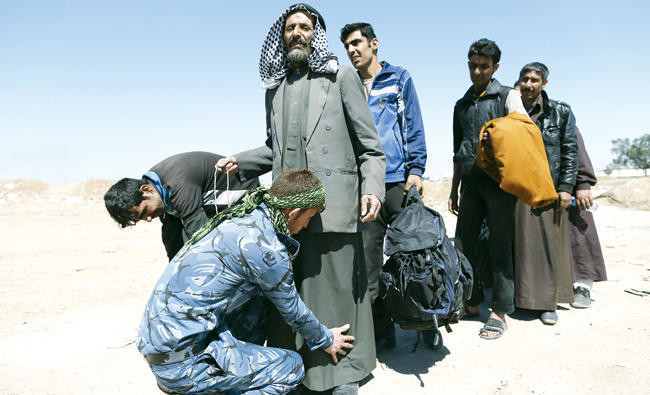
Anti-Daesh strikes kill over 100 civilians in Iraq
Anti-Daesh strikes kill over 100 civilians in Iraq
Latest updates


© 2026 SAUDI RESEARCH & PUBLISHING COMPANY, All Rights Reserved And subject to Terms of Use Agreement.