

Emirates responds to US electronics ban with new advert

The video was well-received online. (Photo courtesy: instagram.com/emirates)
Updated 22 March 2017
Follow

Emirates responds to US electronics ban with new advert

DUBAI: Following the US’ ban on allowing passengers from a handful of Middle Eastern and North African countries to pack large electronic devices in their carry-on luggage, Dubai’s Emirates Airline took to its Instagram page with a slick new advert.
Within hours of the ban being enforced by the airline, it attempted to turn the measure – which states that anything larger than a smartphone must be packed into checked luggage – into a selling point.
“Who needs laptops and tablets anyway?” the advert reads, before cutting to a shot of Hollywood star Jennifer Anniston playing video games on the in-flight entertainment system.
The advert with Anniston is not new, having been released in October 2016, but the repackaged clip is.
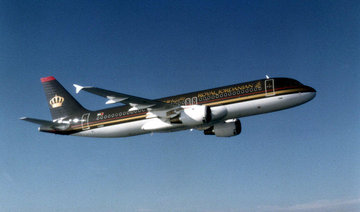
The advert ends with an image of an Emirates Airline plane flying high, with the caption “let us entertain you.”
The video was well-received online, with a slew of commenters praising the airline on the advert.
“Creative in such short notice! Kudos,” one user commented.
“Smooth reaction on the recent electronic ban! Well done @emirates” said another.

Let us entertain you.

A post shared by Emirates (@emirates) on

The UK is set to follow up the American ban with a move of its’ own.
A spokesman for British Prime Minister Theresa May said that there would be curbs on electronic items in the main cabin on flights from six countries in the Middle East. The foreign office said the measures would be implemented by March 25.
DCO and Arab News partner to combat digital misinformation, explore AI’s impact on media

Updated 06 February 2026
Follow

DCO and Arab News partner to combat digital misinformation, explore AI’s impact on media

KUWAIT CITY: The Digital Cooperation Organization (DCO) and the international Saudi newspaper Arab News have signed a Letter of Engagement aimed at strengthening knowledge and expertise exchange on the impact of artificial intelligence in the media sector, as well as leveraging expert insights to develop best practices to combat online misinformation amid accelerating technological advancements.

DCO said this step aligned with its efforts to strengthen collaboration with international media institutions to support responsible dialogue around digital transformation and contribute to building a more reliable, inclusive, and sustainable digital media environment.

Commenting on the agreement, Deemah AlYahya, Secretary-General of the Digital Cooperation Organization, said: “At a moment when AI is reshaping how truth is produced, distributed, and trusted, partnership with credible media institutions is essential.”

She added that “working with Arab News allows us to bridge technology and journalism in a way that protects integrity, strengthens public trust, and elevates responsible innovation. This collaboration is about equipping media ecosystems with the tools, insight, and ethical grounding needed to navigate AI’s impact, while ensuring digital transformation serves people and their prosperity.”

Faisal J. Abbas, Editor-in-Chief of Arab News, emphasized that the partnership enhances media institutions’ ability to keep pace with technological shifts, noting that engagement with representatives of DCO Member States enables deeper understanding of emerging technologies and regulatory developments in the digital space.

He added: “DCO’s commitment to initiatives addressing online content integrity reflects a clear dedication to supporting a responsible digital environment that serves societies and strengthens trust in the digital ecosystem.”

The Letter of agreement was signed on the sidelines of the Fifth DCO General Assembly held in Kuwait City under the theme “Inclusive Prosperity in the Age of AI”, alongside the second edition of the International Digital Cooperation Forum, held from 4–5 February, which brought together ministers, policymakers, business leaders, entrepreneurs, and civil society representatives from more than 60 countries to strengthen international cooperation toward a human-centric, inclusive, and sustainable digital economy.