ISLAMABAD: Pakistan is preparing for its first census in 19 years. Here are some facts about the sixth most populous nation in the world.
For the first time, transsexual people will be counted separately, according to representatives of this historically recognized but often persecuted community in Pakistan.
The forms had been printed well in advance of court decisions to include them in the count. Now enumerators have been informed that those surveyed will have three numeric choices for their gender: 1 for men, 2 for women, 3 for those who declare themselves transsexuals.
Language is considered an essential tool in evaluating the makeup of multi-ethnic Pakistan — but only nine of the country’s estimated 70 will be listed, to the dismay of many communities.
No regional languages from sparsely populated Gilgit-Baltistan will be included nor will Gujrati — spoken by some Muslim immigrants from India who believe the lack of recognition will drive their mother-tongue toward oblivion.
The census will provide an insight into the true number of religious minorities, especially Christians and Hindus. Estimates are approximate and disputed, ranging from 2 to 10 million for the former and 2.5 to 4.5 million for the latter.
Citizens can declare themselves Muslim, Christian, Hindu or Ahmadi — a branch of Islam considered heretic by the state.
Otherwise, they can be “members of scheduled castes” — members of marginalized Hindu families, or “other.” There are no separate options for Sikhs, Parsis or Baha’i.
One box asks households how many toilets they have — a particularly salient question in Pakistan, where the United Nations estimates up to 40 percent of people defecate in the open air with dramatic health consequences, especially for children.
The census gives two nationality options: Pakistani or foreign.
But the army, which will conduct a parallel count, plans to be more precise mainly because of the country’s Afghan refugees who are accused of everything from terrorism to trafficking.
Many local officials fear Afghans could be counted as local and skew demography in favor of ethnic Pashtuns, whose political parties would benefit as a result.
On the other hand, the estimated six million Pakistanis working abroad will not be counted. No information will be collected on internal migration — necessary to assess the political weight of a province where many people have moved for economic reasons.
This information will be the subject of a separate subsequent survey based on a large sample of the population, according to authorities.

Pakistan census: A third sex, nine languages, many faiths
C. Africa’s displaced youth bet on vote for brighter future
BIRAO: Amani Abdramane bustled around her donkey in the makeshift camp where she lives in the Central African Republic.
In this northern part of the country, on the edge of the Sahel, the sun is scorching and sand is swallowing the last traces of vegetation.
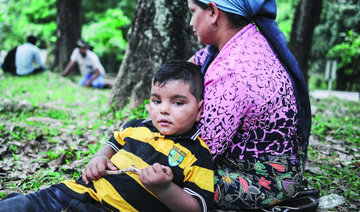
The 18-year-old adjusted a pink scarf covering her head and shoulders and pondered what she wanted from Sunday’s general election that will choose local and regional officials, members of parliament and a new president.
“I hope the person I vote for brings peace,” she said of the seven candidates vying to become head of state.
They include President Faustin-Archange Touadera, who is seeking a third consecutive term.
Displaced by decades of conflict, young people like Abdramane who live in camps around the town of Birao in the far northeast, see the elections as a chance for a better future.
Abdramane fled ethnic violence in El-Sisi, her home village seven kilometers (four miles) from Birao, in 2015 with her mother and eight siblings.
Her father had been killed a few months earlier.
“I just want my brothers, sisters and me to be able to go to school,” she said.
- First-time voters -
Abdramane had just completed her second year of school, aged eight, when her family had to flee.
She has not returned to lessons since.
Now the teenager and other young people are counting on the elections to bring them peace, education and opportunities beyond life as displaced persons.
The last polls were in 2020 but lack of security meant even those old enough to vote at the time were unable to do so.
There is a crowd outside the community radio station in the Korsi neighborhood of Birao, which serves as a distribution center for voter registration cards.
Marina Hajjram, also 18, will be voting for the first time.
“I’m so happy,” she told AFP, clutching her voter card.
Behind her in the queue, 25-year-old Issa Abdoul agreed the elections were essential “to continue the reconstruction of our country.”
Korsi is home to thousands of internally displaced persons, as well as many refugees from neighboring Sudan.
Across CAR, there were 416,000 internally displaced persons as of November, the vast majority of whom are under 25 and will be voting for the first time this weekend.
- A brighter future -
For them, the mere act of obtaining a voter registration card is a challenge.
First they must produce an identity document. But many lost everything when they fled, including ID papers for those who had them.
Three quarters of people in the CAR are under 35, according to a 2018 report by the United Nations Population Fund.
And peace is one of the things these young people most want.
Although the situation has improved in much of the country, particularly in cities, violence persists in the northeast on the border between the two Sudans.
This is mainly due to incursions by Sudanese armed forces, who are waging war in a region already plagued by abuses blamed on rebel groups.
Issene Abdoulkasim, 23, only made it to the third year of primary school.
Now he wants to become a tailor so he can afford to study again.
“I dream of studying so I can become a member of parliament. Because as an MP I’ll be able to bring peace and development,” he said.
“I want to put an end to conflicts, tensions and everything that is destroying our country.”
In this northern part of the country, on the edge of the Sahel, the sun is scorching and sand is swallowing the last traces of vegetation.
The 18-year-old adjusted a pink scarf covering her head and shoulders and pondered what she wanted from Sunday’s general election that will choose local and regional officials, members of parliament and a new president.
“I hope the person I vote for brings peace,” she said of the seven candidates vying to become head of state.
They include President Faustin-Archange Touadera, who is seeking a third consecutive term.
Displaced by decades of conflict, young people like Abdramane who live in camps around the town of Birao in the far northeast, see the elections as a chance for a better future.
Abdramane fled ethnic violence in El-Sisi, her home village seven kilometers (four miles) from Birao, in 2015 with her mother and eight siblings.
Her father had been killed a few months earlier.
“I just want my brothers, sisters and me to be able to go to school,” she said.
- First-time voters -
Abdramane had just completed her second year of school, aged eight, when her family had to flee.
She has not returned to lessons since.
Now the teenager and other young people are counting on the elections to bring them peace, education and opportunities beyond life as displaced persons.
The last polls were in 2020 but lack of security meant even those old enough to vote at the time were unable to do so.
There is a crowd outside the community radio station in the Korsi neighborhood of Birao, which serves as a distribution center for voter registration cards.
Marina Hajjram, also 18, will be voting for the first time.
“I’m so happy,” she told AFP, clutching her voter card.
Behind her in the queue, 25-year-old Issa Abdoul agreed the elections were essential “to continue the reconstruction of our country.”
Korsi is home to thousands of internally displaced persons, as well as many refugees from neighboring Sudan.
Across CAR, there were 416,000 internally displaced persons as of November, the vast majority of whom are under 25 and will be voting for the first time this weekend.
- A brighter future -
For them, the mere act of obtaining a voter registration card is a challenge.
First they must produce an identity document. But many lost everything when they fled, including ID papers for those who had them.
Three quarters of people in the CAR are under 35, according to a 2018 report by the United Nations Population Fund.
And peace is one of the things these young people most want.
Although the situation has improved in much of the country, particularly in cities, violence persists in the northeast on the border between the two Sudans.
This is mainly due to incursions by Sudanese armed forces, who are waging war in a region already plagued by abuses blamed on rebel groups.
Issene Abdoulkasim, 23, only made it to the third year of primary school.
Now he wants to become a tailor so he can afford to study again.
“I dream of studying so I can become a member of parliament. Because as an MP I’ll be able to bring peace and development,” he said.
“I want to put an end to conflicts, tensions and everything that is destroying our country.”
© 2025 SAUDI RESEARCH & PUBLISHING COMPANY, All Rights Reserved And subject to Terms of Use Agreement.