NEW YORK: In the disheveled backroom of an East Village restaurant, Kristen Stewart is sarcastically motivating the French director Olivier Assayas for a photo shoot.
“You’re in America now, dude,” Stewart jokes. “We’ve got to sell the s--- out of this movie.”
Stewart, a blockbuster veteran at 26, is well acquainted with the demands of movie promotion. But with Assayas, she has found a freedom from such concerns. She and the director have forged an unlikely but formidable bond that has resulted in two highly acclaimed movies, both made in Europe, far outside of Hollywood jurisdiction.
They are an odd pair: She, a rebel A-lister from Los Angeles who has become one of the movie’s most exciting and uncompromising actors; he, a demure Parisian whose layered, cerebral films teeter between reality and fiction.
What makes them click? They chuckle.
“I’m not sure,” said Assayas. Stewart nodded. “That’s the main question,” she said. “I don’t know. We like each other.”
Their latest film, “Personal Shopper,” is full of mysteries, too. It is a ghost story, set in a contemporary world of texting and Googling. In the film, which opened Friday, Stewart plays a twin whose brother has just died. Her day job is shopping in Paris for a stuck-up celebrity, but a series of strange encounters make her believe a spirit (her brother?) is contacting her.
“Personal Shopper” follows their previous “Clouds of Sils Maria,” also a singularly enigmatic movie in which Stewart played support staff (an assistant to Juliette Binoche’s theater actress) to a more famous character. (The part earned Stewart a Cesar, the first American to win the French award.) But by stepping into characters out of the spotlight — and into films outside of Hollywood convention — Stewart has never been so much herself on screen.
“I could be making movies about Kristen being a movie star or whatever persona any actress has on social media,” said Assayas. “But what interests me is the person. So I throw the burden of celebrity on someone else, so she can be free of it.”
“Maybe for the next one I could play a famous actress,” joked Stewart.


![]()
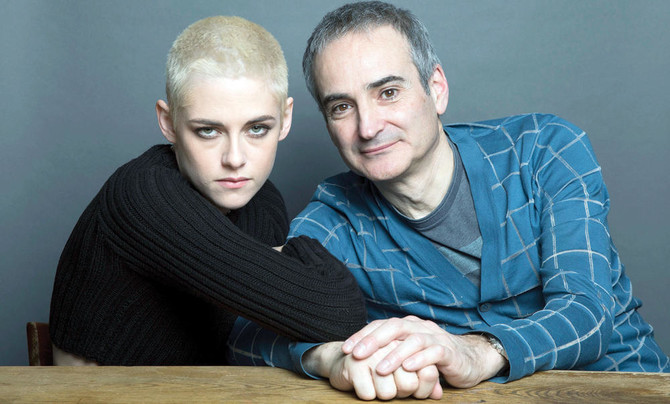
Stewart and Assayas find a groove in the shadow of celebrity
Stewart and Assayas find a groove in the shadow of celebrity
Latest updates


© 2026 SAUDI RESEARCH & PUBLISHING COMPANY, All Rights Reserved And subject to Terms of Use Agreement.