BERLIN: Qatar Airways will not take delivery of any Airbus A320neo aircraft this year as it looks to change its order to larger A321neos, Chief Executive Akbar Al-Baker said on Wednesday.
The Gulf carrier has refused to take delivery of Airbus A320neos since December 2015, initially after performance issues with the aircraft’s new engines.
“I have to scream at Airbus to get my planes faster. I am nearly eight destinations behind schedule because of delays in aircraft deliveries. I hope this will be resolved during this year,” Al-Baker told reporters at the ITB travel fair in Berlin.
Qatar Airways is around 10 aircraft short on deliveries from Airbus at present, including A320neos and wide body A350s, he said.
The Gulf carrier wants to change its order for 50 A320neo family jets, which includes A319, A320 and A321 versions, to take only the larger A321neos, which would likely be powered by CFM engines.
Asked to comment, an Airbus spokesman said: “We are working with our customers to deliver aircraft to their full satisfaction.”
Al-Baker said that unlike rivals, Qatar Airways was not reducing capacity growth or delaying plane orders, saying Qatar Airways had always been “prudent” in how it deploys capacity.
Rival Gulf carrier Emirates said in January it was undertaking a “modest restructuring,” a month after Airbus said it had reached an agreement with the airline to postpone deliveries of 12 A380 planes over two years.
Seeking to extend its reach Qatar Airways has been buying stakes in other airlines, and Al-Baker said India was next on Qatar’s list, once it has finalized a deal with Italian carrier Meridiana.
Al-Baker said he wanted to set up a full-service Indian carrier to fly domestic routes with around 100 narrowbody planes, now that the country had opened up the airline industry to foreign investors.
Under current rules foreign airlines are still restricted to holding a maximum stake of 49 percent in Indian carriers, but other foreign investors may own up to 100 percent.
Qatar’s sovereign wealth fund QIA could own the carrier, and Qatar Airways would then take a stake, Al-Baker said. “We work in partnership. They may use us to run the airline,” he said.
Qatar Airways has previously talked of investing in Indigo, but missed out on taking a stake in its IPO.
Al-Baker said taking a stake in an existing carrier was off the table now, but that Qatar Airways was talking to two Indian carriers to code-share with them.


![]()
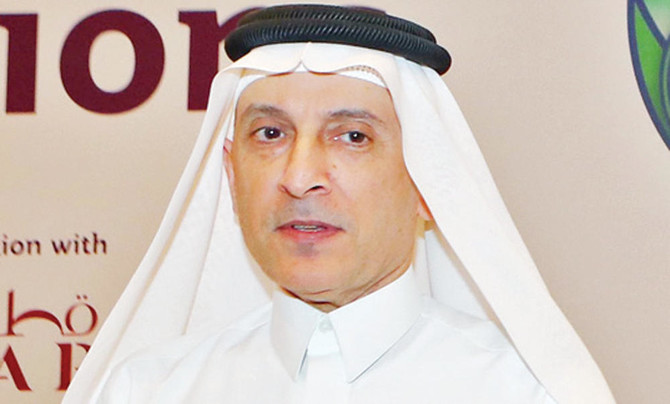
Qatar Airways chief says will not take any Airbus A320neos in 2017
Qatar Airways chief says will not take any Airbus A320neos in 2017
Latest updates


© 2026 SAUDI RESEARCH & PUBLISHING COMPANY, All Rights Reserved And subject to Terms of Use Agreement.