JEDDAH: The Ministry of Labor is moving forward with plans to set up workplace nurseries and daycare centers and creating “a safe and friendly working environment for women,” according to Khalid Abalkhail, a ministry spokesman.
Abalkhail made the announcement Saturday on his Twitter account.
The ministry also has started implementing a new initiative to facilitate commuting for women to and from their workplaces in Jeddah and Riyadh. The initiative is in its pilot phase, according to Abalkhail.
Establishing nurseries and daycares at workplaces, as well as adjusting working hours for women to achieve a workplace/home balance, especially for mothers of infants and younger children, is part of the initiative.
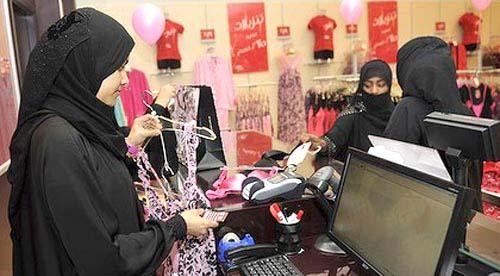
Angham Bukhari, a lingerie and sleepwear store manager at Mall of Arabia in Jeddah, told Arab News that her company has been providing shuttle bus service to take employees to and from their workplaces. She said she does not know whether providing a safe and convenient commute is a requirement by the Ministry of Labor, but her employer has been providing that service for two years.
Starting this month, her company has collaborated with Careem. The company assigned SR1,500 a month for female employees to use a taxi service if buses do not reach their homes.
“There is a daycare at the mall now where I can leave my child during working hours,” said Bukhari, who is a mother of a 5-year-old. “I used to work for eight hours but now I work for six only. A colleague then takes over in the evening shift.”
Bukhari’s monthly basic salary is SR3,550 with added benefits and occasional bonuses that can bring it up to SR6,000. She still receives a transportation allowance even if she uses the shuttle bus service.
“We do not get lower salaries compared to our male counterparts due to working for six hours a day (with a weekly day off) instead of eight as this is a regulation from the Ministry of Labor,” she told Arab News. Bukhari said Saudi salesmen also work for six hours unlike non-Saudis who work longer hours.
Bukhari, who is expecting a second baby, added that maternity leave is three weeks. Additional time can be provided, although subject to an unpaid leave.
Sarah’s case is different. After being hesitant to speak to Arab News, she asked to be referred to as “Sarah” without confirming whether it was her real first name.
The 23-year-old, who works at a store that sells cosmetic products, needs to choose between receiving a SR500 transportation allowance, or taking a ride on the bus the company provides.
If they have children, her female colleagues must pay an average of SR350 a month to take their children to the nursery at the mall.
“I don’t have children, but I believe that this is difficult for mothers as they want to keep their children close,” she said. Sarah, who joined the store a year and a half ago, works eight hours daily and receives a monthly salary of SR3,500 including benefits.
At a department store that caters to female and male shoppers in one of Jeddah’s malls, women sales assistants whose salaries are below SR5,000 a month will be offered free rides on Careem following and arrangement with the employer.
“What I like the most about working here is that it’s at a mall and I have everything I need around me,” said Fatima, the manager of the female staff at the department store. “What is annoying is that the store is open until 11:30 p.m. and we sometimes get men coming after 11 p.m. and act in a way that bothers us. But now the security is aware of that and stops them from entering.”
Workingwomen have been more visible in shopping malls around the Kingdom during the past decade, since they replaced their male counterparts at women’s clothing stores.
The late former Minister of Labor Ghazi Al-Qusaibi took the initiative to ban salesmen from working at lingerie shops — a move that was hailed by women shoppers who found it easier to choose lingerie when surrounded by saleswomen.
In 2011, Saudi women started working as sales assistants and behind the tills at stores that sell women and children clothes that only allow entry for families.
Increasing the number of women’s participation in the workforce from 22 percent to 30 percent is among the goals of Saudi Vision 2030.
Arab News requested a clarification from the Labor Ministry’s spokesman Khalid Abalkhail, but he did not respond late Monday.


![]()
Saudi women find working environment improving, but obstacles remain
Saudi women find working environment improving, but obstacles remain




Latest updates


© 2026 SAUDI RESEARCH & PUBLISHING COMPANY, All Rights Reserved And subject to Terms of Use Agreement.