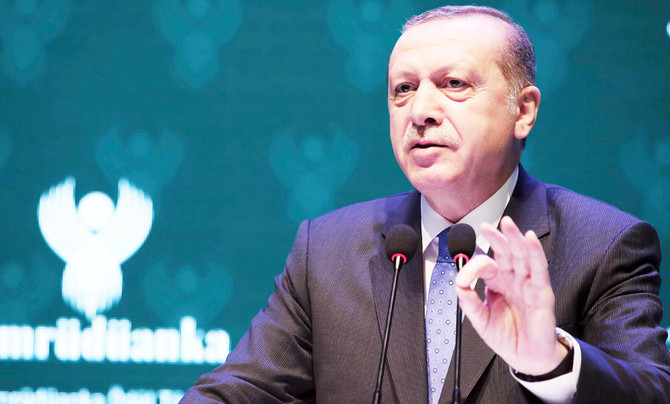
ISTANBUL: Turkish President Recep Tayyip Erdogan lashed out Sunday at Germany for blocking several rallies there ahead of an April vote in Turkey on boosting his powers as head of state, likening it to Nazi practices.
“Your practices are not different from the Nazi practices of the past,” Erdogan told a women’s rally in Istanbul, ahead of an April 16 referendum on whether to approve changes to the constitution.
“I thought it’s been a long time since Germany left (Nazi practices). We are mistaken,” he said.
Several German towns prevented appearances by Erdogan’s ministers last week, citing security and safety concerns.
The cancelations have infuriated the Turkish government, which accused Berlin of working against the “Yes” campaign in the referendum and summoned the German ambassador to the Foreign Ministry in protest.
“You will lecture us about democracy and then you will not let this country’s ministers speak there,” said an angry Erdogan, adding that Germany was not “respecting opinion and thought.”
Women rally
Thousands of pro-government women filled an Istanbul arena on Sunday in support of a “Yes” vote in next month’s referendum on boosting Erdogan’s powers.
Waving Turkish flags, women shouted “Of course, Yes!”
Erdogan’s ruling Justice and Development Party (AKP) is running the “Yes” campaign, saying the changes would bring political stability.
Pro-govermment supporters gathered at the 12,500 capacity sports complex, known as Abdi Ipekci Arena, outside Istanbul’s ancient city walls, with the campaign theme: “Yes! If women are there, democracy is there.”
The gathering was organized by the pro-government Women’s and Democracy Association (KADEM), whose deputy chair is Erdogan’s younger daughter Sumeyye Erdogan Bayraktar.
“For the survival of our country, it is a very important decision,” said AKP supporter Ayse Gurcan, who came to the event from Erzurum province in eastern Turkey.
“We must make our choice in a healthy way and I believe that everyone will say ‘Yes’,” she said
Another woman, Zehra Ferahtay, said the approval of constitutional changes would unify Turkey especially after the failed coup attempt in July to oust Erdogan’s government.
“Yes, I support the presidential system and especially after July 15, we must be more united and together for this country,” she said.
Saliha Mantar, wearing a headscarf, said women had been granted more rights since Erdogan came to power as prime minister in 2003 and as president in 2014.
“We, women, promise to be always behind our leader,” she said, referring to Erdogan.
Critics however argue if the plan is approved, Turkey would lurch toward authoritarianism, saying it would not be a system based on checks and balances.