RIYADH: The Islamic Development Bank (IDB) is developing a roadmap to strengthen Arab-African trade over the next three years, according to Hakim Elwaer, IDB’s official spokesman.
The roadmap includes identifying business opportunities and the areas of finance, building logistics platform, supporting trade, credit and insurance, and developing the necessary infrastructure to facilitate trade.
IDB President Bandar Hajjar and Mamoun Buhedod, minister delegate to the Ministry of Industry, Trade, Investment and Digital Economy in Morocco, inaugurated the Arab-African Trade Bridges (AATB) forum held in Rabat last month.
IDB’s support for development programs and infrastructure projects in Africa has reached more than $43 billion, which included funding for projects in infrastructure, according to IDB’s website.
Hajar added that the volume of trade financing granted to Arab and African member countries since the establishment of the International Islamic Trade Finance Corporation (ITFC), which is IDB’s trade financing arm, has reached about $15 billion.
This is in addition to cooperation with many strategic partners to design and implement programs for the development of trade among member countries.
Hajar urged Arab and Sub-Saharan African countries to take advantage of capacity development programs to be available thanks to the “Arab-African Trade Bridges” program over the next three years.
The participants in the forum and side events included trade ministers, directors of trade promotion agencies, presidents of the chambers of commerce and industry representing OIC Arab and Sub-Saharan African member countries as well as international financial institutions and banks.
A number of memorandums of understanding were signed between the main participants during the forum’s inauguration ceremony.
The initiative of the “Trade Bridges between Arab and Sub-Saharan African countries” forum was proposed by the ITFC during the seventh meeting of the Coordination Group to support cooperation in the field of foreign trade and export credit.
Besides ITFC, the Coordination Group includes the Arab Bank for Economic Development in Africa (BADEA), the Islamic Corporation for the Insurance of Investment and Export Credit (ICD), the Arab Trade Financing Program, the Arab Monetary Fund, the OPEC Fund for International Development, the Saudi Fund for Development and the Arab Investment & Export Credit Guarantee Corporation.


![]()
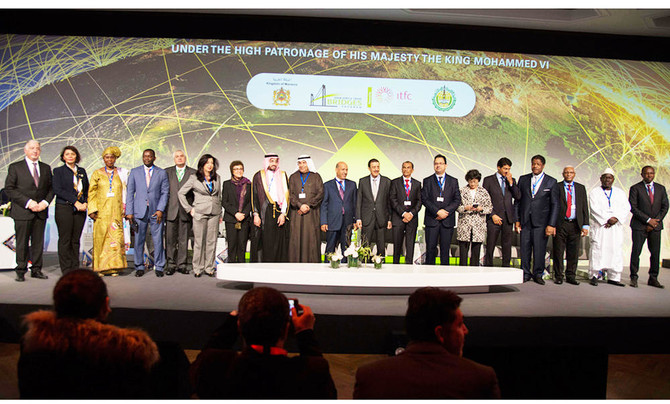
Islamic Development Bank sets out roadmap to promote Arab-African trade
Islamic Development Bank sets out roadmap to promote Arab-African trade
Latest updates


Recommended


© 2026 SAUDI RESEARCH & PUBLISHING COMPANY, All Rights Reserved And subject to Terms of Use Agreement.