JERUSALEM: A report severely criticizing Israeli Prime Minister Benjamin Netanyahu’s leadership in the 2014 Gaza war may weaken the self-styled “Mr Security,” analysts say.
The state inquiry published Tuesday attacked Netanyahu’s governing style throughout the war in which 68 Israeli soldiers died, prompting opposition figures to demand his resignation.
Netanyahu lashed out at the report, accusing the state comptroller who penned it of attacking the army, but canceled a planned public speech on short notice Wednesday evening, with his office saying he was unwell.
The report comes as Netanyahu, a man with a reputation as a political survivor in his eighth consecutive year as leader, is seeking to limit potential damage from a series of corruption investigations.
Analysts said while the report was unlikely to bring about his resignation, Netanyahu’s reputation for being the best man to protect Israel was at risk.
The report by state comptroller Yossef Shapira accused Netanyahu and former Defense Minister Moshe Yaalon of not fully preparing for the threat of attack tunnels dug by Hamas, the party that runs Gaza.
It said the two men did not fully share information they had on tunnels with other members of the security cabinet, speaking instead in “sparse and general” terms.
They also failed to provide ministers with “significant and essential information,” necessary to make “well-informed decisions.”
The report did not call for resignations, however.
The war killed 2,251 Palestinians and left 100,000 homeless, according to the UN.
On the Israeli side, 74 people were killed, all but six of them soldiers.
The tunnels were among the Palestinians’ most effective weapons during the 50-day conflict.
In one particularly notable attack, five soldiers were killed when a Hamas fighter emerged from a tunnel near the Nahal Oz kibbutz inside Israel on July 29, 2014.
Opposition leader Isaac Herzog called for Netanyahu to step down in the wake of the report.
Gil Hoffman, chief political correspondent at The Jerusalem Post, said that was unlikely immediately but it would damage the prime minister’s reputation.
Netanyahu won the last elections in 2015 in large part because he was seen as the most competent leader for Israel’s security, Hoffman said.
“Netanyahu has persuaded Israelis that he and only he can make them feel safe,” he told AFP.
“If there is a security figure running in the election next time he can just wave the report and say ‘not so fast.’ ”
Netanyahu is also facing a series of corruption allegations that have fed speculation about potential snap elections.
“The corruption allegations make him much weaker and this just adds fuel to the fire,” Hoffman added.
The person best placed to gain is Education Minister Naftali Bennett, who consistently accused Netanyahu of not sharing information during the war.
“The report gives credit to Bennett (saying) he was asking the right questions,” Yossi Mekelberg from the London-based Chatham House think tank said. “He did not get proper answers.”
Bennett, seen as a major right-wing challenger to Netanyahu, has remained silent, though his colleague in the Jewish Home party Ayalet Shaked backed the report’s findings.
Itamar Yaar, former deputy head of Israel’s National Security Council, defended Netanyahu and the military’s concerns about Bennett.
He told AFP the Jewish Home leader had a reputation for leaking, making Netanyahu and military leaders wary that information shared with him would get into the public domain.
In 2007 a preliminary report into the 2006 war with Lebanon severely criticized then-Prime Minister Ehud Olmert and Defense Minister Amir Peretz.
Netanyahu himself, then leader of the opposition, called on Olmert to resign and encouraged protests, with tens of thousands turning out on the streets.
“Those who failed at war cannot be those who correct the failures,” Netanyahu said at the time.
Olmert hung on but resigned a year later amid corruption allegations, in what Hoffman said was a parallel of current events.


![]()
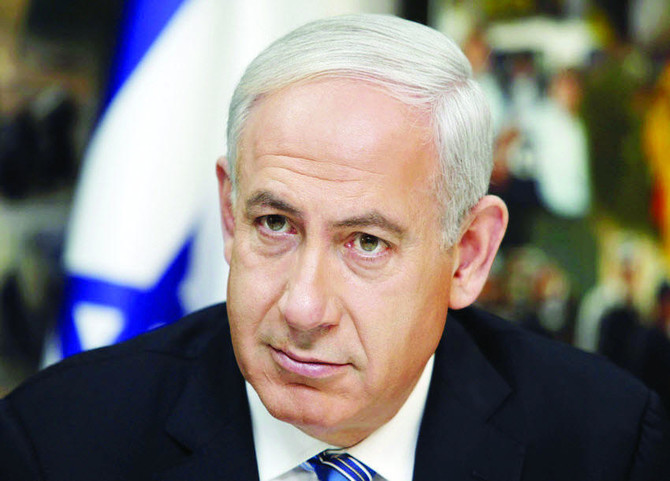
For Netanyahu, Gaza report risks ‘Mr Security’ reputation
For Netanyahu, Gaza report risks ‘Mr Security’ reputation


Latest updates


© 2026 SAUDI RESEARCH & PUBLISHING COMPANY, All Rights Reserved And subject to Terms of Use Agreement.