CAIRO: Egypt’s former president Hosni Mubarak denied on Thursday involvement in the killing of protesters during the 2011 uprising that ended his 30-year rule as his final retrial in the case began.
Mubarak, 88, was originally sentenced to life in prison in 2012 for conspiring to murder 239 demonstrators, sowing chaos and creating a security vacuum during an 18-day revolt which began in Jan. 2011, but an appeals court ordered a retrial.
That retrial culminated in 2014 in an Egyptian court dropping the case. But the public prosecution appealed the decision and ordered another retrial by Egypt’s top appeals court.
That began on Thursday, with the judge reading Mubarak the charges, in which he and his interior minister were accused of providing vehicles and weapons used to assault protesters and failing to take action to prevent deaths.
Sitting in a wheelchair in the defendant’s cage without his trademark dark sunglasses, Mubarak responded: “It did not happen.”
Mubarak has long maintained his innocence in the case and has said history would judge him a patriot who served his country selflessly. He waved at supporters among the journalists and other attendees in the courtroom.
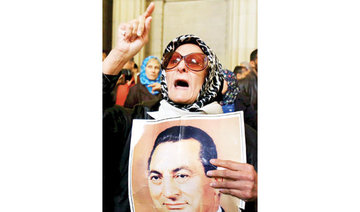
Outside the court house, a small group of Mubarak supporters gathered, unfurling posters of the former president and demanding that he be freed and honored for his service.
Hundreds of people died when security forces clashed with protesters in the weeks before Mubarak was forced from power.
Many Egyptians who lived through Mubarak’s rule view it as a period of autocracy and crony capitalism. His overthrow led to Egypt’s first free election, which brought in Islamist President Mohamed Mursi.
Mursi only lasted a year in office, however, after mass protests against his rule in 2013 prompted an overthrow by then army chief General Abdel Fattah El-Sisi, who later went on to win a presidential election in 2014.
Sissi has since launched a crackdown on Mursi and his Muslim Brotherhood, which has been banned as a terrorist organization.
Hundreds of Mursi supporters were killed in a single day and thousands have been jailed with the dragnet quickly widening to include secular activists who were at the forefront of the 2011 uprising but opposed Muslim Brotherhood rule.
By contrast, Mubarak-era figures are gradually being cleared of charges and a series of laws limiting political freedoms has raised fears among activists that the old regime is back.
Lawyers representing the families of those killed in the 2011 uprising called for the charges against Mubarak to be upgraded to murder and demanded that the court also summon Sissi, who was head of military intelligence at the time.
(Reporting by Mahmoud Mourad and Haitham Ahmed)


![]()
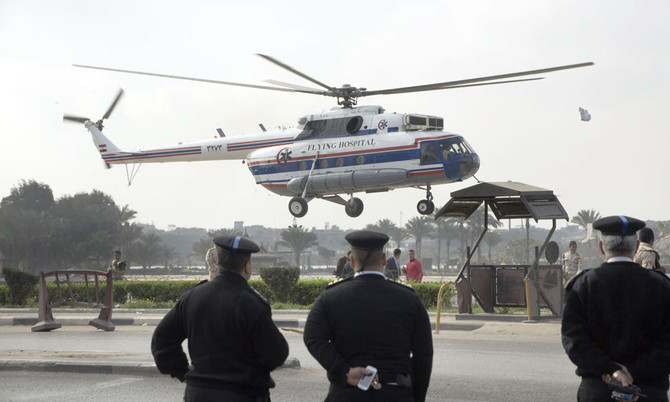
Egypt’s ex-president Mubarak denies killing protesters as final retrial begins
Egypt’s ex-president Mubarak denies killing protesters as final retrial begins

Latest updates


Recommended


© 2026 SAUDI RESEARCH & PUBLISHING COMPANY, All Rights Reserved And subject to Terms of Use Agreement.