JEDDAH: A new ranking has revealed the most influential Saudi women on YouTube — and shows the videos they produce are about five times more engaging than most other clips.
Online video intelligence company Tubular Labs ranked female YouTube creators in Saudi Arabia over the last 90 days.
The list, revealed on Monday, placed 21-year-old Saudi lifestyle video creator Njoud Al-Shammari as the most influential of all, with more than 890,000 subscribers. 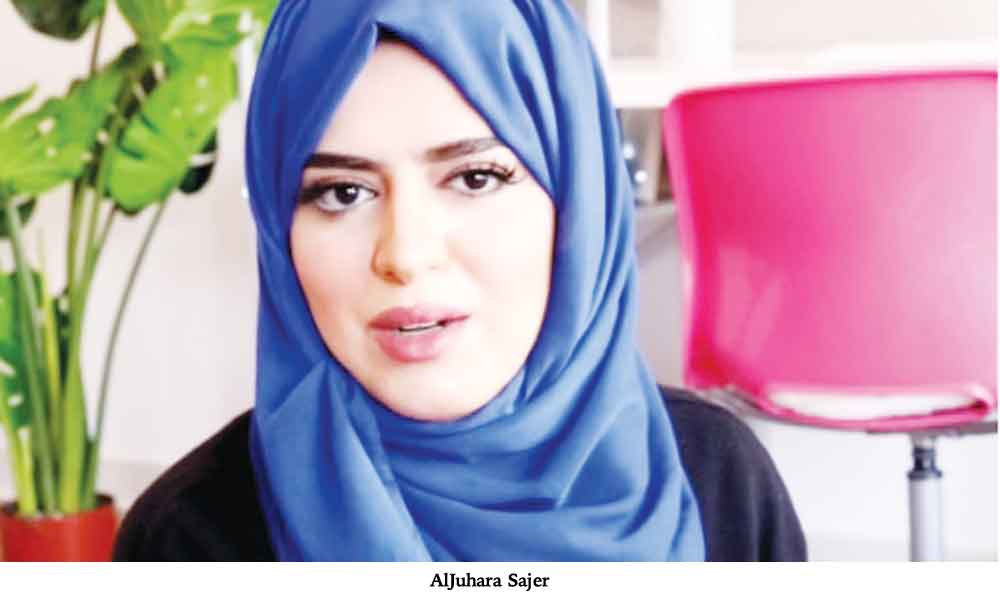
Lifestyle and beauty vlogger Asrar Aref came in second, followed by Amal Elmziryahi, who runs a cookery channel, Hessa Al Awad, a fashion and beauty vlogger, and AlJuhara Sajer, who runs a beauty channel.
The top five names on the list scored the highest on the "Tubular Influencer Score" (TIS), which takes into account 10 different metrics when generating the rankings, including the creator’s reach, engagement with viewers, and the channel’s activity.
Video geared towards women continues to grow on YouTube, with the number of hours spent watching female-related videos rising by 50 percent between 2014 and 2015 in the Middle East and North Africa. Saudi Arabia has the highest YouTube usage per capita globally.
Denis Crushell, VP at Tubular Labs, said: “Online video is more global than ever before, with creators around the world making content that resonates with their audiences. These top female Saudi creators deliver content that engages their audience, providing both entertainment value and inspiration. Collectively their content has drawn more than 184 million views (in) all time with an Engagement Rating… that is (five times) more engaging than average video.”
Diana Baddar, head of YouTube Partnerships in the Middle East and North Africa, said she was “happy to see these women’s hard work recognized by hard data”.
“Each of these creators continues to make high-quality content that is not only useful but is also an expression of their creativity. They are telling their own stories to their audience and the world, and will continue to utilize YouTube’s reach to more than one billion daily users to grow their channels,” she said.
“Where we were four years ago to where we are today, there has been a massive growth! We have thousands of channels in Arabic created by Arabic female content creators. That in itself proves that women haven’t found the content that interests them as much, so they felt the need to create it themselves,” Baddar added.
In October, YouTube launched Batala, a dedicated channel that features the region’s top female creators, featuring more than 100 women from across the Middle East and North Africa. All five channels in the Tubular Labs list are on Batala.
Njoud Al-Shammari, a 21-year old Saudi lifestyle and comedy vlogger, posts videos ranging from comedy and tips to fun tutorials. She often features her brother on her channel who is also a widely-followed YouTuber. She managed to get 890,000 subscribers and 52 million views in only a year.
Speaking to Arab News, Al-Shammari said that things were difficult to begin with.
“My brothers and I were harshly attacked by people for doing what I believe in. And the fact that my brothers appear in my videos made the attack even harsher,” she said.
Al-Shammari advised aspiring YouTube creators to invest in what they do best, but at the same time be creative and develop new categories to stand out. Hessa Al-Awad is a 24-year old Saudi beauty creator and an avid fan of Japanese pop culture. Her videos range from hair tutorials to personal hygiene tips. Hessa produces, shoots, and edits all of her videos in her house. She is the second creator on the list who has never revealed her face on YouTube — something that hasn’t held back her popularity on the video platform. Her channel has 469,000 subscribers and 60 million views.
Speaking to Arab News, Al-Awad said that she gained more confidence in herself and a lot of love from her fans, whom she calls “flowers.”
On being named among the top influential creators on YouTube, she said: “It feels like I am flying from happiness, and so proud of what I have achieved so far.”
AlJuhara Sajer, 25, started her YouTube channel in 2012. In her first videos, she did not show her face. She was so popular that her subscribers started recognizing her voice in Jeddah’s malls. She soon started showing her face on her channel, which has videos ranging from beauty tutorials, to fun conversations and challenges. Sajer, who is from Saudi Arabia, managed to get 423,000 subscribers and 48 million views on YouTube.
Sajer said that YouTube changed many things in her life, “I am not the same person I was five years ago, it changed me personally, not only socially and media wise. I became more outspoken, courageous and bolder, and more open-minded as I met a many people from different backgrounds. Now, I have bigger ideas.”


Ranking reveals Saudi Arabia’s top female YouTube stars

Ranking reveals Saudi Arabia’s top female YouTube stars

To infinity and beyond: Grendizer’s 50 years of inspiring Arabs
- 50 years after its creation, the Grendizer anime series continues to capture Arab imagination
- Arab News Japan speaks to creator Go Nagai, Middle Eastern fans and retells the story behind the UFO Robot tasked with protecting our planet
LONDON: Few cultural imports have crossed borders as unexpectedly, or as powerfully, as Grendizer, the Japanese giant robot that half a century ago became a childhood hero across the Arab world, nowhere more so than in Saudi Arabia.
Created in Japan in the mid-1970s by manga artist Go Nagai, Grendizer was part of the “mecha” tradition of giant robots. The genre was shaped by Japan’s experience during the Second World War, and explored themes of invasion, resistance and loss through the medium of science fiction.
But while the series enjoyed moderate success in Japan, its true legacy was established thousands of kilometers away in the Middle East.
The anime “UFO Robot Grendizer” arrived on television in the region in 1979, dubbed into Arabic and initially broadcast in Lebanon during the Lebanese civil war. The story it told of the heroic Duke Fleed, a displaced prince whose planet had been destroyed by alien invaders, struck a chord with children growing up amid regional conflict and occupation by Israel.

Its themes of defending one’s homeland, standing up to aggression and protecting the innocent were painfully relevant in the region, transforming the series from mere entertainment into a kind of emotional refuge.
Much of the show’s impact came from its successful Arabization. The powerful Arabic dubbing and emotionally charged voice-acting, especially by Lebanese actor Jihad El-Atrash as Duke Fleed, lent the show a moral gravity unmatched by other cartoons of the era.
The theme song for the series, performed by Sami Clark, became an anthem that the Lebanese singer continued to perform at concerts and festivals right up until his death in 2022.
By the early 1980s, “Grendizer” had spread across the Middle East, inspiring fandoms in Saudi Arabia, Kuwait, Iraq and beyond. For many, it was not only their first exposure to anime, it also delivered lessons on values such as justice and honor.
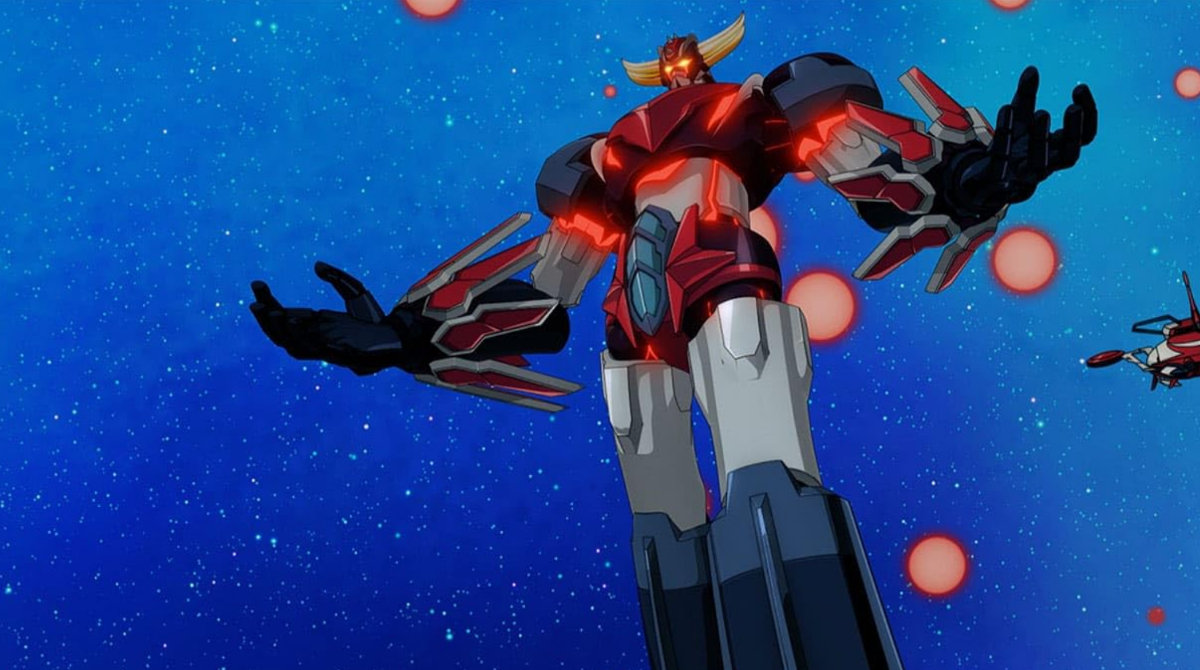
Grendizer was so influential in the region that it became the subject of scholarly research, which in addition to recognizing the ways in which the plight of the show’s characters resonated with the audience in the Middle East, also linked the show’s popularity to generational memories of displacement, particularly the Palestinian Nakba.
Half a century later, “Grendizer” remains culturally alive and relevant in the region. In Saudi Arabia, which embraced the original version of the show wholeheartedly, Manga Productions is now introducing a new generation of fans to a modernized version of the character, through a video game, The Feast of The Wolves, which is available in Arabic and eight other languages on platforms including PlayStation, Xbox and Nintendo Switch, and a new Arabic-language anime series, “Grendizer U,” which was broadcast last year.
Fifty years after the debut of the show, “Grendizer” is back — although to a generation of fans of the original series, their shelves still full of merchandise and memorabilia, it never really went away.


