


RIYADH/JEDDAH: The National Forum for Prevention of Sexual Exploitation of Children via Internet, which concluded here on Thursday, called for the establishment of a center for cyber safety and for national efforts to prevent exploitation of children through the Internet.
The three-day event, organized by the General Directorate of Public Security in cooperation with the Ministry of Interior and several government and nongovernmental agencies, was inaugurated by Crown Prince Mohammed bin Naif, deputy premier and minister of interior.
The forum drew regional and international participation: 12 countries, 15 community-based organizations, international bodies and national and regional entities.
During the concluding session, which was chaired by Lt. General Othman Al-Mihrij, 21 recommendations by the delegates to the conference were presented.
They called for supporting national efforts aimed at preventing and tackling sexual exploitation of children via the Internet, supervising the Internet and other technology that has wide reach, and providing and developing different means and ways to notify those concerned with sexual exploitation in the cyber world.
The forum also suggested building a national overarching strategy to protect children against sexual exploitation by use of the Internet and other technology methods, in addition to implementing pertinent national regulations and legislation that is used by international organizations in this respect.
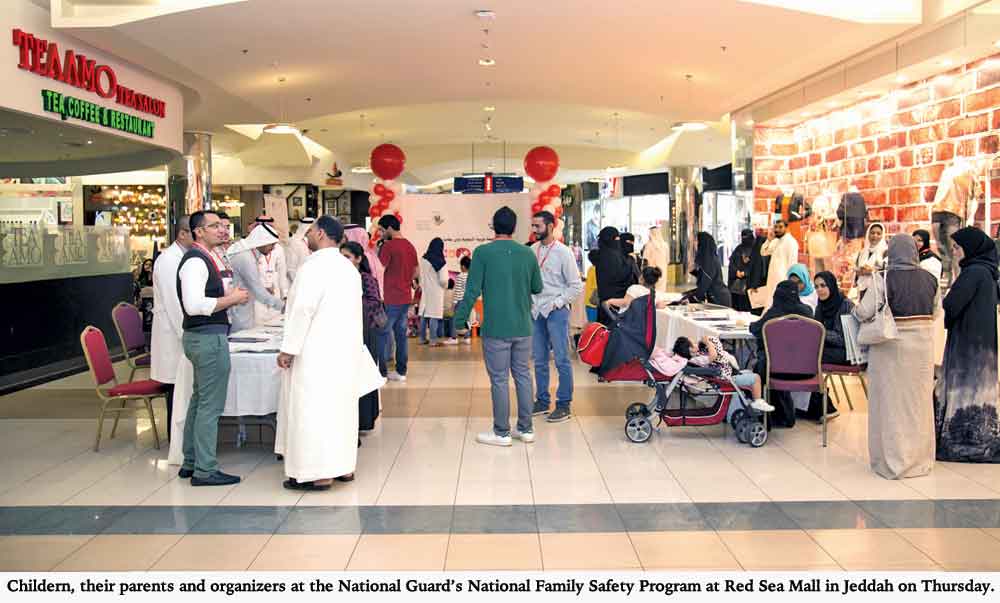
In a related event, a nationwide awareness campaign was launched on Thursday by the National Guard’s National Family Safety Program in cooperation with King Saud University for Health Sciences and LIBRA artistic production at the Red Sea Mall in Jeddah.
The program against child abuse, titled “La Tmodaha,” which is a short version of the local idiom that literally means “do not extend your hand,” had as theme corporal punishment. It is the first campaign that targets this issue directly in Saudi Arabia.
The initiative belongs to Dr. Mohammed Haneef, a medical intern at King Saud bin Abdulaziz University for Health Sciences in Jeddah, who was inspired by his wife’s experience in her childhood. It is supported by the NFSP leadership to empower and encourage youths.
A large number of people attended the launch of the initiative, wishing to get to know about the preventive methods to fight this menace.
The campaign also aims to suggest positive alternatives to guide the behavior of children, rather than beating.
“The specific objective of the campaign is to increase the parents’ knowledge about the potential harm of corporal punishment, and make them aware of the existence of effective alternatives for correcting behavior by providing parents with educational resources and publishing them in print and online, and also by conducting an educational campaign among the public at the Red Sea Mall,” said Haneef.
The campaign will continue at this venue for three days and in other malls until the end of November.
Details about it can be found on Twitter @NFSP1, hashtag and on social media.
“We are expecting that the campaign will not stop here and will be implemented in other cities. There are ideas on expanding the idea further. We have more than 20 volunteers who will make daily presentations on child abuse at the Red Sea Mall,” he said.
Experts and volunteers talked with more than 200 people on the first day and about 100 of them filled in a form for a detailed survey.
According to a study done in Al Kharj city by the NFSP, 57 percent of children experience physical abuse in one year. The study found that around 50 percent of the children in the Kingdom experienced physical abuse last year.


