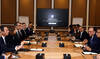
Alstom has secured another important contract in Saudi Arabia following its selection by lead contractor Hyundai Heavy Industries (HHI) to supply 4 x 720 MW steam turbine generator sets for the Shuqaiq project. The contract is valued at approximately 170 million euros. The Shuqaiq plant is due to enter commercial operation in 2017.
Alstom's contract includes the engineering, manufacturing, supply and field services for all four steam turbines and generators, and will also include all direct control and auxiliary systems.
The 2,650 MW power plant will be located on the Kingdom’s western Red Sea coast and will be among the world’s most efficient facilities run on heavy fuel oil. With the Alstom machines at its core, Shuqaiq will help Saudi Arabia expand generation base while minimizing environmental impact.
The new contract comes just five months after Alstom was picked to supply 5 x 620 MW steam turbine, generators, supercritical boilers as well as electrostatic precipitators and flue gas desulphurization systems for the Yanbu 3 plant in Saudi Arabia.
Currently more than one-fifth of Saudi electricity is generated on equipment supplied by Alstom.


Alstom to supply steam generators for Shuqaiq plant

Alstom to supply steam generators for Shuqaiq plant

Amazon’s AWS reports outage after UAE data center struck by ‘objects’
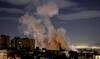
DUBAI: Amazon cloud-computing unit’s facilities in the Middle East were facing power and connectivity issues on Monday, the company said, after its UAE data center was struck by “objects,” triggering a fire.
Amazon Web Services’ UAE and Bahrain regions were affected by outages, it said, citing localized power issues for both regions.
Two of Amazon cloud unit’s zones, which are clusters of data centers, in the UAE were without power on Monday, the company said on its status page.
AWS said on Sunday that one zone in the UAE was affected after “objects” struck the data center and created sparks and fire, following which power was shut off.
“We can confirm that a localized power issue has affected another availability zone” in the UAE region, AWS said.
AWS did not confirm or deny, when asked earlier, whether the UAE incident was connected to the Iranian strikes on neighbouring Gulf states, including the UAE and Bahrain, in response to US and Israeli attacks on Iran.
The cloud firm had reported some recovery in the UAE region earlier on Monday, but is now asking customers to rely on its services in other regions, adding that it was working to restore power and connectivity.
The cloud division expected full recovery to “be many hours away” for both the UAE and Bahrain.
Separately, Abu Dhabi Commercial Bank said on Monday that technical issues were affecting some of its platforms and mobile app users. It was unclear if the outage at the lender was related to AWS.