
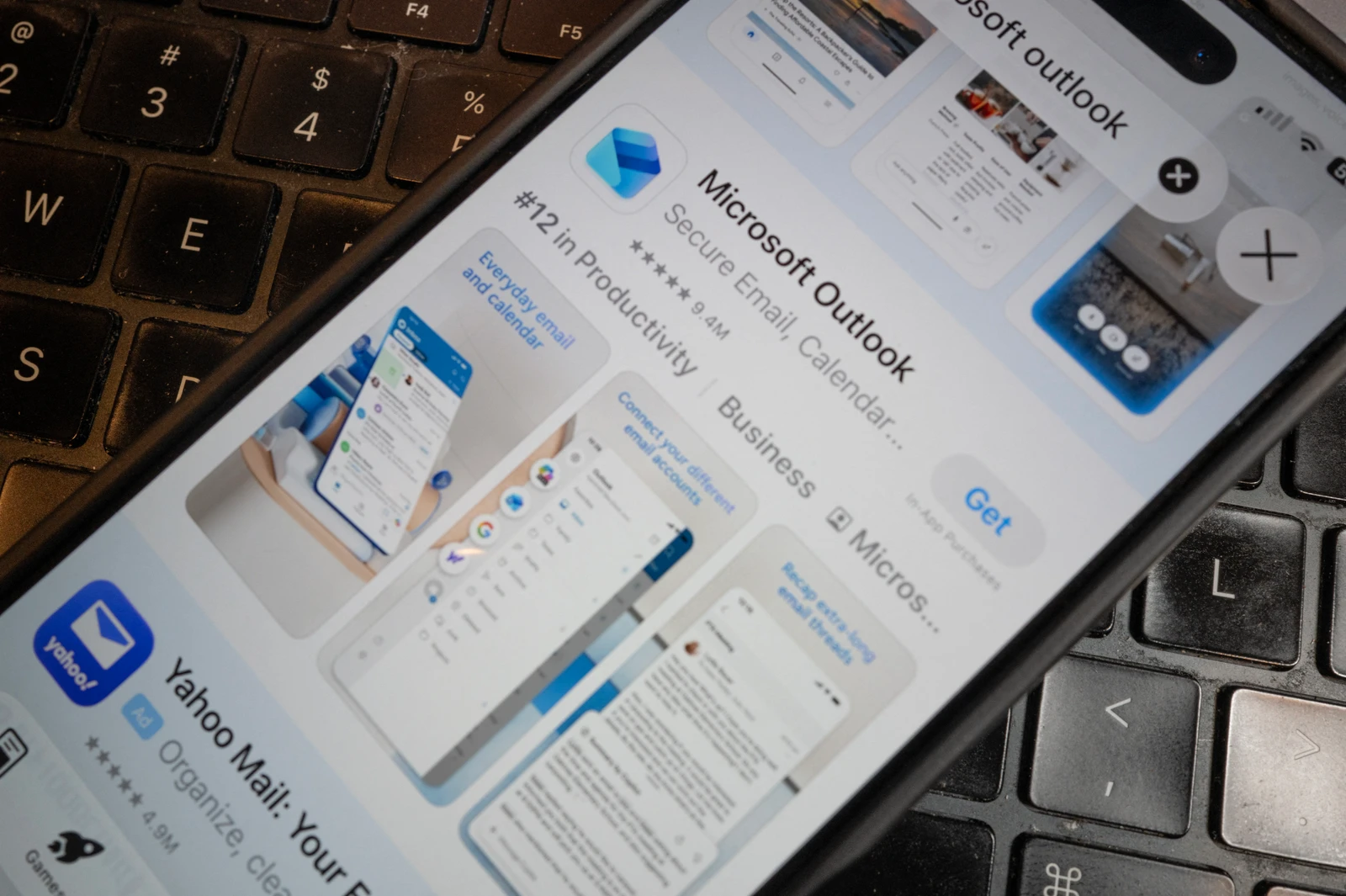
- Schools and businesses regionwide scrambled for alternatives after Outlook, Teams and other Microsoft services failed
- Experts say weak backup plans and opportunistic scams can deepen the damage caused by major technology outages
RIYADH: The global Microsoft outage poses a blunt question to users and customers across the Gulf region: What happens when the digital tools that keep everyday life ticking suddenly stop working?
Services are back, but Gulf businesses and public bodies still have to consider how they would cope with another prolonged failure. Their investment in digital services makes that a pressing concern, regardless of whether the cause is a cyberattack or a technical fault.
The outage began on Nov. 12, affecting Microsoft 365 services including Outlook, Teams and Copilot. Microsoft announced full restoration on Nov. 14 after disruption lasting more than 24 hours. The company said a fault introduced during an earlier network capacity upgrade had surfaced after a more recent network change.
Microsoft said the failure was unrelated to cyber activity or artificial intelligence agents. “We know our customers rely on our services to get important work done every day and regret the impact these outages had on those who depend on us. Our teams are reviewing what happened and how we can prevent similar issues going forward,” Microsoft executive Charles Lamanna said in a statement.
For Gulf businesses accustomed to warnings about cyberattacks, this was disruption of a different kind. In Saudi Arabia, some families were preparing for their children’s exams when the outage struck. Zainab Rahman, a parent, told Arab News that her daughter struggled to download assessment materials through Teams. The school resorted to WhatsApp to distribute them.
“We rely on Microsoft Outlook for emails and customer enquiries and use its services to coordinate orders and communicate with suppliers. With these services affected, it has become harder to respond to customers promptly, follow up on orders and manage routine business activities,” Mohammed Ahmed, a leather business owner, told Arab News.
Sameer Sayed, information technology manager at Giordano, said: “Our business operations rely heavily on Microsoft’s cloud services, including Exchange Online, Microsoft Teams, SharePoint Online and Copilot … Their unavailability has affected our ability to coordinate activities and carry out routine tasks efficiently.”
In the UAE, the Danube Group said it had to shift some transactions to WhatsApp after the outage complicated financial approvals and bulk sales. With several people needed to approve a transaction, the loss of email was enough to hold up business.
Other businesses were less affected. One company spokesperson said email was disrupted, but core sales and logistics operations, which run on SAP, continued as normal.
For Gulf governments and businesses, losing office software does not automatically mean payment networks, aircraft or electricity supplies stop functioning. Different systems depend on different services. Reports from this outage described disruption to workplace tools; they did not show widespread failure of the Gulf’s critical infrastructure.
However, the consequences can still be serious. England’s National Health Service activated contingency plans, including alternative systems and paper records. Pharmacies reported difficulties communicating with doctors’ offices, delaying prescriptions. A delayed email can matter a great deal when it holds up a patient’s medicine.
As more services across the Gulf move online, such interruptions become harder to contain. Teams working in different departments may rely on the same tools, leaving them vulnerable to the same fault, wherever it occurs.
Cloud services do far more than store files on distant servers; they handle email, shared documents, computing and the systems people use to log in. The ease of using these services together can encourage organizations to depend increasingly on one supplier.
Using one supplier can save money and make administration easier. But a company may only realize how much it depends on that supplier when email, shared documents and even recovery instructions become inaccessible together.
“If your emergency communications, identity management and recovery procedures all depend on the same unavailable cloud provider, your recovery plan has a fundamental weakness,” Morey Haber, chief security adviser at BeyondTrust, told Khaleej Times.
Keeping another copy of a document offers little protection if staff still need the failed login service to open it. And recovery instructions cannot help much if they are stored on a system nobody can reach.
Some Saudi companies had prepared alternatives. Meshari Hussain, digital head at Tamer Group, told Arab News that the company had alternative access through Google accounts alongside its integration with Microsoft services. He also said it had received no reports of a data breach linked to the incident.
The region is also investing in infrastructure closer to home. Microsoft announced in February that customers would be able to use its Saudi Arabia East data center region from the fourth quarter of 2026. The design includes three zones with independent power, cooling and networking infrastructure.
These facilities can improve service speed, support local data storage and protect against some physical failures. They can still depend on the provider’s wider systems, however. Microsoft’s own technical guidance notes that separate regions may rely on shared global services.
Knowing where data is stored is therefore only part of the job for Gulf decision-makers. They also need to know what is required to access it, who runs those services and how they would cope if several stopped working at once.
In July 2024, a faulty CrowdStrike security update affected an estimated 8.5 million Windows devices, according to Microsoft. The cause was different, and the software came from another company. But that incident also showed how widely used technology can spread disruption across organizations that otherwise have little in common.
Moving everything in-house would bring its own expense and maintenance burden. Spreading work among several suppliers may help, but it offers little protection if they all rely on the same infrastructure or login system.
For a hospital, a retailer or a school, the priorities will differ. Experts say managers need to work out what can wait during an outage and what staff must be able to do, and access, without delay.
Small businesses may not be able to afford duplicate systems. Even so, they can keep protected copies of essential contacts and records, agree on alternative ways to communicate and make sure staff know how to carry out some tasks manually.
Improvising during an outage carries risks of its own. Personal messaging accounts may keep people in touch, but staff need clear rules for sensitive information, financial approvals and recordkeeping. Without those rules, an urgent workaround may allow a fraudulent payment to slip through or make it hard to establish who approved a decision.
Leonid Bezvershenko, senior security researcher at Kaspersky GReAT, cautioned that the confusion surrounding the outage could be exploited by scammers.
“When normal communication channels go down, employees and customers are far more likely to trust messages that appear to offer updates, workarounds or a quick way to restore access,” he said in a statement
Bezvershenko described possible phishing emails and text messages impersonating Microsoft or internal IT teams, fake password resets and cloned login pages designed to steal credentials and multifactor authentication codes. Fraudsters could also pose as help desk staff seeking remote access.
“In the middle of a live outage, a simple request to ‘re-authenticate’ or ‘verify your account’ can seem credible because it matches what users expect to see,” he said.
These are ways criminals might exploit an outage once it has begun; they are not evidence that this incident was caused by an attack. Restoring normal work should not mean dropping routine security checks.
Bezvershenko urged organizations to provide a single verified source of updates and warn against unsolicited support. Staff should never disclose passwords or authentication codes to callers claiming to offer help. Any request for remote access should follow established verification and approval procedures.
Managers also need to put a price on the disruption. Delayed transactions, unanswered customers and a backlog of work all add to the bill. Spending on backups should reflect those costs, with the strongest safeguards reserved for services whose interruption could cause serious harm.
A cheap subscription may prove expensive if losing access holds up the business. When choosing or reviewing suppliers, companies should seek written commitments on recovery times and updates during outages. They also need to know how to retrieve their information if they decide to leave.
Microsoft, for its part, said it would publish a full report after reviewing the incident. Gulf customers should use it to examine how the company tests changes, restores services and keeps users informed when things go wrong. They can then judge where their own backup arrangements need work.
Mohammed Elias, IT head at the Muslim World League, is convinced that companies must assess their dependence on digital infrastructure and prepare for scenarios in which primary platforms become inaccessible.
“An outage of this scale highlights how dependent organizations have become on cloud-based services for their daily operations,” he told Arab News.
“Businesses need reliable backup systems and contingency plans to ensure they can continue working and accessing essential information when their primary platforms become unavailable … Business continuity planning should be an ongoing process rather than something addressed only when an outage occurs.”
Looking to the future, Gulf states have good reason to take the Microsoft global outage seriously. The family waiting for schoolwork and the business waiting to authorize a payment both need another way to get things done. They should be able to carry on while the provider works on a fix.