- The committee emphasizes the goal of ending Israeli occupation and establishing an independent Palestinian state with East Jerusalem as its capital
- The committee advocates for maintaining a ceasefire in Gaza, ensuring protection for civilians, and allowing unrestricted humanitarian aid
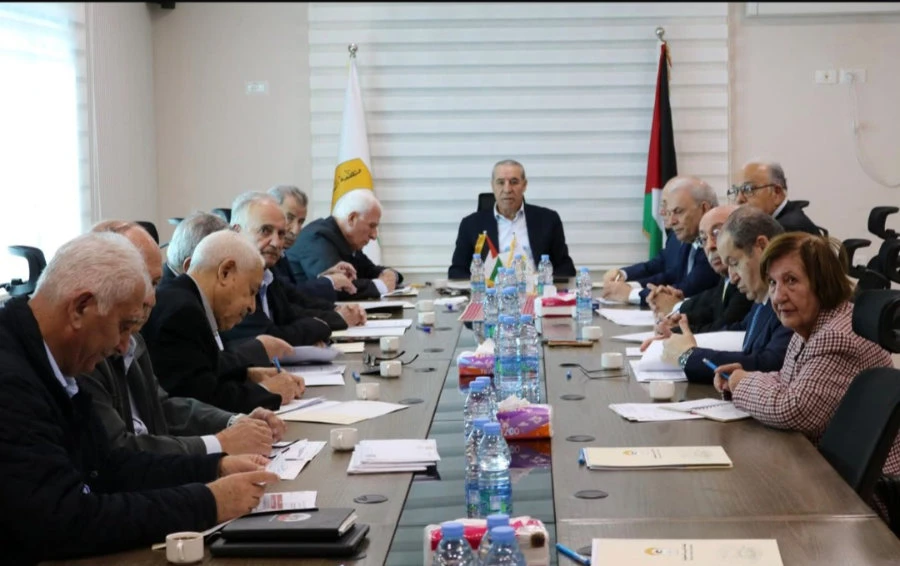
RAMALLAH: The Executive Committee of the Palestine Liberation Organization reaffirmed that Palestinian presidential and legislative elections are scheduled for 2027 in the Gaza Strip and the West Bank, including occupied East Jerusalem, but could be held earlier if current obstacles are resolved.
The announcement followed a Sunday meeting on recent political and field developments and growing threats to Palestinians in Gaza and the West Bank, including East Jerusalem.
The committee said the national priority is to end the Israeli occupation and establish an independent, sovereign Palestinian state along the June 4, 1967 borders, with East Jerusalem as its capital.
It reaffirmed the Palestinian people’s right to self-determination and called for a just, mutually agreed solution to the refugee issue in line with UN General Assembly Resolution 194.
It urged the international community, particularly the UN Security Council, to take concrete, time-bound steps to implement relevant international resolutions, especially Security Council Resolution 2334.
It also called for implementation of the New York Declaration commitments, recognition of the state of Palestine by countries that have yet to do so, and support for full UN membership.
On Gaza, the committee called for maintaining the ceasefire, ending ongoing Israeli violations, protecting civilians, reopening border crossings, and ensuring unrestricted humanitarian aid.
It urged progress on the second phase of the process under Security Council Resolution 2803, leading to a complete Israeli withdrawal from the Strip, the assumption of responsibilities by state of Palestine institutions, and the launch of recovery and reconstruction.
The committee reaffirmed that Gaza is an inseparable part of the state of Palestine and said the territorial, national and institutional unity of Gaza and the West Bank, including East Jerusalem, must underpin any future arrangements.
It rejected the displacement of Palestinians and any territorial fragmentation of Gaza, and said the Palestinian government and legitimate institutions must continue fulfilling their responsibilities to Gaza’s population.
On the UN Relief and Works Agency for Palestine Refugees, the committee rejected measures that would undermine its mandate, reduce or transfer its responsibilities, or cut its workforce.
It said UNRWA must carry out its full UN General Assembly mandate across all areas of operation, including Gaza and the West Bank, including East Jerusalem, until a just and agreed solution to the Palestinian refugee issue is reached under Resolution 194.
The committee urged donor countries to provide adequate, sustainable funding for UNRWA and called on Israel, as the occupying power, to lift operational restrictions and respect UN privileges and immunities.
On the West Bank, including East Jerusalem, the committee warned of accelerating settlement expansion and annexation plans.
It called for international protection for Palestinians, preservation of the historical and legal status of holy sites in Jerusalem, Hebron and across the occupied territory, accountability for violations, and the release and regular transfer of withheld Palestinian clearance revenues.
On the Israeli elections, the committee said its position toward any new Israeli government would depend on its policies and actions, particularly whether it halts settlement expansion, annexation and settler violence; implements UN Security Council Resolutions 2803 and 2334; respects Palestinian self-determination; and engages in a genuine political process to end the occupation and achieve peace.
The committee called on Washington to use its influence to halt unilateral Israeli actions, ensure implementation of Security Council resolutions, and support a political process leading to US recognition of the state of Palestine and its establishment in line with international legitimacy resolutions, paving the way for a just and lasting peace.
On Palestinian national dialogue, the committee called for continued discussions among all Palestinian political forces and factions while adhering to the PLO’s political program and international commitments as the sole legitimate representative of the Palestinian people.
It also reaffirmed the importance of upholding international legitimacy and unifying institutions under the principles of one state, one law, and one legitimate armed force, describing these as essential to strengthening Palestinian unity and the people’s ability to address current challenges.