- Hezbollah reportedly spends 3 months getting ready for hostilities, heightening fears of renewed fighting
- Analysts say that while Lebanese authorities face international pressure to disarm the group, they lack strong leverage to negotiate Israeli withdrawal
LONDON: Lebanon’s leaders are looking to US-mediated diplomacy in an effort to avert another war with Israel, even as Israeli forces remain in southern Lebanon and Hezbollah refuses to surrender its weapons.
This leaves authorities in Beirut with little control over the decisions that could plunge the country back into conflict.
Caught between Israeli demands for security guarantees and Hezbollah’s insistence that its arsenal is essential for efforts to resist occupation, the Lebanese government faces a dilemma: It has pledged to disarm the group but has yet to secure the Israeli withdrawal that could strengthen its case.
Its strongest leverage might lie not at home, analysts said, but in the willingness of Washington to restrain its Israeli allies, amid reports that Hezbollah had spent three months preparing for renewed hostilities.
“The only leverage (Beirut) has is its positive relationship with the United States,” said Faysal Itani, an adjunct professor of security studies at Georgetown University. Lebanese officials hope that their relationship will translate into US pressure on Israel, he told Arab News.
But a fundamental obstacle remains, Itani said: “Israel does not trust Lebanon to deliver on its security guarantees.”
From Beirut’s perspective, the stakes extend far beyond preventing another round of destructive fighting. A renewed conflict could further weaken the government, displace communities once again and deepen divisions over the question of whether Hezbollah’s weapons protect Lebanon or expose it to wars it cannot afford.
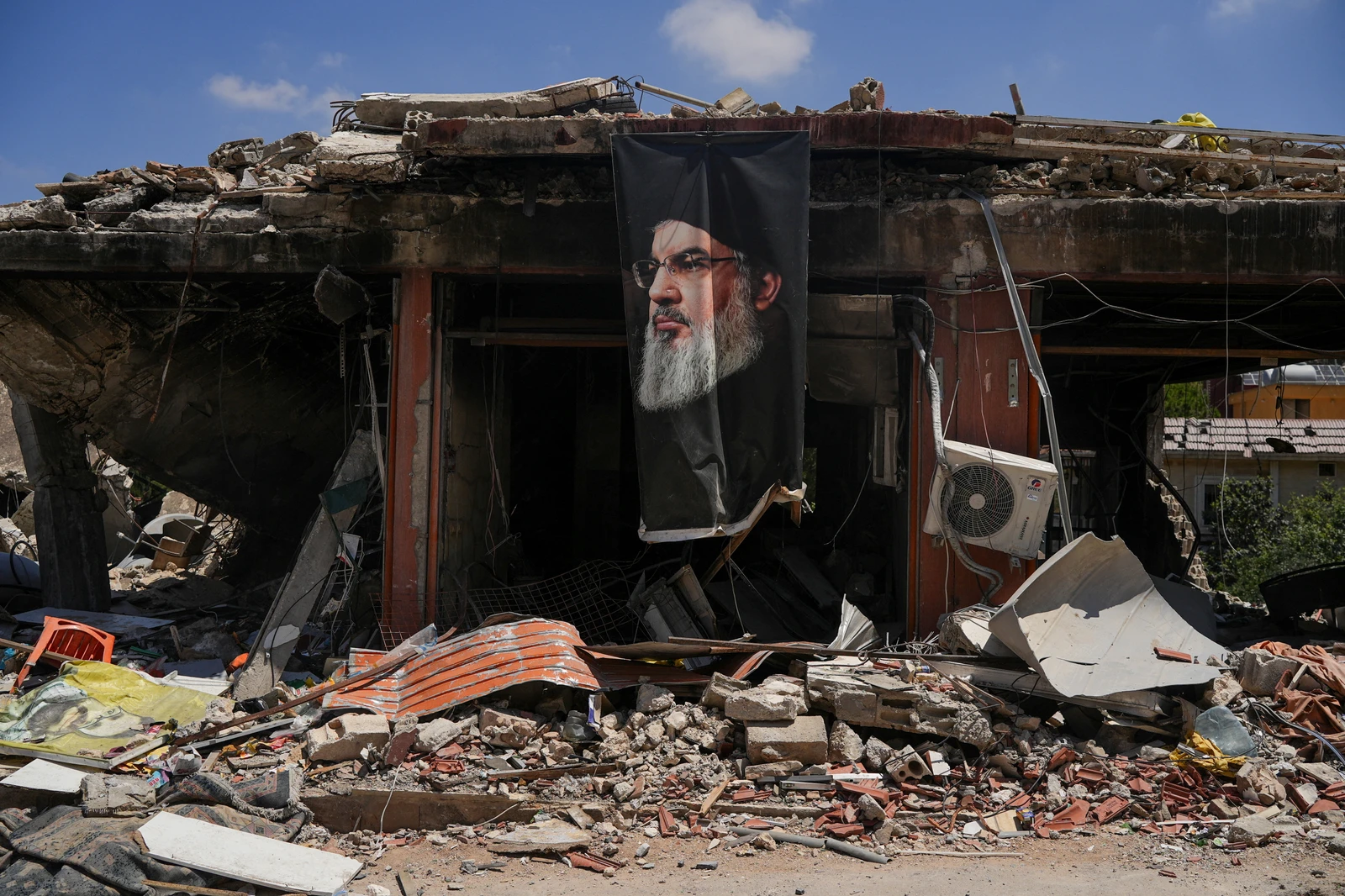
Nearly 330,000 people remained internally displaced as of late September, according to the International Organization for Migration. More than 877,000 others had returned to their home areas after being displaced by the Israeli military escalation in March, which followed Hezbollah rocket attacks launched in retaliation for the joint US-Israeli strikes on Iran.
President Joseph Aoun reaffirmed Lebanon’s commitment to diplomacy on Thursday, while stressing that his country’s central demands during negotiations with Israel remained unmet.
Speaking with the visiting German minister for economic cooperation and development, Reem Alabali-Radovan, Aoun said wars had failed to achieve their intended goals, Lebanese media reported.
He listed four issues Lebanon had brought to the negotiating table: a ceasefire agreement, an Israeli withdrawal, border demarcation and prisoners. He said the progress Beirut sought had not materialized.
Aoun also called on Israel to halt its attacks and comply with existing agreements, and warned that strikes on civilian areas and infrastructure were increasing suffering and undermining efforts to restore stability.
His appeal came a day after Hezbollah’s secretary-general, Naim Qassem, rejected the prospect of disarmament under a US-brokered framework agreement reached in June.
“The resistance continues and will confront any aggression against it; there is no room for discussion regarding the surrender of its weapons,” he said in a statement.
He described the agreement as illegitimate and “in effect, null and void,” and said it surrendered Lebanese sovereignty to Israeli demands.
“An end must be put to American tutelage and its control over certain key sectors of the Lebanese state,” he added.
The respective positions seem to leave little room for compromise. From the government’s perspective, disarmament is a commitment under the agreement. In the view of Hezbollah, the identity and influence of which rest on armed resistance, it threatens the organization’s military role and its rationale for retaining an independent arsenal.
Israel’s ongoing military presence in Lebanon further complicates Beirut’s efforts to make its case.
“The continued military presence in Lebanon undermines the credibility of the government overall, and not just among Hezbollah’s constituency,” Itani said.
“It is at risk of being perceived as capitulating to the enemy and making concessions without receiving any in return.”
Despite the pressure to disarm, Hezbollah has spent three months preparing for a possible resumption of hostilities, Reuters reported on Oct. 26, citing Lebanese security personnel briefed on the group’s activities.
The Iran-backed group has suffered severe losses in two wars with Israel since 2024. However, security sources told Reuters that Hezbollah had used the lull in hostilities since June to rearm using Iranian funding. The group has also been restoring command-and-control structures that were disrupted in key battles, Reuters reported.
But Hezbollah’s media office rejected the suggestion that those systems had broken down. It also told Reuters that Israel’s occupation of Lebanese territory made resistance a legitimate right.
Hussein Chokr, a policy expert based in Beirut, said Lebanon’s predicament reflected both internal divisions and its limited ability to shape events beyond its borders.
“No actor in Lebanon possesses the influence needed to insulate the country from the broader regional reality,” he told Arab News.
Lebanon’s geography and exposure to regional rivalries prevented it from standing apart from the conflict, Chokr said. Its leaders also lack the leverage to persuade the powers shaping the region’s security arrangements to spare the country.
Even dialogue between the government and Hezbollah would run up against Israel’s determination to maintain its presence in southern Lebanon, he said.
That presence, Chokr argued, reinforces the case Hezbollah’s supporters make for retaining its weapons: The state cannot protect them and diplomacy has not secured a withdrawal.
It also creates a dangerous contradiction for the government. Without an Israeli withdrawal or an agreement with Hezbollah, Chokr said, the pursuit of disarmament could lead to a confrontation with the group and its supporters.
Meanwhile, the continuing stalemate threatens to erode confidence in the Lebanese state without resolving the security concerns of either side. Another war would also be a hard strike on a country already struggling to stabilize its economy and institutions.
“Lebanon is in the midst of a political, security and economic storm, struggling to achieve the bare minimum of stability needed to prevent an explosion, nothing more than that,” Chokr said.
Itani warned that renewed fighting would push recovery further out of reach by weakening economic growth, straining infrastructure as people fled their homes, and undermining the prospects for an international financial agreement.
“An international financial deal is of course less likely if the government is overwhelmed by war and confidence in it is low,” he said.
But the consequences could extend beyond economic damage.
“The real danger of another war is not primarily economic; it is political and social,” Chokr said.
In a country already deeply divided over Hezbollah’s military role, he warned, renewed conflict could threaten social cohesion and internal security.
Some domestic actors, Chokr added, “may seek to exploit the war as an opportunity to use force against Hezbollah, potentially turning an already profound political crisis into an internal security confrontation.”