- Researchers believe they have located a funerary chamber containing Nefertiti's 3,400-year-old remains
- Archaeologists have requested permission to drill a small hole to investigate the potential chamber without damaging the artwork
CAIRO: The tomb of Tutankhamun in Egypt’s Valley of the Kings has fascinated historians for more than a century, but it may be about to give up its greatest secret — the burial chamber of the legendary Queen Nefertiti.
New surveys suggest the tomb is part of a much larger complex, with several more chambers about 30 meters behind a painted wall to the north. In one of those chambers, researchers believe, lie the 3,400-year-old remains of the queen consort of the pharaoh Akhenaten.
One survey report said: “If this is a chamber, then the most likely explanation ... is that the center of the space is occupied with materials which, relative to limestone, are of higher density — such as those one might encounter, in fact, in a well-stocked, undisturbed funerary chamber.”
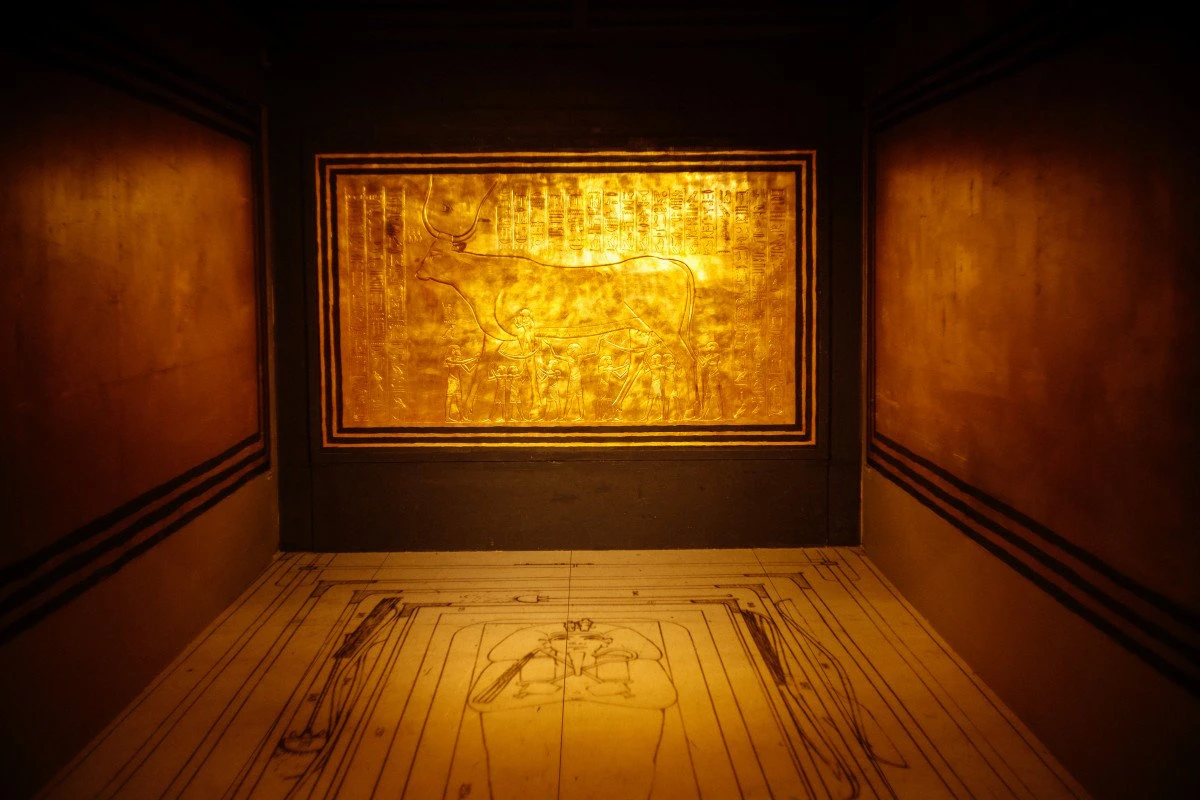
Archaeologists cannot excavate through the wall of the tomb, with its priceless artwork — so they have asked for permission to drill a hole about 8cm wide from ground level down through 20 meters of limestone. If it reaches an open space, a camera will be lowered to examine the chamber beneath.
“It could potentially rank among the most transformative archaeological discoveries of the modern era,” said Mamdouh Eldamaty, the former Egyptian antiquities minister who leads the research team.
One theory advanced by the British Egyptologist Nicholas Reeves is that when Tutankhamun died unexpectedly at the age of about 19, there was no suitable chamber ready. The ancient Egyptians improvised by reopening Nefertiti’s burial complex and converting its outer rooms into the boy king’s burial place, leaving her sealed behind.
Tutankhamun’s burial treasures, now on show at the Grand Egyptian Museum in Cairo, are stunning in their opulence. However, his tomb is unusually small. Howard Carter, who originally uncovered it 1922, suspected that it was only an anteroom to a grander burial chamber.