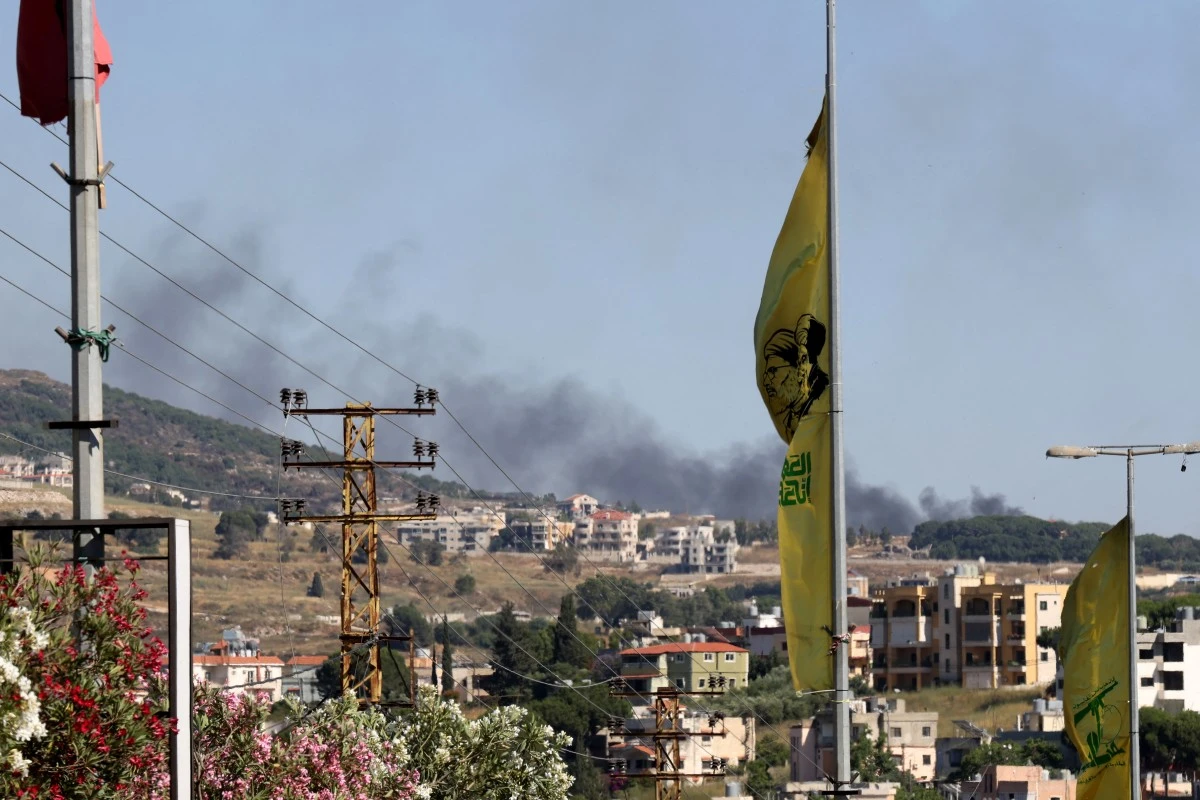
LONDON: Israel’s declaration last week that it had seized the strategically important Ali Al-Taher ridge in southern Lebanon from Hezbollah could be the latest setback for a Lebanese government trying to demonstrate it can provide security without the group’s arsenal, analysts say.On Sept. 4, Israeli Defense Minister Israel Katz said the military had cleared Hezbollah fighters from tunnels beneath the ridge, a prominent stretch of high ground that overlooks a wide area of southern Lebanon. The site became one of the most fiercely contested areas of the Israel-Hezbollah war.Israel’s operation had been underway for weeks. The military says Hezbollah maintained a tunnel network beneath the ridge that included command rooms, weapons depots and living quarters for fighters.But despite Israel’s assertion that it controls the area, military activity and airstrikes have reportedly continued.The operation came despite a ceasefire announced in June and amid US-mediated peace talks. Under the proposed Trilateral Framework, Israel and Hezbollah would withdraw from the ridge and the Lebanese army would take control.For Lebanese officials, that prospect is central to a broader effort to extend state authority into areas long dominated militarily by Hezbollah. But Israel’s move illustrates how difficult that transition may be.“The framework told us where the Americans, Lebanese and Israelis want to end up,” Fadi Nicholas Nassar, a senior fellow at the Middle East Institute, told Arab News. “Ali Al-Taher reminded us they still haven’t solved how to get there.”“At the heart of the problem is Lebanese inaction on disarming Hezbollah and the question of what it will finally take to overcome it.”He said proposed pilot zones — areas in which the Lebanese state would assume greater security control — “are designed to make disarmament achievable while containing the fallout of any confrontation between Hezbollah and the Lebanese state.”He added: “But make no mistake: this is a political step, and it crosses a threshold there is no walking back from. By narrowing the space for confrontation, the pilot zones lower the risk. What they cannot lower is the political weight of the decision itself.”Timothy E. Kaldas, deputy director of the Tahrir Institute for Middle East Policy, said Israel’s actions weaken Beirut at a critical time.“It is another example of Israel taking actions that undermine the credibility of the Lebanese government and weaken its ability to pursue the political process required to disarm Hezbollah,” he told Arab News.Lebanon’s government has committed itself to establishing a monopoly on arms and disarming Hezbollah, he added. To carry out that policy, however, it must persuade Lebanese citizens that it can safeguard the country’s sovereignty and security.“When Lebanon engages in direct talks with Israel — historic talks — and makes these commitments, but Israel responds by expanding the territory it controls in Lebanon rather than pursuing the withdrawal the trilateral framework is meant to facilitate, it undermines the Lebanese government’s credibility in the eyes of its people,” Kaldas said.That credibility gap gives Hezbollah a ready-made political argument: “It makes it easier for Hezbollah to say: ‘See, Israel will never withdraw, so you need us’,” he told Arab News.Rather than eroding Hezbollah’s justification for keeping its weapons, he said, Israeli action around the ridge could reinforce it.Hussein Chokr, a Beirut-based policy expert, said the dispute over Ali Al-Taher should not obscure the wider question of how Lebanon can deter future Israeli military action.“Lebanon’s security equation does not rest on Ali Al-Taher,” Chokr told Arab News. “It rests on Lebanon’s ability to deter Israel militarily, politically or diplomatically.”He said direct negotiations with Israel and concessions by Lebanese authorities “were marketed on the basis that they would restrain Israeli aggression and prevent Israel from going further in Lebanon.”Those arguments, he said, are becoming increasingly difficult to sustain: “Today, these justifications are collapsing, not only in Ali Al-Taher, but also across the broader southern front, where Israeli strikes continue to escalate and innocent civilians continue to be killed.”The ridge’s value is partly military. As strategic high ground, it offers the force that controls it a commanding view of surrounding territory and a potential operational advantage.“It is strategic high ground, which provides a military advantage to whichever party controls it,” Kaldas said. Still, he argued, the ridge’s military significance may be overstated, given Israel’s broader capabilities.“Realistically, given Israel’s technological advantages, it does not need this high ground,” he said. “Israel already has extensive surveillance capacity and a substantial military advantage, so any individual site is not central to its security concerns.”Its symbolic value may be more consequential. “Symbolically, control of the site is a blow,” Kaldas said.Chokr said the precise purpose of Hezbollah’s facilities beneath the ridge remains unclear, making it difficult to independently judge the site’s operational importance, and added: “As for Ali Al-Taher itself, its military value cannot be assessed with certainty from the outside. We do not know what is inside it. Is it a strategic missile storage site? Is it a command-and-control center? Is it merely a regular military position? We do not know.“What we do know is what Israel says, and Israel has every interest in exaggerating the site’s importance in the media in order to magnify its own achievement.”Even so, he said, the ridge is unquestionably strategic because it overlooks Nabatiyeh. Control of the area could facilitate a future Israeli ground operation if Israeli forces sought to advance toward the city.“But the deeper issue remains unchanged,” Chokr said. “Lebanon’s security does not depend on one hill. It depends on the ability of the Lebanese people to produce a deterrent force against Israel.”For Beirut, the episode also underscores the limited leverage it brings to negotiations with Israel. Kaldas said that imbalance makes sustained US involvement especially important.So far, however, he said Washington risks repeating a central flaw of the Oslo process by “empowering the stronger party and intensifying an already substantial imbalance of power.”“That,” he said, “discourages Israel from feeling it needs to make concessions.”In the short term, he added, that approach may help Israel pursue its immediate military aims. Over time, though, it could “prevent the diplomatic breakthroughs necessary for durable security for both Lebanon and Israel.”Nassar said a sovereign Lebanon and a permanent end to the Israel-Lebanon conflict remain possible, but neither outcome is assured.“The early bumps since the Trilateral Framework are signals, not permanent failures,” he said. “Sustained US engagement, paired with Lebanese agency, is what will keep this on track.“Momentum is fragile, but it hasn't been lost. It survives only where American focus meets Lebanese will.”
How Israel’s operation on Lebanon’s Ali Al-Taher ridge could complicate US-backed talks