- China’s cultural heritage authorities announced discovery on Thursday
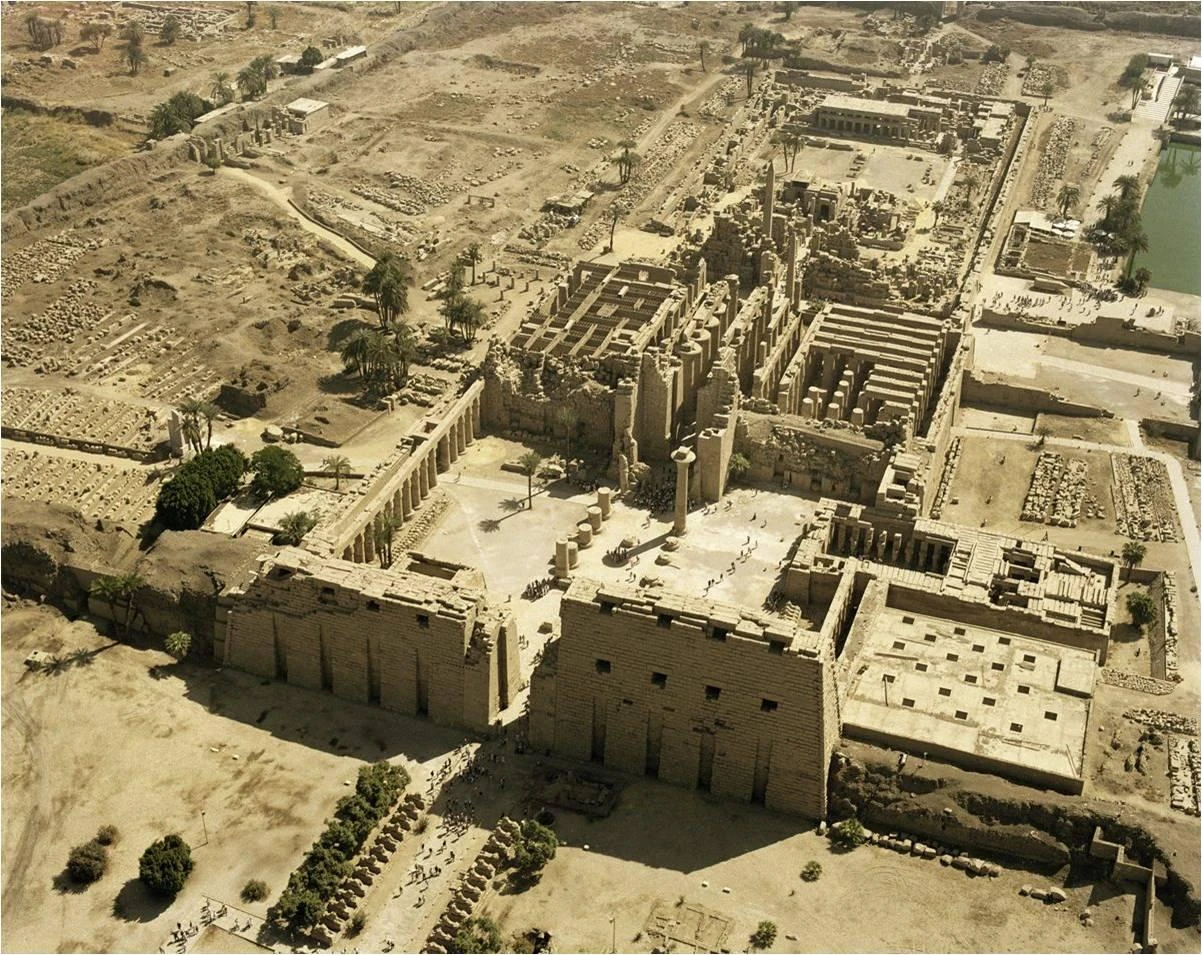
LUXOR: An Egyptian-Chinese archaeological mission has uncovered the remains of two sacred lakes at the Temple of Montu in the Karnak complex in Luxor, revealing new details about a site dating back more than 3,000 years.
China’s cultural heritage authorities announced the discovery on Thursday, saying it marked the first known layout of two sacred lakes within a single ancient Egyptian temple precinct.
The announcement follows a visit to Egypt this month by the Chinese president and comes as Cairo and Beijing mark 70 years of diplomatic relations.
Egyptian and Chinese archaeologists began working together at Karnak in 2018, carrying out systematic surveys and excavations across the site.
During the 2026 excavation season, the mission worked across an area of about 2,300 sq. meters, including more than 50 sq. meters around the northern sacred lake.
Dr. Salah El-Masekh, director general of the Karnak temples, told Arab News that the discovery sheds new light on daily and religious life at the Temple of Montu during the reign of Amenhotep III in Egypt’s New Kingdom, particularly the 18th Dynasty.
He described the find as historic and said work was continuing to remove layers of silt caused by rising groundwater in an effort to reach the bottom of the lakes.
Archaeologists have also uncovered evidence of plants and cultivated beds near the lakes, providing new indications of agricultural activity within or around the temple complex.
Egyptologist Dr. Hussein Bassir told Arab News that water played a fundamental role in the religious life of ancient Egyptian temples.
Sacred lakes were closely associated with ritual purification and supplied water for religious ceremonies, he said.
Bassir said the significance of the discovery was particularly important because of the setting.
Located in the northern part of Karnak, the Temple of Montu was dedicated to the ancient Egyptian god of war and preserves evidence spanning several historic periods, including the Pharaonic, Ptolemaic and Roman eras.
He said the scientific importance of the excavation extended beyond the discovery of another sacred lake.
The presence of two lakes within the same temple complex could provide archaeologists with a new framework for studying the layout, religious functions and development of ancient Egyptian temples.
The find comes during a year in which Egypt and China are celebrating the 70th anniversary of diplomatic relations.
Egypt became the first Arab and African country to establish formal diplomatic ties with Beijing on May 30, 1956, and archaeological cooperation has become one element of an expanding bilateral partnership.
Earlier this month, an Egyptian-Chinese archaeological mission also announced discoveries at the Temple of Sekhmet in Mit Rahina, Giza.
Excavations there uncovered stone blocks and fragments of statues, many dating to the New Kingdom and particularly the reign of Ramses II.
Archaeologists also found objects made from limestone, red granite and schist, along with pottery fragments, faience amulets, small terracotta and limestone figurines, ostraca and votive stelae.