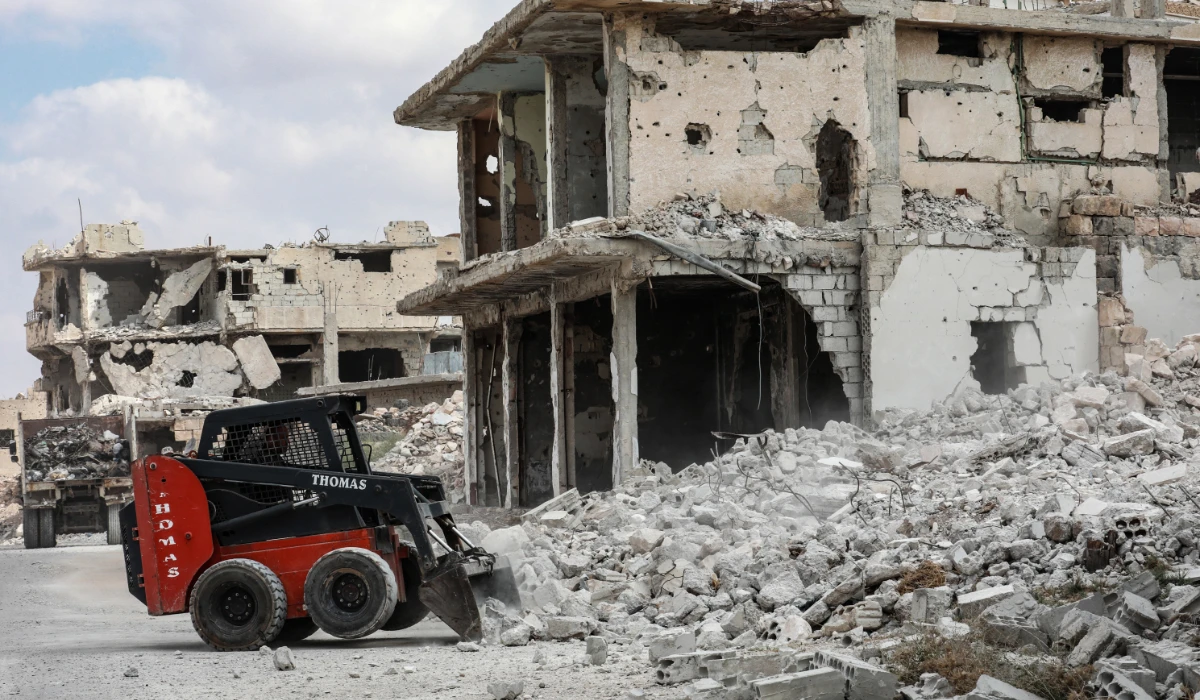
- Local authorities are working to clear rubble from destroyed buildings, particularly in Daraa Al-Balad and the commercial market, but shortages of equipment and complex legal procedures are slowing the work
DARAA: More than 33,400 homes in Syria’s Daraa province were completely destroyed and more than 60,000 others damaged during military campaigns by the deposed regime, according to a report by the Ministry of Local Administration and Environment and UN-Habitat.
The damage affected more than 95,000 homes and residential units, as well as more than 55 bakeries and other essential infrastructure and service facilities.
Local authorities are working to clear rubble from destroyed buildings, particularly in Daraa Al-Balad and the commercial market, but shortages of equipment and complex legal procedures are slowing the work.
Essam Al-Zoubi, head of the technical department at Daraa City Council, said the governorate’s Emergency and Disaster Directorate was continuing to remove debris from completely destroyed buildings.
The work will be carried out under a dedicated contract covering designated sites, he said.
Al-Zoubi said the municipality lacked sufficient machinery and resources for rubble clearance.
Authorities must also establish committees to document property ownership and identify rights holders before proceeding with work on certain buildings.
Several structurally hazardous buildings have been designated for demolition, but ownership must be verified and legal notices issued to protect the rights of owners and tenants.
A municipal committee assesses cracked buildings that are unsafe to occupy and issues the necessary demolition orders. If owners fail to comply within the legal deadline, the municipality carries out the demolition at its own expense, Al-Zoubi said.
The Ministry of Local Administration and Environment and UN-Habitat began issuing reports in February assessing war-related damage across Syrian provinces.
Field surveys cover housing, education, health, infrastructure and essential services.
The ministry said the reports provide a baseline for identifying development needs, preparing reconstruction plans and directing international support toward the hardest-hit sectors.
Initial surveys in damaged areas across several provinces began in January 2025 to establish a central database for setting reconstruction priorities.