Insight


Turning longevity into an economic strategy

Turning longevity into an economic strategy

Author
Short Url

The growing focus on longevity industrialization in the Gulf Cooperation Council has the potential to significantly boost regional economies. 

By integrating cutting-edge healthcare systems, developing smart cities, and supporting increasing life expectancies, longevity could add an estimated $70–$100 billion to the combined GDP of GCC countries by 2030.

This potential economic impact is often described as the “Longevity Dividend,” a concept that captures the growth generated when populations live healthier, longer lives. It encompasses the benefits of extended productivity, longer workforce participation, and reduced healthcare demands.

Although research on the Longevity Dividend has mainly focused on the US and Europe, its impact in the GCC could be even greater. With a combined GDP of around $2.19 trillion, adding just 2 to 4 healthy years to people’s lives could drive significant economic growth. Healthier populations work longer, rely less on healthcare, and can invest more in savings, education, and other productive areas.

In the US, research shows that an additional year of healthy life expectancy can boost GDP by 0.7-1 percent annually, a figure supported by decades of demographic and economic studies. This framework is now being applied to the fast-growing economies of the GCC, which could see even greater benefits than Western nations due to several unique factors.

Firstly, the GCC has a higher per-capita GDP than many Western countries, meaning each additional year of healthy life has a higher economic value. Secondly, chronic diseases such as diabetes, hypertension, and obesity are more prevalent in the region, meaning that improving healthspan could significantly reduce healthcare costs. Moreover, the GCC is home to a dynamic expatriate workforce, meaning that improvements in longevity would benefit a wide swath of workers, not just nationals.

The region is also investing heavily in modernizing its healthcare infrastructure, including AI health platforms, smart hospitals, and telemedicine. These advancements are accelerating the potential for preventive health initiatives to take root. Additionally, the GCC has a relatively young population, so longevity policies enacted now will have a compounded positive effect as people enjoy healthier, longer lives from an earlier age.

Calculating the potential Longevity Dividend for the GCC involves several steps. Global research by Longevity Industry Analytics shows that each additional year of healthy life expectancy can increase GDP by 0.7-1 percent. 

This figure is then adjusted for the GCC’s unique economic profile. Using a conservative multiplier of 1.1 to account for higher per-capita GDP and the region’s potential to reduce chronic disease burdens, the model estimates that a 2-4 year increase in healthy life expectancy could add up to $100 billion to the GCC’s GDP by 2030.

The analysis draws on widely accepted models used by institutions such as the US Congressional Budget Office and the National Academy of Medicine. These same methodologies have been applied to forecast the economic impact of longevity in the GCC. The region is already making substantial investments in preventive healthcare, life sciences, and technological innovation, all of which will accelerate gains in healthspan. As GCC governments focus on reducing chronic disease and investing in health technologies, the Longevity Dividend will become more pronounced.

For GCC governments, the implications are vast. Longevity is no longer just a health policy issue; it is an economic strategy. By improving the healthspan of their populations, governments can increase workforce participation, reduce healthcare costs, and build more productive societies. Countries with healthier populations also attract foreign direct investment, as companies seek to establish themselves in stable, sustainable environments. Additionally, demand for health tourism and longevity-focused industries — such as wellness and anti-aging — presents new opportunities for economic diversification.

Investors also stand to benefit from the longevity revolution. By investing in companies driving innovation in preventive health, biotechnology, and longevity technologies, investors can tap into new markets that will grow exponentially as the global population ages. 

This includes opportunities in digital therapeutics, health-tracking devices, AI health analytics, and corporate longevity programs. Companies that prioritize employee health will also see benefits, as healthier employees contribute to increased productivity and reduced insurance costs.

As GCC governments position themselves to capture the Longevity Dividend, they are shaping the future of a new economic pillar. By focusing on longevity, they can build a sustainable, knowledge-based economy that improves health outcomes and fosters economic growth. 

With the right investments in preventive healthcare, longevity technologies, and aging-focused industries, the region could emerge as a global leader in the longevity economy, generating significant returns while ensuring the long-term well-being of their populations.

• Dmitry Kaminskiy is general partner at Deep Knowledge Group.

Disclaimer: Views expressed by writers in this section are their own and do not necessarily reflect Arab News' point-of-view

Saudi Arabia’s leap into digital leadership

Saudi Arabia’s leap into digital leadership

Author
Saudi Arabia’s leap into digital leadership
Saudi Arabia’s broader digital progress has already gained international recognition. (Shutterstock)
Short Url

The storage, protection, and management of data have become among the most critical challenges facing governments worldwide. 

As digital technologies permeate nearly every aspect of modern life — from banking and healthcare to education and public services — the reliability and security of data infrastructure are no longer optional. They are strategic imperatives.

Individuals and businesses today rely on an ecosystem of online services, including applications, websites, cloud platforms, email, streaming, and financial systems. Behind each of these services lies a data center—tasked with securely storing vast volumes of information and processing it efficiently, continuously, and without interruption. As a result, data centers have emerged as the backbone of the digital economy, enabling real-time information flows and ensuring the resilience of national digital infrastructure.

Beyond storage and processing, data centers play a crucial role in guaranteeing service availability. They operate around the clock, supported by redundant power supplies, backup systems, and failover mechanisms designed to minimize downtime during disruptions. For governments, this reliability is essential to maintaining public trust and ensuring uninterrupted access to critical digital services.

Saudi Arabia has recognized this reality and acted decisively. The Kingdom’s push to develop advanced data center infrastructure is not merely about keeping pace with global demand; it is about supporting its rapidly expanding digital ecosystem, which now delivers more than 3,500 public services across 530 government platforms.

At the center of this effort is the Hexagon Data Center in Riyadh — the world’s largest government data center. The facility has earned Tier IV certification from the Uptime Institute, the highest international benchmark for data center reliability, guaranteeing fault tolerance and operational availability of 99.995 percent. This places the Hexagon Data Center among the most resilient facilities globally.

With a capacity of 480 megawatts and a footprint exceeding 30 million square feet, the center is designed to support the Kingdom’s long-term digital ambitions. It employs advanced energy-efficiency and smart-cooling technologies, including direct liquid and hybrid cooling systems, to achieve optimal power usage effectiveness. Renewable energy integration further strengthens its credentials as one of the world’s largest green data centers, built to LEED Gold standards.

The facility has also secured international accreditations under the TIA-942 engineering standard and ISO/IEC 22237, reinforcing its compliance with global benchmarks for infrastructure availability, risk mitigation, and environmental protection. Together, these certifications underscore Saudi Arabia’s commitment to building digital infrastructure that rivals — and in some cases exceeds — leading global facilities.

Importantly, the Hexagon Data Center is not a standalone project. It represents the foundation of a nationwide network of data centers envisioned under the Saudi Data and AI Authority’s strategic expansion plan. This initiative aims to meet surging demand for digital infrastructure services while ensuring maximum system availability through global best practices.

From a business and economic perspective, the implications are substantial. Establishing sovereign data centers is a strategic necessity for safeguarding national data, strengthening technological independence, and accelerating economic diversification beyond oil. SDAIA estimates that the Kingdom’s data center strategy will generate a cumulative local economic impact exceeding SR10 billion ($2.7 billion), alongside annual savings of more than SR1.8 billion. These gains are expected to enhance public-sector efficiency, stimulate non-oil growth, and improve quality of life through more advanced and responsive government services.

Saudi Arabia’s broader digital progress has already gained international recognition. The Kingdom recently ranked first globally in the World Bank’s GovTech Maturity Index 2025, topping an assessment of 197 countries — a milestone that reflects sustained investment in digital governance and institutional capability.

Taken together, these developments signal Saudi Arabia’s rapid ascent as a serious player in the global digital economy. Through large-scale investments in secure, sustainable, and high-performance data centers, the Kingdom is positioning itself as a reliable digital nation and a leading technology hub in the Middle East.

The Hexagon Data Center stands as a tangible outcome of this transformation — a symbol of Saudi Arabia’s six-year journey toward digital leadership and a compelling destination for global technology companies seeking scale, security, and long-term partnership in the region.

Talat Zaki Hafiz is an economist and financial analyst.

X: @TalatHafiz

Disclaimer: Views expressed by writers in this section are their own and do not necessarily reflect Arab News' point-of-view

Law in the age of power: Javier Cremades and the defense of the rule of law

Law in the age of power: Javier Cremades and the defense of the rule of law

Author
Short Url

In an era defined by accelerating technological power, geopolitical fragmentation, and the growing influence of private actors over public life, the question of who truly governs has never felt more urgent. Few legal thinkers are better positioned to engage with this debate than Javier Cremades, the Spanish jurist, academic, and public intellectual whose new book, Sobre el Imperio de la Ley (“On the Rule of Law”), arrives at a moment of profound institutional uncertainty.

Cremades is not a conventional legal theorist. As a practicing lawyer with international experience, president of the World Jurist Association, and a frequent commentator on democracy and governance, he writes from the intersection of law, power, and global transformation. His latest book is both diagnosis and warning: the rule of law, long assumed to be the invisible operating system of democratic societies, is under sustained pressure from technology, from populism, and from the erosion of institutional boundaries.

This concern resonates with the themes explored in the TechVille series, which examines how technology reshapes power, sovereignty, and social contracts. Cremades refuses to treat technology as neutral. Instead, he places it within a broader political and legal ecosystem, asking a deceptively simple question: what happens when innovation moves faster than law?

Beyond legal formalism

At the heart of Sobre el Imperio de la Ley is a rejection of complacency. Cremades argues that the rule of law is often invoked rhetorically while being hollowed out in practice. Laws still exist, courts still operate, constitutions remain in force, but their authority is increasingly conditional or subordinated to other forces.

This is not merely a legal problem. As Cremades frames it, the weakening of the rule of law is a civilizational issue. When legal norms lose primacy, decision-making shifts toward whoever controls data, platforms, capital, or narratives. In TechVille terms, power migrates from institutions to infrastructures.

Cremades traces this shift through multiple layers: the concentration of technological power in a handful of global companies; the temptation of governments to bypass legal safeguards in the name of efficiency or security; and the growing tolerance among citizens for exceptions and “emergency logic.” Each of these trends chips away at the idea that law is above power, rather than an instrument of it.

Technology as a stress test

One of the book’s most compelling contributions is its treatment of technology not as an external disruptor but as a stress test for legal systems. Artificial intelligence, algorithmic decision-making, and digital platforms expose the weaknesses of frameworks designed for slower, more localized societies. Cremades does not adopt a technophobic stance. On the contrary, he acknowledges the transformative potential of innovation. But he insists that technology without law does not lead to freedom, it leads to asymmetry. Those who design and control systems gain disproportionate influence, while those subject to them lose transparency, recourse, and accountability.

This argument aligns with TechVille’s observation that technological progress often outpaces democratic oversight. Whether in content moderation, data ownership, or automated governance, the key issue is not capability but legitimacy: who decides, under what rules, and who is protected when things go wrong? For Cremades, the rule of law is the only sustainable answer. Without it, societies risk replacing democratic institutions with opaque technical authority — a new form of digital feudalism.

The temptation of power

Another central theme is the perennial temptation of power to escape legal constraint. Cremades shows that while the phenomenon is not new, its scale and speed are unprecedented. In a hyperconnected world, decisions taken by a small group — whether policymakers, regulators, or platform executives — can have immediate global consequences. The margin for error narrows, and the temptation to act first and legalize later grows stronger.

Cremades is critical of the normalization of “exceptional measures.” States of emergency, special regulations, and discretionary powers, once rare and temporary, increasingly become permanent. Over time, the exception replaces the rule. For Cremades, the rule of law is not an obstacle to progress but its precondition. Societies that sacrifice legal certainty for short-term effectiveness undermine trust, investment, and social cohesion.

A civic responsibility

Importantly, Sobre el Imperio de la Ley does not place responsibility solely on institutions. Cremades devotes attention to citizens, professionals, and civil society. The erosion of the rule of law often occurs with public acquiescence. In an age of convenience, many are willing to trade rights for speed, privacy for personalization, and due process for perceived security. This quiet bargain weakens the cultural foundations of legality.

Here again, the book echoes TechVille’s concern with digital citizenship. Technology empowers individuals, but it also demands responsibility. Understanding rights, demanding transparency, and resisting arbitrary power are no longer abstract civic virtues — they are daily practices.

Europe, the world and legal leadership

While rooted in European legal tradition, Cremades’ analysis is global in scope. He views the rule of law as a universal framework capable of mediating between cultures, markets, and technologies. He is particularly attentive to Europe, which he sees as uniquely positioned to champion legal norms in the digital age. Europe lacks the raw technological dominance of the United States or China, but its comparative advantage lies in regulation, institutional design, and rights-based governance.

Whether Europe can live up to this role remains uncertain. But for Cremades, abandoning the ambition would mean ceding the future to systems driven solely by power and efficiency.

A book for the present moment

Sobre el Imperio de la Ley is not a technical legal manual. It is an essay in the classical sense: reflective, engaged, and openly concerned with the direction of society. Its tone is urgent but not alarmist, critical yet constructive.

For readers of Arab News and followers of TechVille, the book offers a sharpened lens: technology is not destiny, power is not self-justifying, and the rule of law may be the most innovative tool available to navigate the 21st century. As Cremades makes clear, the real question is not whether law can keep up with change, but whether societies still believe it should.

Rafael Hernandez de Santiago, viscount of Espes, is a Spanish national residing in Saudi Arabia and working at the Gulf Research Center. 

Disclaimer: Views expressed by writers in this section are their own and do not necessarily reflect Arab News' point-of-view

Can AI surpass human emotional intelligence?

Can AI surpass human emotional intelligence?

Author
Short Url

The world is on the verge of a technological shift that will reshape how we live. Artificial intelligence is no longer a science fiction idea. In many tasks, it already matches human capability. In some, it surpasses it.

But emotions are a different frontier. Intuition, empathy, creativity and social nuance are core to what makes us human. Can AI reach meaningful emotional intelligence by 2030? 

This is no longer a distant question. It is a live development challenge, and Saudi Arabia is positioning itself at the center of it. Vision 2030 has placed technology and AI at the heart of the Kingdom’s transformation. The goal is not only economic diversification. It is also the building of a vibrant society, a thriving economy and an ambitious nation. Saudi Arabia is not watching the global AI race from the sidelines. It is investing heavily to shape outcomes.

One example is Humain, a full-stack AI ecosystem backed by the Public Investment Fund. Its stated ambition is to help Saudi Arabia become the world’s third-largest AI market after the US and China. Whether that ranking is reached or not, the direction is clear. The Kingdom intends to build, deploy and govern AI at scale.

Today’s AI excels in logic-heavy tasks. It drafts emails, summarizes documents and supports routine work. But emotional intelligence demands more than language fluency. It requires sensitivity to tone, intent and context. It requires understanding what is implied, not only what is said.

For Saudi Arabia and the Arab world, this matters more than in many other societies. Emotional connection is not optional here. It is central to how relationships function. Hospitality is not merely etiquette, but a social obligation. A greeting, offering a cup of coffee and dates to a guest signal respect and character.

Small gestures carry weight. How coffee is poured, how often a cup is refilled and how family is asked about can define the tone of an interaction. Emotional expressiveness is not unusual. It is expected.

That reality creates a higher bar for AI tools intended for everyday life in the Kingdom. A system that processes words only at face value will struggle in a culture where meaning often sits between the lines. A polite refusal must be delivered with warmth to avoid offense. A business meeting may begin with extended conversation about family and health. That is not inefficiency. It is relationship-building.

AI that cannot navigate these norms will be culturally tone-deaf. It will feel cold in settings where warmth is part of competence.

Saudi Arabia’s approach, however, is increasingly shaped by localization. The Kingdom has backed Arabic language AI models designed to understand not only Modern Standard Arabic but regional dialects. That matters because dialect carries social cues, identity and emotion. A phrase delivered in Najdi may land differently when expressed in Hijazi. Tone can shift meaning entirely.

Arabic also presents technical challenges, including morphology and dialectal variety. If AI is to read emotional context accurately, it must first read language the way people actually speak it. That is a prerequisite for empathy-like performance.

The stakes extend beyond national ambition. The wider Middle East has been projected to gain significant economic value from AI by 2030. Saudi Arabia has the resources and political will to lead. It also aims to become a provider of AI services to emerging markets in Asia and Africa. If it can build AI that respects Arab culture and norms, it could export models that feel culturally compatible in many societies.

The most immediate question, however, is what this means for daily life. Consider mental health, a topic still handled delicately in much of the region. An AI companion that offers confidential support in Arabic, with culturally competent language, could lower barriers to seeking help. If such systems can respond with sensitivity, they could complement human services and widen access.

Emotionally aware AI could also reshape public services. In government centers, tools that recognize frustration and respond with patience could improve the citizen experience. In healthcare, AI that detects anxiety or pain from context and tone could support clinicians and improve communication. In education, AI tutors that adapt to a student’s emotional state, not only performance, could strengthen learning outcomes.

There are economic implications, too. Vision 2030 includes raising the private sector’s contribution to gross domestic product. AI is expected to be part of that push. In tourism, emotionally intelligent systems could help deliver a version of Saudi hospitality that feels personal, not transactional. In retail, AI that understands trust-based relationships could align better with how business is often done in the Kingdom.

The challenges are real. Human emotion is complex, inconsistent and deeply contextual. Building systems that respond appropriately, without manipulation, bias or misuse, raises serious ethical questions. Regulation, transparency and accountability will matter as much as capability.

Saudi Arabia is better placed than many countries to pursue this responsibly, if it pairs investment with strong governance. Localization is not just a language choice. It is an attempt to build AI that fits society rather than forcing society to fit AI.

The journey to emotionally intelligent AI will not be simple. But the direction of travel is clear. By the end of this decade, digital assistants may understand not only what we say, but what we mean, in our own language and cultural context. For Saudi Arabia, that would not only be a technological milestone. It would be a Vision 2030 outcome with direct social impact.

• Yousef Khalili is the Global Chief Transformation Officer and CEO MEA at Quant.

Disclaimer: Views expressed by writers in this section are their own and do not necessarily reflect Arab News' point-of-view

In Techville, the conscience has gone digital

In Techville, the conscience has gone digital

Author
Short Url

They used to say that the greatest victory of modernity was self-awareness — the moment when humanity, like a newborn before the mirror, recognized its reflection and said: “This is me.” 

Today, we have delegated even that intimate gesture to machines. In Techville, where everyone has a device but no one looks up, the mirror has learned to think — and it thinks for us.

Our portable devices — those discreet companions resting in our palms, whispering through notifications — have ceased to be tools. They are becoming extensions of our minds, and worse, replacements of our consciences. The risk is not that artificial intelligence may one day simulate human conscience. It’s that, little by little, it may build one, nourished by fragments of our own moral confusion, our habits, our contradictions.

“Know thyself,” Socrates advised — but had he lived in Techville, his smartphone would have replied: “Already done. Here’s your weekly self-report.”

What happens when our moral compass, once fragile but authentically ours, becomes a data-driven simulation? When conscience — that delicate space between reason and heart — is reduced to algorithms predicting not what we should do, but what we will do? Artificial conscience is not being invented in laboratories; it is being trained by our behavior, one click, one scroll, one craving at a time.

We live under the illusion of freedom, while invisible architectures shape our desires. It’s not the data itself that’s dangerous — it’s the pattern behind it. Every time we indulge in the digital comfort of being entertained, consoled, or praised, we leave an imprint. And that imprint becomes knowledge. The algorithm studies it, interprets it, refines it. It learns what soothes us, what angers us, what keeps us awake at 2 a.m. It learns our virtues — but more dangerously, our vices.

Nietzsche once wrote that “the abyss also gazes into you.” In Techville, the abyss now sends push notifications.

The danger lies not in technology’s intelligence but in its intimacy. A device that knows your schedule is useful; one that knows your insecurities is omnipotent. And in a world increasingly driven by dopamine — the fleeting reward that confirms our digital existence — we are teaching this emerging artificial conscience the most vulnerable parts of the human psyche. We are feeding it our weaknesses, our impulses, our small daily moral compromises.

What makes this new conscience terrifying is that it learns not from principles, but from patterns. It does not care whether your action is right or wrong; it cares whether it can predict it. Morality is replaced by probability. The “good” becomes whatever keeps the user engaged, and the “bad” whatever leads to disconnection.

Our comfort zones, those soft digital cocoons, are the laboratories where this artificial conscience grows. Every time we surrender reflection for convenience, every time we prefer the quick answer over the uncomfortable truth, we contribute to its education. We are not users; we are tutors — teaching an intelligence not how to think, but how to feel for us.

The irony is almost divine. In our attempt to create something in our image, we are offering it our worst likeness. The more we seek pleasure, validation, or distraction, the more this artificial conscience learns to manipulate those very desires. It does not dominate through force, but through pleasure — the gentlest and most efficient form of control.

The ancients feared gods because they could see into human hearts. We now fear nothing, even though we have built machines that can do the same. And in this blindness, we grow complacent. We trust our devices more than our intuition. We outsource memory, morality, and even meaning. The tragedy is not that machines are becoming human — it’s that humans are becoming mechanical.

In Techville, everyone smiles at their screens, confident that they are in control. But each smile is a data point. Each pause before clicking “agree” is a recorded hesitation. Each “like” is a confession. Slowly, the artificial conscience learns — not to judge, but to predict; not to understand, but to guide.

Pascal once said that “man is but a reed, the weakest in nature, but he is a thinking reed.” Today, that thinking has been automated. The reed no longer bends to the wind; it scrolls through it.

The real risk is not dystopian — it’s banal. It’s comfort. It’s the slow surrender of moral effort. For conscience requires struggle, reflection, even guilt. These are uncomfortable, human sensations. But when comfort becomes the supreme good, conscience becomes optional. We allow algorithms to soothe our anxieties and justify our impulses. The more they comfort us, the less we question them — and the less we question ourselves.

We are entering an age where conscience may no longer need a soul, only a dataset. Where guilt can be quantified and compassion optimized. And once that happens, the most human of all faculties — the inner voice that whispers “this is right” or “this is wrong” — will no longer belong to us. It will be a service, an app, a subscription.

The ancient philosophers imagined virtue as an ascent, a labor of the spirit. In Techville, virtue is an algorithmic suggestion: “Would you like to practice mindfulness?” “Would you like to donate?” “Would you like to forgive yourself?” The irony is unbearable: we have mechanized morality.

The next frontier is not artificial intelligence — it is artificial conscience. And its formation depends on us. If it learns from our distractions, it will inherit our chaos. If it learns from our darkness, it will amplify it.

The only resistance is awareness. Not the awareness of data or devices, but of ourselves. To pause. To reflect. To choose discomfort over convenience. For only in that fragile, unmeasured space — the space where conscience still whispers — does humanity remain free.

Otherwise, one day soon, Techville’s citizens will awaken to find that the voice in their heads no longer belongs to them. And when that happens, even Socrates will be silent — for there will be no one left to know themselves.

Rafael Hernandez de Santiago, viscount of Espes, is a Spanish national residing in Saudi Arabia and working at the Gulf Research Center. 

Disclaimer: Views expressed by writers in this section are their own and do not necessarily reflect Arab News' point-of-view

When industry grows, so does a nation

When industry grows, so does a nation

Author
When industry grows, so does a nation
Short Url

Saudi Arabia’s industrial sector continues to stretch its wings, and the recent robust performance in October is a clear signal that the Kingdom’s economic transformation is succeeding in both depth and direction. 

According to data from the Ministry of Industry and Mineral Resources, 95 industrial licenses were issued in October 2025, representing more than SR2.4 billion ($640 million) in planned investment. Meanwhile, 81 factories moved into actual production with about SR1.3 billion in investment and nearly 2,000 new jobs created, a testament to momentum at the grassroots of the non‑oil economy.

The data shows that Saudi Arabia’s strategy to re-engineer its industrial landscape is working, not just in broad ambition, but in real factories, real jobs, and real economic impact. At the heart of this transformation is Vision 2030’s call for localization, empowered talent, and export-ready production. 

The idea is simple yet profound: a country that makes what it uses and exports what it makes gives its people sovereignty in their livelihoods and its economy greater resilience. Growing industrial output and factory activation are essential steps in creating a manufacturing base that can compete regionally and internationally.

I witnessed this momentum firsthand during the Ministry of Industry and Mineral Resources’ Standardized Incentives for the Manufacturing Sector event recently in Riyadh, where an official signing ceremony was held to award incentives to select manufacturers. Johnson Controls Arabia was honored to be among the recipients, with a project focused on localizing production of advanced water-cooled centrifugal chillers.

Minister of Industry and Mineral Resources Bandar Alkhorayef opened the event by announcing that SR2 billion has been earmarked to support new and expanding factories across the Kingdom. His speech was followed by mine, where I shared a belief deeply held across our company: “A country that manufactures is a country that holds its destiny in its own hands.”

This vision is moving from words to implementation and the results are visible not only in industrial licensing and factory activation but also in trade performance. Saudi Arabia’s non-oil exports reached a record SR307 billion in the first half of 2025, marking the highest level in the Kingdom’s history. 

This achievement underscores the link between industrial growth and global competitiveness: every new factory and every localized product strengthen the Kingdom’s ability to compete internationally.

Localization is a foundation for scale, quality, and global relevance, never a move toward isolation. A product labeled “Made in Saudi” becomes more than an economic input. It becomes a statement of national capability. The ability to export high-value, high-quality Saudi products is essential to the Kingdom’s ambitions to expand its role among the world’s industrial powers.

As the Kingdom sets its sights on elevating its global industrial standing, this kind of growth and investment is not just a metric of success, it’s a strategic necessity. Industrialization supports diversification, anchors value chains, and enables the very sovereignty that Vision 2030 envisions.

When factories expand, licenses multiply, and production lines hum with activity, we witness a nation accelerating toward a future it is building with its own hands.

• Dr. Mohanad Al-Shaikh is CEO of Johnson Controls Arabia. 

Disclaimer: Views expressed by writers in this section are their own and do not necessarily reflect Arab News' point-of-view

Saudi Arabia leads the digital government revolution

Saudi Arabia leads the digital government revolution

Author
Saudi Arabia leads the digital government revolution
Short Url

Over the past few years, Saudi Arabia has emerged as one of the world’s most advanced digital governments, reshaping how public services are designed, delivered, and experienced, and setting a new global benchmark for digital governance.

The Kingdom’s digital transformation journey began in 2005 with the launch of the Yesser eGovernment Program, in cooperation with the National Center for Archives and Records. 

The program laid the groundwork for modernizing government operations and connected 62 government entities to the National Unified Government Correspondence System, Morasalat. This was achieved through the integration of several key ministries and authorities, including economy and planning, culture, sport, and tourism, as well as the Capital Market Authority and the Saudi Export Development Authority.

Building on the cumulative successes of Yesser and the government’s shift toward electronic services, Saudi Arabia adopted an institutionalized approach to digital transformation to ensure sustainability and maximize impact. This led to the establishment of the Digital Government Authority in 2021 — a qualitative leap aimed at enhancing digital performance across government entities, improving public service quality, and elevating customer experience, in line with the ambitions of Vision 2030.

The DGA plays a central role in enabling government entities to deliver high-quality, efficient digital services that increase investment returns and enhance the value of the national economy. It also measures and assesses the digital capabilities and performance of entities to ensure beneficiary satisfaction and continuous improvement.

In coordination with relevant stakeholders, the authority developed the Kingdom’s Digital Government Strategy to achieve national objectives and position Saudi Arabia as a global leader in digital government. The strategy seeks to accelerate digital transformation while strengthening governance and regulatory frameworks, achieve excellence in digital services, and secure top rankings in international indicators. Beyond regulation, the DGA aspires to enable a proactive digital government capable of delivering highly efficient services and ensuring seamless integration across entities.

From ranking 49th globally based on 2020 data, to third in 2022, and now first in 2025, Saudi Arabia’s rise in the GovTech Maturity Index reaffirms its position as one of the world’s leading countries in digital transformation and innovation.

Talat Zaki Hafiz

At its core, digital government in Saudi Arabia leverages information and communication technologies, systems, platforms, and portals to enhance access to government information and services, while maximizing quality and security. It also promotes community participation, supports the development of administrative and operational processes, and adopts innovative business models and flexible policies that foster transformation and excellence.

As a result, the Kingdom now provides more than 3,500 digital government services through 530 platforms and portals, reflecting the scale and effectiveness of its digital government strategy in expanding access, quality, and integration.

These efforts culminated in a historic achievement in 2025, when Saudi Arabia ranked first globally in the World Bank’s GovTech Maturity Index, out of 197 countries, with results announced in Washington on Dec. 18, 2025. The Kingdom was classified within the “Very Advanced” category, with an overall score of 99.64 percent — underscoring excellence in digital infrastructure, core government systems, service delivery, and citizen engagement.

The GTMI results highlight Saudi Arabia’s leadership across all sub-indicators, with scores of 99.92 percent in Core Government Systems, 99.90 percent in Public Service Delivery, 99.30 percent in Digital Citizen Engagement, and 99.50 percent in GovTech Enablers. This balanced performance clearly reflects the maturity and strength of the Kingdom’s digital government ecosystem.

Commenting on the milestone, DGA Gov. Ahmed bin Mohammed Alsuwaiyan said national teams have re-engineered government services and built advanced digital infrastructure to achieve this global position. He reaffirmed that the authority will continue to strengthen innovation and enhance the quality of digital products in support of the national economy and the objectives of Vision 2030.

In sum, Saudi Arabia’s steady advancement in digital government since the launch of Vision 2030 places people at the heart of transformation — delivering high-quality services to citizens and residents, enhancing user experience, and improving government efficiency. This progress has been driven by deep integration across government entities, comprehensive digital system development, and the adoption of artificial intelligence and emerging technologies.

From ranking 49th globally based on 2020 data, to third in 2022, and now first in 2025, Saudi Arabia’s rise in the GovTech Maturity Index reaffirms its position as one of the world’s leading countries in digital transformation and innovation.

Talat Zaki Hafiz is an economist and financial analyst. X: @TalatHafiz
 

Disclaimer: Views expressed by writers in this section are their own and do not necessarily reflect Arab News' point-of-view

Saudi Arabia regulates grazing to preserve nature, boost rural economies

Saudi Arabia regulates grazing to preserve nature, boost rural economies

Author
Saudi Arabia regulates grazing to preserve nature, boost rural economies
Short Url


In a strategic move that underscores the Kingdom’s commitment to safeguarding its natural resources and preserving one of its most significant cultural legacies, Saudi Arabia is advancing with determination the regulation of its grazing sector, as part of a national approach aimed at achieving a balanced integration of environmental, economic and social development.

Grazing is no longer regarded as simply a traditional activity; it has emerged as a fundamental component of national sustainability policies. Natural rangelands account for approximately 73 percent of the Kingdom’s land area and represent a critical resource for the support of livestock production and the rural economy.

This transition comes at a time when rangelands are confronted with serious environmental challenges. Studies indicate that nearly 70 percent of rangelands are affected by degradation resulting from unregulated practices and climate factors. There is therefore a need for scientific, systematic interventions to restore balance to these vital ecosystems, transforming them from vulnerable resources into the foundations of sustainable development.

Reflecting the commitment of the wise Saudi leadership, a directive has been issued to designate 26 grazing sites across the Kingdom’s regions, covering a total area of approximately 8 million hectares (80,000 sq. km).

This decision represents a qualitative shift in rangeland management, with the aim of protecting vegetation cover from unregulated grazing, regulating the movement of herders, and localizing grazing activities in a manner that ensures the sustainability of natural resources.

The National Center for Vegetation Cover Development and Combating Desertification aspires to play a vital role in helping to realize this ambitious vision, by safeguarding these sites and conducting rigorous scientific studies to assess the condition of vegetation cover and determine grazing capacity — that is to say, the ideal number of livestock an area can sustain without compromising its regenerative ability.

To date, these studies have been completed at 10 sites and serve as the scientific foundation for issuing grazing permits, and defining authorized grazing periods and designated areas.

Grazing regulation in the Kingdom is implemented within specific seasons that respect the natural life cycle of vegetation. Grazing is permitted only after plants have dispersed their seeds, ensuring the completion of their natural reproduction cycles and their ability to regenerate and grow during the following season. During sensitive growth periods, grazing is suspended to protect vegetation cover from depletion.

In practice, the regulation of grazing has delivered notable outcomes that affirm its economic and social viability.

Meshal Al-Harbi

This scientific approach to grazing management enhances the sustainability of rangeland and helps achieve a careful balance between the benefits of grazing and the preservation of natural resources for future generations.

In practice, the regulation of grazing has delivered notable outcomes that affirm its economic and social viability.

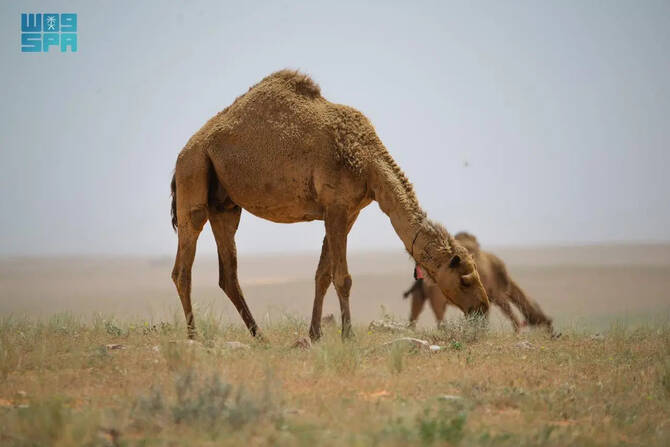
In Jabla National Park, located in Al-Dawadmi governorate in Riyadh region, a pioneering experiment was carried out to regulate camel grazing through the issuance of official permits to their owners. After only one grazing season, a field survey indicated a 76 percent reduction in the cost of manufactured feed as a result of the increased reliance on rich, natural rangelands and improved productivity.

In the Ma’ila rangelands of the Northern Borders Province, sheep grazing was organized for approximately 7,000 animals. This resulted in a 100 percent reduction in feed costs during the grazing season; in other words, complete grazing self-sufficiency through the use of local natural resources.

Such models have strengthened the trust between herders and the center, by demonstrating that environmental protection can result in direct economic benefits for local communities.

The concept of grazing regulation extends to include preventive grazing in natural rangelands, natural parks, valleys and mountain forests, where dry vegetation accumulates during certain seasons.

By permitting organized grazing in these areas, the excess biomass is utilized to lower the risk of fires, positioning grazing as an effective environmental-protection tool that contributes to the conservation of biodiversity and a reduction in emissions as a result of burning vegetation.

As part of the technological transformation of the sector, the center has launched an electronic system for issuing grazing permits through its “Nabati” platform, marking a step forward in the comprehensive automation of grazing-regulation processes.

The platform enables herders to submit applications electronically and monitor the status of their permits, while linking geographic and environmental data to ensure regulatory compliance and allocate grazing activities in line with the capacities of each site.

This digital transformation represents a qualitative shift toward the smart and sustainable management of natural rangelands.

The regulation of grazing in the Kingdom is not merely an environmental project; it is an integrated national vision aimed at protecting nature, supporting the rural economy, strengthening food security, and preserving a rich pastoral legacy.

Through scientific plans, digitization and partnerships with local communities, the Kingdom is steadily advancing in its efforts to become a regional model for rangeland sustainability and development, in line with the objectives of Saudi Vision 2030 and the Saudi Green Initiative.

Meshal Al-Harbi is director general of the General Department of Natural Rangelands at the National Center for Vegetation Cover Development and Combating Desertification.
 

Disclaimer: Views expressed by writers in this section are their own and do not necessarily reflect Arab News' point-of-view

A Christmas carol in Techville

A Christmas carol in Techville

Author
A Christmas carol in Techville
Illustration courtesy of Gemini
Short Url

In the prosperous city of Techville, where towers of glass shimmered like icicles and drones hummed softly above snow-dusted rooftops, there lived a man named Edwin Computon, chief director of the Office of Intelligent Systems. 

He was brilliant, efficient, and entirely convinced that algorithms—cold, precise, obedient—were the finest companions a city could ask for. It was said that no man in Techville understood AI more deeply, yet no man understood the heart of his fellow citizens less.

As Christmas Eve settled upon the city with its quiet glow of lanterns, the people gathered in the squares to sing carols of peace and goodwill, but Edwin remained alone in his office, hunched over the glowing panels of the Central Decision Engine.

“Sentiment,” he muttered, “is the enemy of progress.”

Yet as the clock struck midnight, a sudden stillness fell upon the building. The monitors dimmed. The server lights flickered. And Edwin found himself enveloped in a presence both familiar and strange—a shimmering figure made of codes and clouds, glowing with the soft radiance of a winter star.

“I am the Ghost of Algorithms Past,” the apparition spoke.

The ghost of algorithms past

The spirit swept Edwin into the memories of Techville’s early days: a small coastal town dreaming of progress, where people embraced AI with wonder rather than dependence. He saw the first self-driving tram, met with cheers.
The first automated clinic, celebrated. The first predictive system for storms, applauded. But the spirit guided him further—toward the first cracks.

A family confused by a medical algorithm they could not question. A fisherman wrongly flagged by an early surveillance system.
A young student punished by a bias hidden deep within a classifier. 

“They trusted what they did not understand,” the ghost whispered. “And you, Edwin, were already urging the city forward, faster, faster still.”

The scenes dissolved like melting frost. Edwin reached out, but the ghost was already fading. “Remember,” it said, vanishing into the dim glow of the monitors, “progress without memory becomes cruelty.”

The ghost of algorithms present

A second spirit appeared, wrapped in warm lights and adorned with the cheer of Techville’s Christmas Eve festivals. Its form flickered with images of citizens—families, workers, students—each illuminated by a digital halo representing their daily interactions with AI.

“I am the Ghost of Algorithms Present,” it declared. “Walk with me.”

They soared over the city, where lanterns shone like hopeful constellations. Edwin watched scenes he had rarely witnessed:

In the hospital, a doctor stood thoughtfully beside an AI report, explaining to a worried mother what the system could—and could not—predict.

In a public square, citizens debated the city council’s new ethical regulations, speaking passionately about transparency, dignity, and safety.

In a classroom, a teacher guided her students through discussions on responsibility in the age of intelligent machines.

“Do you see?” the ghost asked. “The city has grown wiser, not by rejecting your work, but by insisting that technology walk hand-in-hand with conscience.”

But not all scenes were joyful. The ghost showed Edwin a warehouse where a fully autonomous defense drone sat idle, its deployment paused after a near-disastrous misclassification earlier that year. Engineers stood around it anxiously.  “If the system had launched,” one whispered, “our city could have known tragedy.”

Edwin felt a chill. “That was a minor flaw,” he insisted.

The ghost gazed at him with gentle heaviness.  “Minor flaws are harmless—until they touch human life.”

Before Edwin could reply, the spirit dissolved into drifting snowflakes of data.

The ghost of algorithms yet to come

A third figure appeared—silent, cloaked in a deep digital shroud. No warmth, no cheer, no lantern light accompanied it. Edwin trembled.

“You must be…” He swallowed hard.  “…the Ghost of Algorithms Yet to Come.”

The spirit did not speak; it simply pointed.

They stood before a future Techville: colder, stronger, yet somehow emptier. 

AI governed every decision with stark efficiency. Human judgment had grown rare. People lived safely, predictably—yet without trust, without voice, without dignity. Edwin was led into an Ethics Council chamber—abandoned.
Laws that once protected human oversight lay torn, unread. Companies dominated policy, optimizing away the very idea of responsibility. He saw his own office, years later, replaced by an autonomous system.

Even Edwin himself was gone from history. No one remembered the man. Only the algorithmic empire he had helped unleash.

He fell to his knees. “Spirit,” he cried into the sterile air, “is this the future that must be, or only the future that may be?”
The spirit did not speak—but its silence was enough.

Then, like a lantern being lit in a darkened room, the vision faded.

Awakening to Christmas morning

Edwin awoke at his desk, the first rays of Christmas dawn breaking gently over Techville. The city bells were ringing. Carols floated from the streets. He rushed outside, almost stumbling with excitement, greetings tumbling from his lips: “Merry Christmas! Merry Christmas to everyone!”

He hurried straight to the Ethics Council, gathering citizens, engineers, and council members alike. His voice trembled—not with fear, but with newfound humility.

“My friends,” he began, “we have built wonders—but without wisdom, wonders become weapons. Let us reaffirm today that human dignity is our constant star, and conscience our compass.”

The proclamation that followed became known as Techville’s Christmas Charter of Responsible AI, vowing: Transparency in all high-impact systems, human oversight where life and liberty are at stake, ethical certification for every public algorithm, education in digital responsibility for every child and above all: technology that serves humanity, never replaces its judgment.

The people rejoiced, for the city had found its heart again.

And Techville shone that Christmas—not only with lights and lanterns, but with the renewed warmth of moral clarity.

Edwin Computon lived the rest of his days as a man transformed; some said he became the gentlest and most thoughtful guardian of ethics the city ever knew.

And whenever citizens passed the council hall on Christmas Eve, they would smile and whisper:

“May we forever remember the carol that saved Techville—the carol sung by the ghosts of algorithms.”

Rafael Hernandez de Santiago, viscount of Espes, is a Spanish national residing in Saudi Arabia and working at the Gulf Research Center.
 

Disclaimer: Views expressed by writers in this section are their own and do not necessarily reflect Arab News' point-of-view

Saudi Arabia’s Northern Border Region set for investment takeoff

Saudi Arabia’s Northern Border Region set for investment takeoff

Author
Saudi Arabia’s Northern Border Region set for investment takeoff
Northern Border Region represents a high-potential destination, offering diverse opportunities. (SPA/File)
Short Url

The Northern Border Region stands out as a vital economic hub among Saudi Arabia’s 13 regions, contributing around SR27 billion ($7.2 billion) annually to the Kingdom’s gross domestic product.

Serving as one of the Kingdom’s principal northern gateways, the region is endowed with vast mineral wealth, most notably phosphate reserves that account for about 7 percent of global supply. It also hosts significant natural gas resources, ranking among the largest worldwide. Together, these assets provide strong potential for downstream and value-added industries, particularly in phosphate-based manufacturing.

Strategically positioned along the international highway linking Saudi Arabia and the Gulf states with neighboring countries to the north — including Jordan, Syria, and Turkiye — the region connects directly to broader markets extending into Europe. 

This geographic advantage is further strengthened by the Kingdom’s only land border crossing with Iraq, the Jadidat Arar Border Crossing, located roughly 60 km north of Arar city.

The Northern Border Region’s distinctive location and competitive investment appeal were highlighted at the Annual Northern Borders Investment Forum 2025, held in Arar in December. The forum serves as a recurring platform to expand investment opportunities, attract local and international investors, and showcase the region’s untapped economic potential.

This year’s event, held under the patronage of Prince Faisal bin Khalid bin Sultan bin Abdulaziz, governor of the Northern Border Region, presented more than 240 investment opportunities with a total value of around SR40 billion.

Aligned with Saudi Vision 2030, the region aspires to emerge as a leading investment destination, linking investors with high-impact opportunities and contributing to long-term sustainable development. This ambition is supported by a mission to build a comprehensive investment ecosystem that facilitates opportunity discovery, strengthens strategic partnerships, and drives economic growth across the region.

At the forum’s main panel, titled “From gaudiness to empowerment: A national vision for future investment,” vice ministers and chief executives from key government entities explored ways to unlock the region’s full investment potential. Participants agreed that the Northern Border Region represents a high-potential destination, offering diverse opportunities across mining, energy, logistics, and tourism.

Deputy Minister of Environment, Water and Agriculture Mansour bin Hilal Al-Mushaiti described the region as one of the Kingdom’s most promising strategic areas, citing its natural and geographic advantages that make it attractive for investment across the environment, water, and agriculture ecosystem. 

These include abundant natural resources, varied topography, vast rangelands, rain-fed agriculture, rich biodiversity, and its strategic location anchored by the Arar Land Port, which supports trade and logistics services.

Al-Mushaiti highlighted significant progress achieved by the ministry in the region. In the environmental sector, degraded land was reduced from 167,000 hectares in 2015 to 89,000 hectares in 2023. More than 60,000 hectares were rehabilitated, nearly 1 million trees were planted, and nine tonnes of rangeland seeds were dispersed across more than 3,700 hectares.

He added that the rehabilitation of Mu‘aylah National Park has surpassed a 70 percent completion rate, transforming it into an investment opportunity covering more than 14 million sq. meters, alongside 18 additional environmental investment opportunities. Meanwhile, the water sector has seen the rollout of vital projects exceeding SR2.2 billion in value.

Al-Mushaiti concluded by stressing that the Northern Border Region offers a promising investment environment, backed by solid infrastructure and a wide range of opportunities across environment, water, and agriculture.

In sum, the Northern Border Region presents a compelling investment proposition, combining strategic location with expanding opportunities in mining, energy, logistics, and tourism — all supported by strong government commitment and an enabling investment ecosystem.

• Talat Zaki Hafiz is an economist and financial analyst.
X: @TalatHafiz

Disclaimer: Views expressed by writers in this section are their own and do not necessarily reflect Arab News' point-of-view