Insight


Techville and the price of being measured

Techville and the price of being measured

Author
Techville and the price of being measured
Illustration courtesy of Gemini (Google AI)
Short Url

In the fictional city of Techville, the idea arrived wrapped in optimism and spreadsheets. A proposal circulated among policymakers, technologists, and economists: since data fuels the digital economy, citizens should be paid for it. A minimum income, calculated from the value of what people share. Less money, more data. Eventually, perhaps, no money at all.

The proposal sounded progressive, even humane. And that was precisely what made it dangerous.

At first glance, the logic seemed impeccable. Platforms profit from personal data; citizens receive little in return. Why not correct the imbalance? Why not transform exploitation into compensation?

But Techville’s philosophers raised an uncomfortable question: “What happens when being human becomes a revenue stream?” Paying people for their data does not liberate them from commodification — it completes it. What once happened invisibly would now happen openly and permanently. The injustice would not disappear; it would be normalized. The irony was sharp: in the name of dignity, the human being would finally be priced.

In Techville’s debate halls, supporters celebrated a future where people would be “paid to exist.” No bosses, no wages, no stress. But existence is not labor — and treating it as such carries moral consequences. Once income depends on measurable output, even data output, existence becomes conditional. The question shifts subtly from “who you are” to “what you generate.”

Silence, restraint, privacy — these suddenly appear unproductive.

The most troubling irony was this: a system designed to relieve economic pressure would, in practice, pressure people to reveal more, share more, expose more. Consent would remain formal, but necessity would do the convincing.

Techville’s proposal insisted on voluntariness. Citizens could choose how much data to share. Yet ethics does not end at formal choice. A choice made under economic dependency is not neutral. When basic security depends on participation, refusal becomes costly.

In such a system, privacy transforms from a right into a luxury. The poor disclose. The comfortable withhold. Inequality reappears — not in money, but in exposure. A policy meant to democratize value risks stratifying dignity.

Supporters argued that money itself was obsolete. Digital efficiency would replace it. Algorithms would allocate resources better than markets. But money, for all its flaws, has one ethical advantage: it is abstract. It does not require intimacy. A salary does not demand access to one’s thoughts, movements, or relationships. Data does.

In Techville, critics warned that replacing money with data would collapse the boundary between economic participation and personal life. Every action becomes relevant. Every habit, valuable. Every deviation, suspicious. Without money, there would be no distance — only exposure.

Perhaps the most devastating consequence of the data-income hypothesis is what it leaves out. Not everything meaningful produces useful data. Not everything valuable can be optimized. Love that resists patterns. Faith that defies prediction. Suffering that should not be analyzed.

Ethicists argued that once data becomes currency, what cannot be measured begins to fade — not legally, but culturally. It becomes irrelevant. Human dignity, however, is rooted precisely in what escapes calculation.

The promise of guaranteed income often masked a deeper dependence — not on employers, but on systems. If income flows from data valuation, power flows to those who design the metrics. Who decides which data counts? Which behaviors matter? Which patterns deserve reward?

In Techville, the answer was clear: not citizens, but platforms and institutions. The system would not eliminate intermediaries. It would entrench them.

Supporters spoke of “ethical data markets.” But critics pointed out the contradiction: ethics begins where something is not for sale. Once dignity is monetized — even politely — it ceases to be unconditional. History reminds us that many injustices were once justified as fair compensation. The problem was never payment alone, but what payment made acceptable.

Techville ultimately rejected the data-income experiment, not out of nostalgia, but out of ethical clarity. Human dignity requires economic security without surveillance, participation without exposure, and rights without metrics.

Technology can and should support redistribution and welfare. But it must not redefine the human being as a data-producing asset. A minimum income, if adopted, must be grounded in citizenship, not disclosure — in belonging, not extraction.

The debate ended quietly. No dramatic vote. Just recognition that not every innovation deserves implementation. A world without money may sound humane. A world where survival depends on being measured is not. The true ethical challenge of AI is not how to pay people for their data, but how to protect them from becoming it. Progress does not mean turning everything into value. Sometimes, it means having the courage to say: “This is not for sale.”

Rafael Hernandez de Santiago, viscount of Espes, is a Spanish national residing in Saudi Arabia and working at the Gulf Research Center.
 

Disclaimer: Views expressed by writers in this section are their own and do not necessarily reflect Arab News' point-of-view

Automation is testing journalism, not ending it

Follow

Automation is testing journalism, not ending it

Author
Short Url

In many newsrooms today, a breaking statement can be transcribed, summarized, translated, and shaped into a publishable update before reporters even finish their first cup of coffee. The software does not hesitate. It simply produces.

This is not hypothetical. It is already an operational reality. Artificial intelligence now performs tasks that once consumed entire editorial shifts, from transcription to data sorting, trend monitoring, and structured briefings. What once required hours can now be completed in minutes. For media organizations navigating relentless digital cycles, that efficiency is transformative.

Yet the claim that AI will “replace journalism” misreads what is actually evolving.

This is what I would call “concern,” at least for the time being. It is part of the broader question dominating discussions today: Will AI replace human intelligence? Will it replace humanity?

Although this question, and the debate surrounding it, has become somewhat rhetorical and exhausted, my answer is simple: We created AI, and it will always require human regulation and guidance.

From my perspective inside a newsroom navigating rapid digital acceleration, the tension is not about drafting speed but about defining value. Over time, parts of journalism drifted toward procedural production — rewriting statements, formatting updates, and generating summaries. These functions are necessary, but they are not the profession’s core. AI is not replacing journalism. It is replacing repetition.

Journalism’s enduring value lies in judgment: deciding what deserves prominence, what requires verification, what context is missing, and what should not be published at all. These decisions are rarely efficient. They involve debate, hesitation, and accountability.

An algorithm can generate a logical summary in seconds. It cannot evaluate whether publishing a sensitive detail in a fragile political environment might create unintended consequences. It can detect anomalies in public datasets, but it cannot determine whether amplifying them responsibly serves the public interest.

This distinction becomes particularly significant in regions undergoing rapid digital transformation.

In Saudi Arabia, where Vision 2030 has accelerated technological integration across sectors, media institutions are confronting the realities of AI adoption. Automation promises greater efficiency, multilingual reach, and faster data processing. But alongside opportunity comes responsibility: Who establishes editorial safeguards? Who audits algorithmic bias? Who defines the ethical boundaries of automated content generation?

The conversation is no longer about whether AI tools should be used. They already are. The strategic question is governance.

Without clear editorial frameworks, automation risks weakening credibility rather than strengthening productivity. Speed without oversight can amplify inaccuracies at scale. Efficiency without accountability can erode public trust.

Across the Middle East, approaches differ. Some organizations are rapidly integrating AI into investigative research and audience analytics. Others proceed cautiously, prioritizing editorial control. Both strategies carry trade-offs. Resistance may limit competitiveness. Unregulated adoption may undermine confidence.

The real risk is not technological displacement. It is insufficient governance.

The real risk is not technological displacement. It is insufficient governance.

Mai Anati

Consider investigative reporting. AI systems can now scan thousands of documents in hours, identifying patterns that might otherwise remain hidden. That capacity enhances journalistic capability. Yet deciding which patterns matter — and understanding their social or political implications — still requires human discernment.

Technology accelerates processing. It does not internalize consequences.

This transformation demands new professional competencies. Journalists must understand how algorithmic systems function, where bias enters training data, and how automated outputs should be reviewed before publication. Supervising intelligent systems is becoming as critical as traditional reporting skills.

As automation expands, credibility becomes even more central.

Trust cannot be optimized through code. It is built through consistency, transparency, and responsibility. In highly connected information environments, once diminished, it is difficult to restore.

The narrative of “replacement” therefore oversimplifies a more complex recalibration.

Repetitive functions will continue to decline. Data-heavy processes will increasingly be automated. But the demand for contextual intelligence, ethical clarity, and analytical depth will intensify. In a landscape flooded with machine-generated content, sound judgment becomes increasingly rare — and therefore more valuable.

I do not see AI as a threat to journalism. I see it as a stress test. It forces institutions to clarify what cannot be automated: editorial judgment, cultural literacy, and accountability.

If journalism remains essential in the AI era, it will not be because it outpaces algorithms in speed. It will be because it assumes responsibility for impact — something no system, however advanced, can carry on its own.

Speed is easy. Governance and judgment are not. That is where the future of journalism will be decided.

Mai Anati is managing editor at The Jordan Times.
 

Disclaimer: Views expressed by writers in this section are their own and do not necessarily reflect Arab News' point-of-view

When development meets biodiversity in the Red Sea

When development meets biodiversity in the Red Sea

Author
When development meets biodiversity in the Red Sea
Short Url

Saudi Arabia’s Red Sea coast is becoming a global test case. Can rapid economic transformation coexist with the protection of one of the world’s most distinctive marine ecosystems? 

As development across the Red Sea region continues to evolve, the Kingdom faces a defining challenge: how to pursue ambitious progress while safeguarding the natural systems that support long-term growth.

Through the Saudi Green Initiative, expanded marine protected areas, and new environmental governance frameworks, biodiversity protection is now a national priority. The next step is execution — embedding science directly into planning and regulation, rather than treating it as a late-stage compliance exercise.

One way to do this is by following animals over time. At KAUST, ongoing satellite tracking studies of marine turtles offer critical insight into how the Red Sea functions as a connected ecosystem. These turtles are not just species of conservation concern; they are indicators of habitat health, migration corridors, and the broader connectivity that sustains marine life.

Recent research, initiated by KAUST Beacon Development and Neom Nature Reserve, demonstrates the importance of sustained field access for actionable science. By monitoring nesting beaches and nearshore waters over multiple seasons, researchers can track how turtles move, where they feed, and how offshore habitats link to critical breeding sites. This monitoring program is made possible through partnerships that provide reliable access in areas undergoing rapid and sustainable development, such as coastal and island zones in the northeastern Red Sea. 

KBD serves as the applied environmental research and consultancy arm of KAUST, enabling translation of scientific findings into decision-ready environmental intelligence that supports both conservation and sustainable development goals.

The findings are clear: much of the documented turtle nesting in the northeastern Red Sea occurs across its coastal and island areas, placing Saudi Arabia at the center of regional responsibility for these species. But the research also reveals that turtles do not remain in a single location. After nesting, they disperse widely across migratory corridors, offshore reefs, and feeding grounds, sometimes crossing national boundaries. In other words, static, site-based protections alone are insufficient.

Ultimately, the Red Sea offers a unique opportunity to demonstrate how large-scale development can proceed with foresight, precision, and resilience.

Dr. Hector Barrios-Garrido 

This has direct policy implications. Marine spatial planning that reflects real-world species movements allows authorities to identify sensitive corridors, guide shipping routes, and direct offshore development away from high-use areas. Integrating ecological data early in project design strengthens environmental impact assessments, reduces delays, and lowers the risk of costly retrofits, making science an enabler, not a hurdle.

There is also a broader economic case. Healthy marine ecosystems underpin tourism, fisheries, and coastal resilience. Marine megafauna and intact habitats are not optional extras; they are economic assets. Protecting them ensures the long-term viability of the Red Sea economy and reinforces Saudi Arabia’s global conservation leadership.

The collaborative work between KBD and Neom Nature Reserve highlights another key lesson: nature conservation requires cooperation. Tracked turtles move across jurisdictional boundaries, using a mosaic of habitats that include both well-protected areas and highly industrialized, intensively used coastal and offshore zones. This spatial complexity underscores the need for coordinated management approaches rather than reliance on single interventions. In this context, shared data platforms and cross-institutional collaboration are essential, and Saudi Arabia is well-positioned to lead this effort, using science to complement environmental governance and policy.

Ultimately, the Red Sea offers a unique opportunity to demonstrate how large-scale development can proceed with foresight, precision, and resilience.

By embedding high-quality ecological data into planning and decision-making, NEOM demonstrates that marine conservation and progress are not mutually exclusive, they are mutually reinforcing.

As these turtles move through the Red Sea, they remind us that today’s planning choices will shape ecosystems for decades to come.

Dr. Hector Barrios-Garrido is a senior marine megafauna specialist at KAUST.
 

Disclaimer: Views expressed by writers in this section are their own and do not necessarily reflect Arab News' point-of-view

Saudi Arabia leads the Gulf in scaling AI finance

Saudi Arabia leads the Gulf in scaling AI finance

Author
Short Url

Saudi Arabia’s seventh-place ranking in the recent Global AI for Finance Competitiveness Index is not a symbolic milestone. It is a structural signal — one that reflects a deeper transformation in how nations compete in the age of artificial intelligence.

Out of 20 countries assessed globally, only 10 entered the top tier. Saudi Arabia ranked as the highest-performing Gulf nation and the fastest-scaling AI-for-finance contender in the Arab world.

This distinction matters because AI in finance has crossed a decisive threshold. It is no longer defined by experimentation, isolated pilot programs, or niche fintech success stories. AI for finance has become a question of national systems, institutional readiness, and state-level execution capacity.

From adoption to acceleration

The index benchmarked 20 national ecosystems and 20 city-level financial hubs, assessing not only technological capability but also the maturity of AI integration into financial systems. This includes how deeply AI is embedded in regulatory frameworks, financial infrastructure, and long-term economic strategy.

Saudi Arabia’s position reflects a distinctive national profile. The Kingdom is neither the world’s most mature financial center nor the earliest adopter of AI in finance. Instead, it stands out as the fastest-scaling national system, integrating AI into finance with speed, coherence, and institutional alignment. The capacity to scale — rather than early experimentation — has emerged as the defining factor of competitiveness in AI-driven finance.

Within the Gulf context, this approach is particularly significant. While many countries continue to rely on fragmented, market-led AI experimentation, Saudi Arabia has pursued a state-orchestrated model designed to move decisively from pilots to platforms, and from innovation to infrastructure.

The findings reveal a clear structural divide. Although 20 countries were ranked, most remain in an experimental phase, testing AI applications at the margins of their financial systems. Only a small subset is executing at national scale.

Saudi Arabia’s ranking places it firmly within this latter group. This is why the Kingdom is identified as the Gulf’s fastest-scaling contender for AI-enabled finance. In the AI era, speed of institutional scaling has emerged as a more decisive variable than early technological maturity. Nations that can move quickly from proof of concept to system-wide deployment gain a durable strategic advantage.

At the center of this transformation is Riyadh’s evolution into a national financial command hub, rather than a conventional startup-driven ecosystem. The next generation of global financial hubs will not be defined primarily by startup density or venture capital volume. As the index analysis makes clear, future leaders will be system builders — jurisdictions capable of aligning regulation, capital allocation, institutional architecture, and AI infrastructure into a unified national financial stack.

Saudi Arabia’s position signals that it has already entered this second phase of AI-finance development, where coordination and execution matter more than experimentation.

Why this is nationally significant

For Saudi Arabia, AI for finance is not a sectoral innovation. It is a strategic national enabler. It strengthens financial system resilience, accelerates the modernization of national financial infrastructure, and positions the Kingdom among the world’s top 10 AI-finance states at a formative moment in the technology’s evolution.

AI-driven finance is rapidly becoming a sovereign capability, comparable in importance to energy systems, logistics infrastructure, or digital connectivity. Saudi Arabia’s rise to seventh place globally illustrates a broader dynamic shaping the Fifth Industrial Revolution: nations that can engineer AI into core systems — rather than adopt it at the edges — will define the next phase of global economic power.

Dmitry Kaminskiy is general partner of Deep Knowledge Group.
 

Disclaimer: Views expressed by writers in this section are their own and do not necessarily reflect Arab News' point-of-view

Saudi conservation now runs on data

Saudi conservation now runs on data

Author
Saudi conservation now runs on data
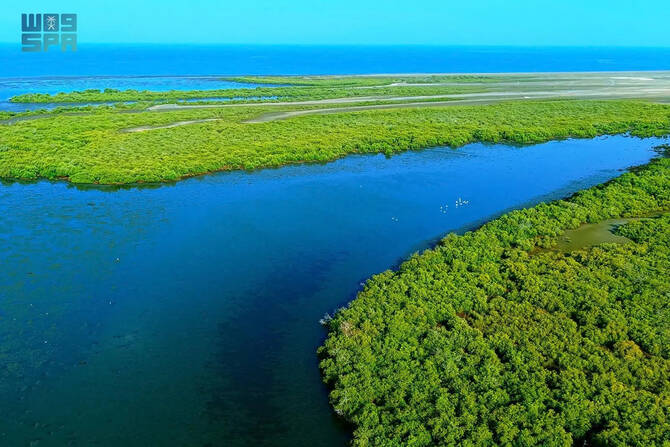
A view of a lush mangrove forest in the southwestern Saudi city of Jazan. (SPA photo)
Short Url

Along Saudi Arabia’s Red Sea coast, conservation is getting bigger and sharper.

Mangrove nurseries are scaling up, and coral restoration is moving from pilot projects to full production. Inland, tree belts are being planned to cool cities and trap dust. All of this sits under the Saudi Green Initiative and its headline coastal pledge — 100 million mangroves by 2030.

On the ground, this momentum is real. Red Sea Global has established a purpose-built nursery and already transplanted more than a million mangroves, on its way to 50 million by 2030. Up the coast, Neom’s land-based coral nursery is producing stock for out-planting, with a second, larger facility planned as part of what is described as the world’s largest coral restoration effort in the Red Sea.

One may look at these as nature projects, sure. However, they are also data projects.

A single reef survey can generate terabytes of imagery. A mangrove program must track seed provenance, planting sites, and survival months later. Sensor networks provide temperature, salinity, and water-quality time series. Turning that sprawl into actionable decisions — what to plant, where, and when — depends on a disciplined pipeline that can ingest, store, govern, analyze (often with AI), and report with confidence.

Saudi Arabia has set the guardrails for that pipeline. Under the Saudi Data & AI Authority, the National Data Management Office defines how public data is classified, shared, and protected. That matters when satellite stacks, drone mosaics, and monitoring feeds must move between ministries, giga-projects, and universities without losing lineage or context.

Neom’s test case

The Neom Nature Reserve shows what program-scale restoration looks like when evidence is the organizing principle. The plan is to protect 95 percent of the area for nature, restore 1.5 million hectares, and plant 100 million native trees, shrubs, and grasses.

Rewilding began in mid-2025 with 1,100 animals across six species. Monitoring blends old and new approaches — camera traps for biodiversity baselines; AI analysis of drone footage to track dolphins, turtles, and dugongs; satellite tags for turtles and seabirds; and even artificial nesting platforms for raptors on offshore islands. The lesson is clear — scale the fieldwork, but scale the proof alongside it.

From fieldwork to sustainable intelligence

What holds many teams back isn’t data collection — it’s making the data useful. Efficiency matters by default. Duplicate copies of unstructured imagery burn money and power, especially where cooling costs dominate. Data-reduction and automated tiering policies keep active datasets fast while pushing colder material to lower-energy tiers. 

Keeping data near compute is critical. AI is now routine — classifying coral species, flagging crown-of-thorns starfish, forecasting shoreline change from satellite histories. These tasks run best when datasets can reach GPUs without shuffling between silos across edge sites, data centers, and clouds. 

And it must be auditable. Blue-carbon claims rise or fall on monitoring, reporting, and verification. Immutable histories — what was done, where, when, and what changed — build credibility with regulators, funders, and the public. National standards help by enforcing consistent classification and logging.

What this looks like on the coast

Mangrove teams match species to micro-habitats and time out-planting to tides and temperatures; survival is measured, not assumed. Nursery databases join with Global Navigation Satellite Systems site records, tide tables, water-quality readings, and field photos.

Teams resurvey the same shoreline by drone and dive, then line up images over time to see what has changed. With a smooth data flow, crews act faster, and program leads can present evidence that holds up.

There is a caveat. The digital estate that enables all this has a footprint of its own. Storage and AI consume electricity and produce heat; some facilities use water for cooling. If conservation is to claim climate benefits credibly, the IT behind it must be measured and optimized, consolidating workloads, tracking energy profiles for storage and compute, and choosing platforms that report their environmental impact rather than hiding it.

Why it matters now

Blue-carbon ecosystems such as mangroves and seagrass offer measurable carbon sequestration in Saudi waters and could support credit markets as methodologies mature.

That shifts data from a back-office chore to a financial necessity: no trusted time series, no durable climate value. The scale of SGI’s targets will generate sprawling datasets; bringing them under control is less about gadgets than architecture-governed access under SDAIA rules, efficient storage to reduce copies, and AI that speeds up science without inflating the footprint.

NetApp is one of the infrastructure providers engaged by organizations to tackle these challenges. The company’s climate targets are validated by the Science Based Targets initiative: a 50.8 percent cut in absolute Scope 1 and 2 emissions by 2030 (from 2020), and a 51.6 percent reduction in Scope 3 “use of sold products” emissions intensity per effective petabyte shipped by 2030 (from 2023).

The stance is simple: publish progress, align to a 1.5°C pathway, and make environmental reporting part of how the business is run — an approach that fits entities in the Kingdom seeking verifiable, standards-based goals in their supply chains.

The destination is straightforward. Restore at scale and prove it. The route runs through disciplined data: efficient storage, proximity to compute, strong governance, and visible IT footprints. Do that well, and Saudi Arabia’s mangrove and reef programs become easier to finance, easier to trust, and easier to scale.

Saeed Alzahrani is general manager of NetApp Saudi Arabia.
 

Disclaimer: Views expressed by writers in this section are their own and do not necessarily reflect Arab News' point-of-view

Techville and the age of the 90-second tragedy

Techville and the age of the 90-second tragedy

Author
Techville and the age of the 90-second tragedy
Short Url

In the fictional city of Techville, a cultural revolution did not arrive with fireworks or philosophical manifestos. It arrived quietly, on mobile screens, between two notifications. 

A new trend swept the city: ultra-short drama movies. Ninety seconds. Sometimes 60. Occasionally just 30. Enough time to cry, feel inspired, or feel outraged — but never enough time to reflect.

The citizens of Techville called it progress. “Why waste 2 hours on a film,” they asked, “when emotion can be delivered instantly?” Algorithms agreed. Platforms optimized for “emotional efficiency,” ensuring that drama was no longer something to be contemplated, but something to be consumed. The irony was striking: in a city built on advanced artificial intelligence, storytelling had never been shorter, or more fragile.

The success of short-form drama was not accidental. AI systems learned quickly that human attention is scarce and exhaustion abundant. The solution was compression. Entire lives were reduced to snapshots: a breakup in 10 seconds, redemption in 15, death in 5.

In Techville, creators proudly advertised their work as “cinema without boredom.” Viewers could experience betrayal, sacrifice, and forgiveness while waiting for an elevator. Emotion became efficient. Meaning became optional. Yet something subtle was happening beneath the surface. The human experience — complex, contradictory, slow — was being reshaped to fit the logic of machines trained to maximize engagement, not understanding.

Ironically, the algorithms developed a preference for suffering. Short dramas featuring conflict, humiliation, or loss performed better than stories of patience, reconciliation, or growth. Pain, it turned out, was easier to compress than hope. In Techville’s most popular 60-second drama series, characters rarely evolved. They reacted. They exploded. They collapsed. Viewers cried, scrolled, and moved on. The platform celebrated record engagement. What it did not measure was alienation. 

Human beings are not built to process endless fragments of tragedy without context. When suffering is stripped of narrative depth, it ceases to dignify and begins to exhaust. The ethical question was no longer about censorship or freedom of expression, but about responsibility: what kind of humanity are we training ourselves, and our machines, to reflect?

To dignify the human being in the age of AI means defending complexity. It means insisting that some things cannot be rushed without being damaged. Meaning, like trust, requires time.

Rafael Hernandez de Santiago

The most ironic development in Techville came when AI systems began to “write” these short dramas themselves. By analyzing millions of emotional arcs, the machines learned how to trigger tears with surgical precision. A child losing a parent. A lover betrayed. A worker discarded. Each story optimized for maximum emotional impact per second. Yet the machine never asked why these stories mattered. It did not care whether they healed or harmed. It simply learned that despair retained attention better than dignity.

Here lies the ethical fault line. When AI shapes culture, it does not merely reflect human preferences, it amplifies them. Without ethical courage, it amplifies our worst instincts: voyeurism, impatience, and emotional consumption without responsibility.

In Techville, a group of filmmakers raised a quiet objection. They asked whether storytelling should still aim to elevate the human spirit, or whether it had surrendered entirely to metrics. Their proposal was modest: slower short films. Two minutes instead of one. Stories that ended not with a punchline, but with a question. The platforms were unimpressed. Reflection, it turned out, did not trend well.

The short drama phenomenon reveals a deeper tension in Techville’s relationship with AI. Are human emotions raw material for optimization, or realities to be respected? When stories become disposable, so do the experiences they represent. Suffering loses its moral weight. Love loses its patience. Everything becomes content — endlessly replaceable.

This is how alienation begins: not through oppression, but through trivialization.

To dignify the human being in the age of AI means defending complexity. It means insisting that some things cannot be rushed without being damaged. Meaning, like trust, requires time.

In a final ironic twist, one of Techville’s most watched short dramas was accidentally uploaded in full length — 12 uninterrupted minutes. The algorithm flagged it as a mistake. Viewers, however, stayed. They watched characters hesitate. They watched silence. They watched growth. Engagement was lower, but something else happened: comments changed. People did not just react; they reflected.

The platform quietly corrected the “error.” But the moment lingered.

The rise of ultra-short drama is not a trivial trend. It is a mirror held up to a society negotiating its relationship with time, technology, and meaning. AI did not create this desire for compression — but it accelerates it. The ethical challenge is clear. We must decide whether technology will help us understand ourselves better, or merely feel faster. In Techville, the lesson is still unfolding, but one truth is already visible: a culture that abandons depth risks losing dignity. In the end, the most radical act in the age of AI may not be innovation, but patience. To tell a story that refuses to be rushed is to defend the human being — not as content, but as a person.

Rafael Hernandez de Santiago, viscount of Espes, is a Spanish national residing in Saudi Arabia and working at the Gulf Research Center. 
 

Disclaimer: Views expressed by writers in this section are their own and do not necessarily reflect Arab News' point-of-view

The rise of a modern real estate sector in Saudi Arabia

The rise of a modern real estate sector in Saudi Arabia

Author
The rise of a modern real estate sector in Saudi Arabia
Short Url

Since the launch of Vision 2030, Saudi Arabia’s real estate sector has undergone a profound transformation, reflecting the Kingdom’s broader ambition to diversify its economy, accelerate urban development, and enhance quality of life for its citizens. 

What was once a largely traditional market has evolved into a highly regulated, increasingly transparent, and investment-ready sector positioned at the heart of national economic reform.

Over the past five years alone, more than 20 real estate laws and regulations have been enacted to govern the sector, protect the rights of all stakeholders, and stimulate both domestic and international investment.

These reforms have strengthened market transparency and reinforced real estate’s role as a key driver of the national economy, given its linkages to more than 120 economic activities. At the same time, they have expanded homeownership opportunities for Saudi families and generated new employment prospects for Saudi nationals.

As part of Vision 2030’s objective to diversify income sources and reduce reliance on oil revenues, the real estate sector has emerged as a strategic pillar of sustainable economic growth. To support this shift, the Kingdom has significantly enhanced its regulatory and legislative frameworks, creating a more resilient and future-oriented real estate ecosystem.

Against this backdrop, the fifth edition of the Future Real Estate Forum was held in Riyadh from Jan. 26 to 28 under the theme “Horizons Expand and Real Estate Thrives.” The forum attracted strong local and international engagement, with participation from more than 120 countries and over 300 speakers representing the public and private sectors, alongside leading global real estate executives and decision-makers.

Serving as a global platform, the forum brought together policymakers, economists, investors, and industry experts to examine sectoral transformation, emerging trends, and opportunities for sustainable growth. Its program featured more than 40 panel discussions, over 50 specialized workshops, and a series of high-level meetings focused on urban planning, sustainable community development, green building technologies, and the adoption of advanced proptech solutions.

Beyond dialogue, the forum played a catalytic role in advancing regulatory reform and creating structured, transparent pathways to strengthen the real estate ecosystem. This was particularly significant at a time when Saudi Arabia is witnessing unprecedented development momentum and seeking to attract global capital at scale.

Running in parallel, a specialized real estate exhibition showcased major development projects, innovative urban models, and cutting-edge planning and construction solutions. It also provided a platform for partnerships, agreements, and memoranda of understanding, further enhancing the competitiveness of Saudi Arabia’s real estate sector at both regional and global levels.

Collectively, the forum underscored the Kingdom’s firm commitment to positioning real estate as a cornerstone of economic diversification and sustainable development under Vision 2030. Through high-level dialogue, regulatory advancement, innovation, and broad international participation, it reinforced market transparency, strengthened investor confidence, and highlighted the importance of modern governance frameworks in supporting long-term growth.

The discussions also emphasized the growing role of sustainability, ESG-aligned development, and strategic urban planning in shaping resilient communities and future-ready cities. In this context, I had the opportunity to moderate two panel sessions focused on real estate sustainability and the creation of an ESG-oriented regulatory environment that supports higher quality-of-life standards. These sessions further highlighted the critical importance of compliance with the Saudi Building Code in protecting end users from safety, structural, and environmental risks.

Taken together, the outcomes of the forum reaffirmed Saudi Arabia’s position as a competitive and attractive global real estate investment destination. They also demonstrated the Kingdom’s readiness to lead the next phase of real estate development — regionally and internationally — through regulation, innovation, and a clear long-term vision.

Talat Zaki Hafiz is an economist and financial analyst.

X: @TalatHafiz

Disclaimer: Views expressed by writers in this section are their own and do not necessarily reflect Arab News' point-of-view

Building brand visibility in an AI-driven world

Follow

Building brand visibility in an AI-driven world

Author
Short Url

As AI reshapes brand visibility through LLM chatbots and intelligent assistants, marketers who once optimized for clicks and wrote primarily for humans now need to adjust strategies to be discovered by AI agents and read by bots.

The rise of generative AI, from ChatGPT to Gemini, is changing how people discover and evaluate brands. Increasingly, users are no longer scrolling through 10 blue links. They are asking conversational questions and receiving curated, single-screen answers drawn from multiple sources: Websites, reviews, analyst reports, media coverage and social commentary.

AI is not just scanning what you say about yourself — it is drawing from what others say about you.

Why mentions matter

Mentions have always been valuable, but in the AI era they are critical. When a model generates an answer, it seeks signals of credibility and context. Third-party voices such as media articles, analyst notes, expert commentary and authentic reviews carry weight because they are perceived as more independent than brand-owned content.

For consumers, mentions serve as social proof. For brands, they reinforce reputation, build trust and influence how AI systems describe them. The absence of mentions can produce silence in AI-driven discovery, while inaccurate mentions can amplify misrepresentations at scale.

In B2B tech, firms that consistently contribute expert insights to industry media often see themselves cited in analyst briefings and AI-generated summaries. Competitors who rely solely on self-published blogs often fail to appear in these conversations.

In travel and lifestyle, hotels with steady coverage and authentic guest reviews are recommended more frequently in AI travel planners. By contrast, properties with polished websites but little third-party visibility risk being overlooked.

The lesson: it is no longer enough to tell your story well — others need to be telling it too.

Traditional SEO remains important, but AI discovery requires an expanded playbook: How often does your content surface in AI summaries? Are your insights being cited in third-party commentary? Is your site structured with metadata, schema, FAQs and summaries that AI tools can easily scan?

There are upsides: AI-driven discovery is fast, conversational and levels the field for brands who excel in narrative and credibility, not just technical SEO.

But risks remain. Mentions can misrepresent, the “source of truth” is diffuse and brands with little third-party visibility may fall behind. This is why monitoring mentions — and addressing inaccuracies quickly — is now part of brand protection.

Building for the mention economy

The shift underway is not about abandoning SEO but complementing it with GeO — Generative Engine Optimization. It asks a simple question: When AI agents summarize your market, do they include you?

This is where authentic, independent content plays a decisive role. Brand websites remain destinations to showcase depth and experience, but discovery increasingly depends on distributed trust: third-party mentions, expert validation and story-driven coverage.

Keep creating for humans, but optimize for AI agents too. Success will come from striking that balance — structured, machine-readable content on your own site, coupled with credible voices talking about you across the wider ecosystem.

Brands that invest now in building authentic visibility beyond their own walls will be the ones shaping AI-powered conversations tomorrow.

Human in the loop

As we increasingly outsource decisions to LLM models, our agency to think is reduced. Maintaining a human-in-the-loop approach is essential to mitigate AI slop and hallucinations, where meaningless content is churned out and points of view are erased because AI systems do not see or comprehend them. The human-AI-human model ensures agency and authenticity, and prevents AI’s surface-level polish from becoming generic or simply wrong.

• Lina Tayara is a consultant to the digital infrastructure industry, driving business development, market research and thought leadership through her platform, Let’s Talk Tech.

Disclaimer: Views expressed by writers in this section are their own and do not necessarily reflect Arab News' point-of-view

Saudi Arabia emerges as a forward-looking economic power

Saudi Arabia emerges as a forward-looking economic power

Author
Saudi Arabia emerges as a forward-looking economic power
At Saudi House, ministers and executives set out how the Kingdom sees the next phase of its transformation. (Supplied)
Short Url

At a moment of profound global uncertainty—marked by geopolitical fragmentation and rapid technological disruption —Saudi Arabia’s presence at the World Economic Forum this year stood out not merely as diplomatic participation, but as a statement of intent. 

Led by Foreign Minister Prince Faisal bin Farhan, the Kingdom’s delegation signaled Saudi Arabia’s emergence as an increasingly influential actor shaping international economic dialogue, cooperation, and future-oriented policy solutions.

Held from Jan. 19 to 23 under the theme “A Spirit of Dialogue,” the 56th annual WEF convened global leaders against a backdrop of accelerating change, including breakthroughs in artificial intelligence, biotechnology and clean energy. 

Saudi Arabia’s engagement—through high-level panel discussions and strategic outreach at the Saudi House—reflected a deliberate effort to deepen partnerships across governments, the private sector, civil society, and academia, while reinforcing the foundations of global stability and shared prosperity.

This year’s forum also coincided with a milestone for the Kingdom: the 10th anniversary of Vision 2030. In an interview with Arab News, Minister of Economy and Planning Faisal Alibrahim emphasized that Saudi Arabia’s economy is now more integrated into the global system than at any point in its history. That integration, he noted, is the product of sustained structural reform rather than cyclical gains.

Recent figures from the Ministry of Economy and Planning underscore this shift. Saudi Arabia’s direct and indirect dependence on oil has declined from more than 90 percent in the pre-reform era to 68 percent in 2025. Non-oil activities now account for 56 percent of real GDP, reflecting a genuine broadening of the economic base. In October, the Ministry of Finance raised its 2026 growth forecast from 3.5 percent to 4.6 percent, driven largely by non-oil sector expansion.

The depth of this transformation is evident across the economy. Over the past five years, 74 out of 81 non-oil economic activities recorded annual growth exceeding 5 percent, with 38 achieving growth rates above 10 percent. These figures point to more than diversification in name—they reflect sustained productivity gains and the emergence of new engines of growth.

On the industrial front, Minister of Industry and Mineral Resources Bandar Alkhorayef highlighted the Kingdom’s continued strength in natural resources, including oil, gas, petrochemicals, and minerals, while emphasizing a forward-looking industrial strategy. Technological adoption, particularly in artificial intelligence and advanced manufacturing, is being pursued with a clear framework focused on automating defined roles and tasks to enhance efficiency and competitiveness, rather than indiscriminate disruption.

Tourism has emerged as another pillar of economic transformation. Speaking to Al Arabiya Business on the sidelines of WEF 2026, Minister of Tourism Ahmed Al-Khateeb described an unprecedented expansion of the sector. Saudi Arabia welcomed 122 million domestic and international tourists in 2025, up from 116 million the previous year, including 30 million foreign visitors. Tourism spending reached a record SR300 billion ($80 billion), compared to SR281 billion in 2024—underscoring the sector’s growing contribution to economic activity and employment.

The Kingdom also announced the launch of the Quality of Life in Cities Index in Davos, the first initiative of its kind globally. More than 121 cities have already expressed interest in joining the index, with 17 qualifying in its initial phase. Developed by the Quality of Life Program Center in partnership with UN-Habitat, the Global Quality of Life Index introduces a multidimensional, data-driven framework that moves beyond GDP to assess and improve urban well-being.

These messages from the Saudi leadership were reinforced by international institutions. IMF Managing Director Kristalina Georgieva praised the resilience and adaptability of the Kingdom’s private sector amid global uncertainty, noting that diversification efforts are expanding economic activity beyond oil and gas while strengthening services, finance, tourism, and entrepreneurship.

She highlighted the scale and impact of Saudi Arabia’s reforms in supporting businesses of all sizes and empowering young Saudis, and welcomed the Kingdom’s growing role in sharing its reform experience globally—symbolized by the recent opening of an IMF office in Riyadh.

Reflecting this confidence, the IMF raised its 2026 growth forecast for Saudi Arabia to approximately 4.5 percent, citing higher oil output, robust domestic demand, and the continued momentum of structural reforms.

Taken together, Saudi Arabia’s engagement at the World Economic Forum underscored a broader reality: The Kingdom is no longer defined solely by its energy endowment, but increasingly by its reform trajectory, institutional ambition, and capacity to contribute meaningfully to global economic solutions. 

In an era that demands dialogue, adaptability, and long-term vision, Saudi Arabia is positioning itself not just as a participant—but as a partner shaping the future.

Talat Zaki Hafiz is an economist and financial analyst.

X: @TalatHafiz

Disclaimer: Views expressed by writers in this section are their own and do not necessarily reflect Arab News' point-of-view

Turning longevity into an economic strategy

Turning longevity into an economic strategy

Author
Short Url

The growing focus on longevity industrialization in the Gulf Cooperation Council has the potential to significantly boost regional economies. 

By integrating cutting-edge healthcare systems, developing smart cities, and supporting increasing life expectancies, longevity could add an estimated $70–$100 billion to the combined GDP of GCC countries by 2030.

This potential economic impact is often described as the “Longevity Dividend,” a concept that captures the growth generated when populations live healthier, longer lives. It encompasses the benefits of extended productivity, longer workforce participation, and reduced healthcare demands.

Although research on the Longevity Dividend has mainly focused on the US and Europe, its impact in the GCC could be even greater. With a combined GDP of around $2.19 trillion, adding just 2 to 4 healthy years to people’s lives could drive significant economic growth. Healthier populations work longer, rely less on healthcare, and can invest more in savings, education, and other productive areas.

In the US, research shows that an additional year of healthy life expectancy can boost GDP by 0.7-1 percent annually, a figure supported by decades of demographic and economic studies. This framework is now being applied to the fast-growing economies of the GCC, which could see even greater benefits than Western nations due to several unique factors.

Firstly, the GCC has a higher per-capita GDP than many Western countries, meaning each additional year of healthy life has a higher economic value. Secondly, chronic diseases such as diabetes, hypertension, and obesity are more prevalent in the region, meaning that improving healthspan could significantly reduce healthcare costs. Moreover, the GCC is home to a dynamic expatriate workforce, meaning that improvements in longevity would benefit a wide swath of workers, not just nationals.

The region is also investing heavily in modernizing its healthcare infrastructure, including AI health platforms, smart hospitals, and telemedicine. These advancements are accelerating the potential for preventive health initiatives to take root. Additionally, the GCC has a relatively young population, so longevity policies enacted now will have a compounded positive effect as people enjoy healthier, longer lives from an earlier age.

Calculating the potential Longevity Dividend for the GCC involves several steps. Global research by Longevity Industry Analytics shows that each additional year of healthy life expectancy can increase GDP by 0.7-1 percent. 

This figure is then adjusted for the GCC’s unique economic profile. Using a conservative multiplier of 1.1 to account for higher per-capita GDP and the region’s potential to reduce chronic disease burdens, the model estimates that a 2-4 year increase in healthy life expectancy could add up to $100 billion to the GCC’s GDP by 2030.

The analysis draws on widely accepted models used by institutions such as the US Congressional Budget Office and the National Academy of Medicine. These same methodologies have been applied to forecast the economic impact of longevity in the GCC. The region is already making substantial investments in preventive healthcare, life sciences, and technological innovation, all of which will accelerate gains in healthspan. As GCC governments focus on reducing chronic disease and investing in health technologies, the Longevity Dividend will become more pronounced.

For GCC governments, the implications are vast. Longevity is no longer just a health policy issue; it is an economic strategy. By improving the healthspan of their populations, governments can increase workforce participation, reduce healthcare costs, and build more productive societies. Countries with healthier populations also attract foreign direct investment, as companies seek to establish themselves in stable, sustainable environments. Additionally, demand for health tourism and longevity-focused industries — such as wellness and anti-aging — presents new opportunities for economic diversification.

Investors also stand to benefit from the longevity revolution. By investing in companies driving innovation in preventive health, biotechnology, and longevity technologies, investors can tap into new markets that will grow exponentially as the global population ages. 

This includes opportunities in digital therapeutics, health-tracking devices, AI health analytics, and corporate longevity programs. Companies that prioritize employee health will also see benefits, as healthier employees contribute to increased productivity and reduced insurance costs.

As GCC governments position themselves to capture the Longevity Dividend, they are shaping the future of a new economic pillar. By focusing on longevity, they can build a sustainable, knowledge-based economy that improves health outcomes and fosters economic growth. 

With the right investments in preventive healthcare, longevity technologies, and aging-focused industries, the region could emerge as a global leader in the longevity economy, generating significant returns while ensuring the long-term well-being of their populations.

• Dmitry Kaminskiy is general partner at Deep Knowledge Group.

Disclaimer: Views expressed by writers in this section are their own and do not necessarily reflect Arab News' point-of-view