ANTALYA, Turkey: World leaders converged Sunday for a summit in Turkey to send a message of unity in the face of the Paris attacks but confronting a gaping divide over the multiple conflicts tearing Syria apart.
Custodian of the Two Holy Mosques King Salman, US President Barack Obama, Chinese President Xi Jinping and Vladimir Putin of Russia will join other leaders in the southern Mediterranean resort of Antalya less than two days after the attacks claimed by Daesh jihadists killed at least 129 people and sent shockwaves across the world.
The character of this Group of 20 summit has been transformed by the attacks, with security and the Syrian conflict now eclipsing a traditionally financial agenda that must also deal with the spreading refugee crisis, climate change and tax avoidance.
An official in the French delegation, led by Foreign Minister Laurent Fabius after President Francois Hollande stayed home to lead his shaken nation, said it was expected that during the meetings “there would a particular emphasis on terrorism.”
The gathering offers the first possibility of a meeting between Obama and Putin since Russia launched its declared anti-Daesh air campaign in Syria, which the West suspects is aimed at propping up the regime of President Bashar Assad.
The White House has said there may be an informal meeting between the pair, whose icy body language at previous encounters has grabbed as many headlines as their comments. No formal summit is scheduled, however.
Host President Recep Tayyip Erdogan, who wants to use the summit to cement his status as a global leader after a resounding election victory this month, has called on the world to forge a stronger “consensus” on terror in the wake of the attacks.
But whereas even the likes of Putin and Obama will have no trouble standing together in shared abhorrence of terrorism, overcoming differences on Syria will prove far trickier.
Finding common ground
All musical events, including at the official dinner on Sunday night, have been canceled as a mark of respect for the victims of the Paris attacks for the summit, which officially kicks off at midday Sunday (1000 GMT), Turkish presidential sources said.
The leaders will likely struggle to find common ground over the Syria crisis, with hosts Turkey deeply opposed to Russia’s air strikes and finding only a lukewarm reaction so far to its proposal for a safe zone free of Daesh jihadists to be created inside Syria as a haven for refugees.
“I pray and hope that G20 will provide a platform whereby all of these issues can be discussed openly and then we can understand each other,” Erdogan said ahead of the summit.
Top diplomats gathered in Vienna on Saturday agreed a fixed calendar for Syria that would see a transition government in six months and elections in 18 months but failed to agree on the future of Assad.
Yet officials in Antalya have also insisted that they will not allow those behind the Paris attacks to derail the summit from achieving its original aims.
The refugee crisis is a key topic, with host Turkey housing some 2.2 million Syrian refugees from the conflict but the European Union wanting Ankara to do more to prevent migrants undertaking risky boat crossings to the EU.
Discussions on climate change will assume greater importance than usual coming just ahead of the UN COP21 conference in Paris that aims to agree a legally binding global climate treaty.
Campaigners will be hoping that a change of leadership in Canada and Australia — whose previous premiers had shown skepticism about the climate drive — will help encourage progress.


![]()
![]()
![]()
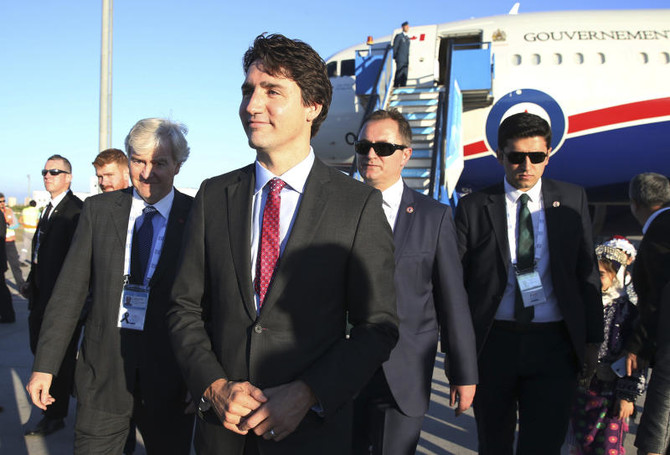

World leaders convene to condemn Paris terror, narrow Syria divide

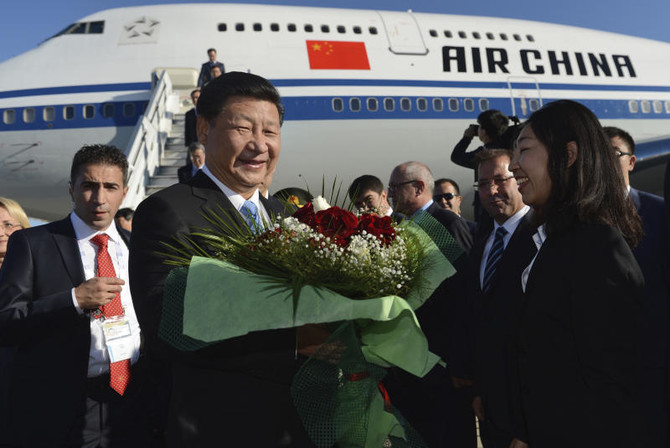
World leaders convene to condemn Paris terror, narrow Syria divide
Trump to decide ‘soon’ on sending weapons to Taiwan
ABOARD AIR FORCE ONE: US President Donald Trump said Monday he would decide soon on whether to send more weapons to Taiwan, after Chinese President Xi Jinping warned him not to do so.
“I’m talking to him about it. We had a good conversation, and we’ll make a determination pretty soon,” Trump said, adding that he has a “good relationship” with the Chinese leader, whose country claims the self-ruled island of Taiwan as its territory.
In a phone call with Trump on February 4, Xi called for “mutual respect” in relations with the United States, while warning Washington about arms sales to the democratically run island.
“The Taiwan question is the most important issue in China-US relations... The US must handle arms sales to Taiwan with caution,” Xi said, according to China’s state broadcaster.
Trump and Xi are due to meet in Beijing in April.
China’s Communist Party has never ruled Taiwan, but Beijing claims the island of 23 million people is part of its territory and has not ruled out the use of force to annex it.
Washington does not officially recognize Taiwan, but is the island territory’s main military backer — although the tone of that support has softened slightly under Trump.
The United States approved $11-billion worth of arms to Taiwan in December, Taipei said.
Shortly thereafter, China launched major live-fire drills to simulate a blockade around Taiwan’s key ports.
While Trump has adopted a softer tone on support for Taiwan in his second term, the issue remains a thorn in US-China relations.
On Saturday, Beijing’s top diplomat Wang Yi warned the United States against “plotting” on Taiwan, saying it could lead to a “confrontation” with China.
Speaking at the Munich Security Conference in Germany, Foreign Minister Wang said that in the future, the United States could adopt a China policy that involves “instigating and plotting to split China through Taiwan, crossing China’s red line.”
Taiwan has spent many billions of dollars upgrading its military in the past decade, but faces growing US pressure to do more to protect itself against China.
Taiwan’s President Lai Ching-te has proposed $40 billion in extra defense spending by his government over eight years, but the plan has been blocked by the opposition-controlled parliament 10 times since early December.
On Thursday, dozens of US lawmakers urged Taiwan’s opposition political parties to end their blocking of the move.
In an exclusive interview with AFP last week, President Lai said he was confident the defense budget would be passed.
“I’m talking to him about it. We had a good conversation, and we’ll make a determination pretty soon,” Trump said, adding that he has a “good relationship” with the Chinese leader, whose country claims the self-ruled island of Taiwan as its territory.
In a phone call with Trump on February 4, Xi called for “mutual respect” in relations with the United States, while warning Washington about arms sales to the democratically run island.
“The Taiwan question is the most important issue in China-US relations... The US must handle arms sales to Taiwan with caution,” Xi said, according to China’s state broadcaster.
Trump and Xi are due to meet in Beijing in April.
China’s Communist Party has never ruled Taiwan, but Beijing claims the island of 23 million people is part of its territory and has not ruled out the use of force to annex it.
Washington does not officially recognize Taiwan, but is the island territory’s main military backer — although the tone of that support has softened slightly under Trump.
The United States approved $11-billion worth of arms to Taiwan in December, Taipei said.
Shortly thereafter, China launched major live-fire drills to simulate a blockade around Taiwan’s key ports.
While Trump has adopted a softer tone on support for Taiwan in his second term, the issue remains a thorn in US-China relations.
On Saturday, Beijing’s top diplomat Wang Yi warned the United States against “plotting” on Taiwan, saying it could lead to a “confrontation” with China.
Speaking at the Munich Security Conference in Germany, Foreign Minister Wang said that in the future, the United States could adopt a China policy that involves “instigating and plotting to split China through Taiwan, crossing China’s red line.”
Taiwan has spent many billions of dollars upgrading its military in the past decade, but faces growing US pressure to do more to protect itself against China.
Taiwan’s President Lai Ching-te has proposed $40 billion in extra defense spending by his government over eight years, but the plan has been blocked by the opposition-controlled parliament 10 times since early December.
On Thursday, dozens of US lawmakers urged Taiwan’s opposition political parties to end their blocking of the move.
In an exclusive interview with AFP last week, President Lai said he was confident the defense budget would be passed.
Latest updates


Recommended



© 2026 SAUDI RESEARCH & PUBLISHING COMPANY, All Rights Reserved And subject to Terms of Use Agreement.